


Recent History
January 10, 1866
Diabetes : its various forms and different treatments

Dr Harley summarizes his views: "The two great types of diabetes, that due to excessive formation, the other to diminished assimilation of saccharine matter, require, of course, as far as animal dieting is concerned, opposite modes of treatment ; for while in the former class of cases it is a most important —I might almost say an essential — adjunct to the other treatment, in the latter it is either detrimental, or, at best, of no use at all."
The two great types of diabetes, that due to excessive formation, the other to diminished assimilation of saccharine matter, require, of course, as far as animal dieting is concerned, opposite modes of treatment ; for while in the former class of cases it is a most important — I might almost say an essential — adjunct to the other treatment, in the latter it is either detrimental, or, at best, of no use at all.
Even in the most favourable cases for restricted diet, we must never allow ourselves to be deluded into the idea that, because we are mitigating the symptoms, and reducing the amount of sugar in the urine, we are necessarily curing the disease, or we shall frequently be doomed to sad disappointment. In keeping a patient on restricted diet, we are merely with-holding from him the straw and mortar out of which the bricks are made — not removing the makers — so that, as soon as the straw and mortar is refurnished to them, they will again be found at work as actively as ever. It is true that it occasionally happens during the withdrawal of the straw and mortar the makers disappear; but this, unfortunately, is by no means invariably or even frequently the case; it is rather, indeed, the exception than therule. We must therefore rely on other means for the removal of the makers. Of these other means I shall presently speak.
Meanwhile, let me explain that by the term restricted diet we mean not only the avoidance of all sugars, and substances containing saccharine matter, but also of all kinds of food convertible during the process of digestion into sugar. The foods convertible into sugar in the digestive canal are those containing starch (not gums), such as arrowroot, tapioca, sago, flours of all the different kinds of cereals (wheat, barley, oats, peas, beans, etc.), potatoes, carrots, beetroot, parsnips, turnips, and other edible roots.
Green vegetables, on the other hand, such as spinach, cabbage, turnip tops, Brussels sprouts, and lettuce need not be forbidden, as they contain too small an amount of starch to do much injury.
As for animal foods, on the other hand, every imaginable kind of fish, fllesh, and fowl may be indulged in, so that even on the most restricted diet the patient has still a large margin for selection — beef, mutton, pork, venison, poultry, game, and wild fowl, oysters, lobster, crabs, prawns, salmon, cod, turbot, etc., Iceland and Irish moss, calf's foot or gelatine jellies, butter sauces, and salad oils.
The only true hardship, in fact, the patient suffers is the deprivation of ordinary bread, and that appears to be a more severe one than most people imagine. I have known patients in whom the craving became at last almost intolerable, as if nature were crying out for some indispensable element of food. In order to mitigate this hardship, a great number of plans of depriving bread of the forbidden element, starch, have been suggested, and many of them have been in a great measure successful. Thus, we have bran, gluten, almond, and glycerine breads and biscuits constantly kept in stock by many of our London bakers, (a) After a time patients get very tired of these substitutes, so it is as well to know that we may occasionally indulge them with well done toast, or very crisp pulled bread, the extra heat having destroyed a considerable portion of the starch normally contained in the article.
As regards drinks, all such as contain saccharine matter are to be avoided ; such, for example, as sweet sparkling wines, whether they be champagnes, moselles, or hocks. An embargo is also to be put on all liqueurs and fruity wines, such as young port, RoussUlon, etc. ; sweet ales, stout, and porter are also to be shimned. If the patient is to be indulged in wines at all, let him have dry Lisbon, old Madeira, Manzanilla, or Amontillado sherries, Chablis, Niersteiner, or old Sauteme ; sound clarets may also be indulged in. "When stimilants are deemed requisite, brandy, whisky, rum, or Hollands may be used ; but these ought always to be employed with caution for the reasons previously given, when speaking of the artificial production of diabetes by means of stimulants introduced into the portal circulation. All that has now been said regarding regimen has of course only had reference to that form of diabetes arising from excessive formation. There are no restrictions either as regards food or drink requisite in cases springing from defective assimilation. On the contrary, the duty of the Practitioner is to select for his patient not only that which is most nourishing, but also that most easy of assimilation. He will often find, too, that such cases not only tolerate but even demand the free use of stimulants, in order to support the flagging vital energies, and enable the weakened organs to perform their work. I think if I were asked what is the best remedy for diabetes, I might venture to answer, in the language of Opie, when the student inquired what he mixed his colours with, "Brains, Sir." For to say that any one remedy or particular line of treatment is suitable to all cases of diabetes would be simply charlatanism of the worst sort.
January 10, 1866
Die Heilung der Psoriasis - by Dr Gustav Passavant

Eczema is cured with an all meat diet. "He now avoided bread completely, as well as flour foods, and subsisted almost exclusively on meat, meat broths, eggs and milk, allowing only some green vegetables and cooked fruit. After only 4 days on this diet, the appearance of the rash had changed considerably, the red areas of skin had become more massive, the watery secretion had become almost zero, as well as the formation of scales and crusts. After 6 weeks the disease was almost completely gone."
Mr. J. B., 49 years old, merchant, had the English disease (rhachitis) as a child and therefore learned to walk only when he was 5 years old In the 20s hemorrhoids set in. Towards the end of the 20s ; years he suffered from paralysis of the legs, which is why he was in 2 Somn.ern
I am unable to form a clear picture of the more detailed causes of this paralysis from the patient's statements; he was never syphilitic. The signs of paralysis were "sporlo" toriiber. The hemorrhoids developed more strongly over the years, there was prolapse of the rectum with frequent bleeding and the naehtheilige influence on the general condition, which - this suffering KU tends to accompany. "In a very run-down condition I saw patient yoi; 7 years first. He could not walk a short distance without the rectum protruding and bleeding. I therefore did the cuffed operation at that time, which consisted of removing the most protruding nodes forming the prolapse with the ecrasenr. Despite slow progress with the instrument, there was a not insignificant secondary hemorrhage, which was not easy to stop, but finally succeeded. The patient recovered rapidly and enjoyed good health for about 5 years. Gradually, however, the disease reappeared, and only recently he was freed from it, and I preferred to use a non-bloody method of treatment, because the patient is very prone to bleeding. The cure, which in a few weeks brought him to the point that the rectum no longer prolapsed and that he was again able to take gprössero walks, consisted of his inserting stool suppositories of stearin, which were provided with longitudinal fnrchen and coated with subsequent ointment.
Argenti nitr. ^j.
Acid. tannic. 5jj.
Extr. belladonn. ^jj.
Extr. opii 9/9.
Ax. porc. 5/S.
F. ungt. moUe.
I owe the knowledge of this treatment of the rectal incident to a communication from Geheimrath Burow of Königsberg. It seems to me that it deserves to become generally known.
In January 1866, a scaly, slightly oozing rash first appeared on the back of the patient's head, which he would have paid little attention to if it had not been the cause of his clothes always being covered with fallen scales. On the hairy head and on the left ear, crusts formed between and next to the scales, which, when removed, quickly formed anew by secreting a yellowish flakiness. The attending physician prescribed rubbing with ointment, but without success; rather, the disease spread to the head, and in the spring it also affected the chest. The patient went to a cold-water institution, where he used rain, sitting and wave baths. This cure had no favorable effect on the rectal prolapse, but a decidedly unfavorable effect on the skin rash. The secretion of yellowish liquid on the head increased so that it often ran down the patient's face and neck; the head and chest were covered with scales and yellow crusts. Since in the course of the cold water cure several small boils developed on the head and a larger one on the right hand, the patient gave it up and returned here in August.
The rash had become very extensive. The hairy head, the ears, some parts of the face, the chest, the abdomen, the genitals, a part of the back and various parts of the legs were affected. The affected areas of the skin were reddened.
A few weeks of aafentiialt in a mountainous area, daily walks of 6 - 8 hours (the rectal incident had already been eliminated), had a favorable effect on the rejection. It decreased. Oertlich applied patient compresses covered with wax and fat rubs of sweet almond oil or cold cream, 2 times a week he took a lukewarm bath, in which he stayed for 1 hour. When he returned from this two-week stay in the mountains and resumed his professional work, the rash soon worsened again. All too soon it had spread again over a large part of the body, to the patient's great annoyance. The hairy head, neck, ears, external auditory canal, part of the face, chest, abdomen, genitals, neck were mostly covered with it, as well as the armpits and part of the thighs.
In this condition I prescribed the flesh cure to the patient. However, it was not used strictly and when after 8 days no substantial improvement had occurred, it was abandoned again and more vegetable food was consumed. The adverse effect of the latter was so striking that the patient decided to try the meat cure again. He now avoided bread completely, as well as flour foods, and subsisted almost exclusively on meat, meat broths, eggs and milk, allowing only some green vegetables and cooked fruit. After only 4 days on this diet, the appearance of the rash had changed considerably, the red areas of skin had become more massive, the watery secretion had become almost zero, as well as the formation of scales and crusts. After 6 weeks the disease was almost completely gone.
A repeated attempt to eat bread again resulted in an aggravation as before; therefore, the patient soon returned to his meat diet, to which he owes his complete recovery.
The history given here might easily give the impression that this is not so much a psoriasis as an eczema. For this reason I have called it Eczema squamosum, without attaching any importance to this name, but I have chosen it precisely because against the form of the disease described here, call it by whatever name you like, the animal diet was of definite benefit, while the relapse to vegetable food always showed itself by Becidive in the disease.
July 10, 1866
The Great Fur Trade - The Great Fall Hunt
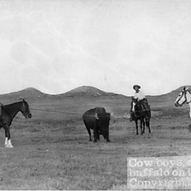
"Two active hunters, taking in their hands the long lines of raw-hide, called "shagnappe," isolate a buffalo cow from the herd. Then, seizing either end of the line, they proceed to revolve about their victim in opposite directions, so entwining her legs in the folds of the cord as to throw her to the ground by the very struggles she makes to escape."
As the hunt approaches the scene of its labors scouts are daily sent out to ascertain, if possible, the direction in which the large herds of buffalo are feeding. No attention is paid to the small bands that are encountered from day to day, and firing at them is strictly forbidden. The object is to encounter the main herds, when all the hunters may participate in the chase with equal chances of success. The longing for fresh meat, however, becomes at times too much for half-breed endurance, and to gain the coveted morsel, and avoid infringing the law, an amusing method of capture is resorted to.
Two active hunters, taking in their hands the long lines of raw-hide, called "shagnappe," isolate a cow from the herd. Then, seizing either end of the line, they proceed to revolve about their victim in opposite directions, so entwining her legs in the folds of the cord as to throw her to the ground by the very struggles she makes to escape. Once down, a few dexterous twists of the line secure her head, and a knife finishes the work. This sport furnishes considerable excitement, and is much affected as a relief from the monotony of the daily jog. Then, too, it supplies what is likely to be by this time a much-needed article--food. Strange as it may appear, the improvident plain-hunter scarcely ever begins his journey with a stock of provisions sufficient to last until the buffalo are reached. And all the lessons taught by years of experience and semi-annual privation and suffering have failed to impress him with the necessity of a more ample supply. Four or five days out from the camp of rendezvous, frequently in less time, half the train is invariably destitute of food. But little appearance of it, however, is presented to the spectator. The volatile hunter laughs and jokes and starves with a sangfroid truly admirable. For all that, he borrows of his neighbor, begs piteously for his children, or, when absolutely forced to it, kills a pony or ox to replace the provision he might easily have brought. Before this stage is reached, however, in nearly every covered cart of the line may be heard children crying for food, and wives pleading for the means of satisfying them.
July 27, 1866
The Great Fur Land - The Great Fall Hunt

The Great Fall Hunt of the buffalo is depicted in which thousands of hunters charge into a massive herd and shoot them point blank. "The hunter pauses not a moment, but loads and fires with the utmost rapidity, pouring in his bullets at the closest range, often almost touching the animal he aims at."
At length the scouts, who for days have been scouring the prairie in every direction, bring the welcome intelligence of the discovery of the main herds. The line of march is at once turned toward the point indicated, and the laws against firing and leaving the main body are rigidly enforced. The long train moves cautiously and as silently as possible. Advantage is taken of depressions in the prairie to keep the train concealed from the buffalo, and not a sound is raised that may give warning of its presence. Approach is made as closely as may be compatible with safety, always keeping to the windward of the herd. Then, if a convenient locality is reached, camp is made, and busy preparations for the ensuing hunt begin. Guns are carefully scanned, powder-flasks and bullet-pouches filled, saddles and bridles examined, and, above all, the horses to be used in the final chase carefully groomed, for highest among his possessions the plain-hunter ranks his "buffalo-runner." It is to him like the Arab's steed--a daily comrade to be petted and spoken to, the companion of his long journeys, and the means of his livelihood.
The buffalo-runner belongs to no particular breed, the only requisites being speed, tact in bringing his rider alongside the retreating herd and maintaining a certain relative distance while there, and the avoiding the numerous pitfalls with which the prairie abounds. Horses well trained in these duties, and possessing the additional requisite of speed, command high prices in the hunt, often ranging from fifty to eighty pounds sterling. On the hunt they are seldom used for any other purpose than that of the final race, except it may be to occasionally draw the cart of madame at times when her neighbor appears in unwonted attire.
Before daybreak on the following morning--for a chase is seldom begun late in the day--the great body of hunters are off under the guidance of scouts in pursuit of the main herd. A ride of an hour or more brings them within, say, a mile of the buffalo, which have been moving slowly off as they approached. The hunt up to this time has moved in four columns, with every man in his place. As they draw nearer at a gentle trot, the immense herd breaks into a rolling gallop- Now the critical and long-desired moment has arrived. The chief gives the signal. "Allee! allee!" he shouts, and a thousand reckless riders dash forward at a wild run. Into the herd they penetrate; along its sides they stretch, the trained horses regulating their pace to that of the moving mass beside them; guns flash, shots and yells resound; the dust arises in thick clouds over the struggling band; and the chase sweeps rapidly over the plain, leaving its traces behind in the multitude of animals lying dead upon the ground, or feebly struggling in their death-throes. The hunter pauses not a moment, but loads and fires with the utmost rapidity, pouring in his bullets at the closest range, often almost touching the animal he aims at. To facilitate the rapidity of his fire he uses a flint-lock, smooth-bore trading-gun, and enters the chase with his mouth filled with bullets. A handful of powder is let fall from the powder-horn, a bullet is dropped from the mouth into the muzzle, a tap with the butt-end of the firelock on the saddle causes the salivated bullet to adhere to the powder during the moment necessary to depress the barrel, when the discharge is instantly effected without bringing the gun to the shoulder.
The excitement which seizes upon the hunter at finding himself surrounded by the long-sought buffalo is intense, and sometimes renders him careless in examining too closely whether the object fired at is a buffalo or a buffalo-runner mounted by a friend. But few fatal accidents occur, however, from the pell-mell rush and indiscriminate firing; but it frequently happens that guns, as the result of hasty and careless loading, explode, carrying away part of the hands using them, and even the most expert runners sometimes find their way into badger-holes, breaking or dislocating the collar-bones of the riders in the fall.
The identification of the slain animals is left till the run is over. This is accomplished by means of marked bullets, the locality in which the buffalo lies--for which the hunter always keeps a sharp lookout--and the spot where the bullet entered. By the time the hunters begin to appear, returning from the chase, there have arrived long trains of carts from the camp to carry back the meat and robes. The animals having been identified, the work of skinning and cutting up begins, in which the women and children participate. In a remarkably brief time the plain is strewed with skeletons stripped of flesh, and the well-loaded train is on its return. Arrived at camp, the robes are at once stretched upon a frame-work of poles, and the greater part of the flesh scraped from them, after which they are folded and packed in the carts to receive the final dressing in the settlement. Of the meat, the choicest portions are packed away without further care, to be freighted home in a fresh state, the cold at that late season effectually preserving it. Large quantities are, however, converted into pemmican, in which shape it finds its readiest market.
January 1, 1867
Travel And Adventure In The Territory Of Alaska by Frederick Whymper

At Port Clarence, where they were almost entirely dependent upon the resources of the country for some weeks, living upon walrus and seal meat, without flour or bread, no symptom of scurvy made its appearance.
Page 369:
During the winter of 1866-7, and following summer, Captain Libby, of our Telegraph Service, with nearly forty men, stopped at this inaccessible place. At Grantley Harbour, a good titation, and other houses (which have been left there), and portions of the telegraph line, were built by these men. It was, as before stated, the spot intended for the Bering Strait cable “landing” on the American side, and it has been already mentioned as the central point at which the natives of Kotsebue and Norton Sounds, and the neighbouring country, meet the Tchuktchis from the Siberian coast. Many whalers annually visit this harbour for trading purposes, and I expect to hear of a permanent white settlement being formed there. The experience of the earlier Arctic explorers, as of our telegraph men, shows that it is a good spot to winter in. Some of our men there, at one time very short of provisions, lived for months at an Indian village near Cape Prince of Wales. Supplies from the resources of the country were very uncertain. In 1866-7, the natives in the neighbourhood were almost starving, and were at one time reduced to boiling down their old boots and fragments of hide, in order to sustain life. “ Yet,” said a correspondent (a member of our expedition), writing from thence, “ the party under Captain Libby although without bread or flour for some weeks, escaped the scurvy entirely. The generally received opinion that scurvy is generated from want of flour, does not seem to be correct. At the station (Fort St. Michaers), where plenty of flour was received, and freely used, they wore afflicted with this disease; while at Port Clarence, where they were almost entirely dependent upon the resources of the country for some weeks, living upon walrus and seal meat, without flour or bread, no symptom of scurvy made its appearance.”
Page 293:
https://archive.org/details/in.ernet.dli.2015.37317/page/n293/mode/2up?q=Scurvy
Some few of the workmen had suffered from frost-bite and scurvy. A propos of the latter terrible scourge, it is to be remarked, that our men at Port Clarence, the worst fed of all our parties, who had lived for a long time on a native diet of walrus and seal blubber, had not suffered from it at all, while those in Norton Sound, who got a fair amount of flour, &c., from the Russian posts, suffered severely from the disease.
Ancient History
Germany
50000
B.C.E.
Palaeolithic and Mesolithic kill-butchering sites: the hard evidence
The upper paleolithic is characterized by advanced hunting of large animals with various weapons, and planning to maximize easy prey
Upper Palaeolithic and Mesolithic Hunting:
the archaeological record leaves us some direct evidence of man's hunting activities. At Meiendorf (Rust 1937) and Stellmoor (Rusf 1937), some bones of reindeer and birds still conserve weapon marks and a few pieces of silex have remained thrusted in mammalian bones; man kills reindeer with harpoons and sticks (fractured skulls), birds with bows and maybe slings. Three fractured skulls of red deer in Abri Pataud (Bouchud, 1975), and one bovid skull with a circular orifice in Saint Marcel (Allain, 1952) suggest the practice of the so called " co'up de merlin": man has delivered a blow similar to the one used today to butcher cattle. Probably the animal already immobilized (wounded or entrapped) was hit on the frontal with a big stone. At Kokorevo I (Siberia), a large scapula of bison is pierced by the upper end of a point made of bone (Boriskowksi, 1965). At High Furlong (Mesolithic), an elk was discovered with the marks of L7 wounds made by barbed points, of which two were found in the site, and by other arms. The animal had apparently been attacked at two distinct occasions: during the first one, hunters aimed at the legs to lame the animal (fig. 6), later hunters hit the thoracic region and the lungs to kill it. However the elk died in a little lake, perhaps imprisoned in the ice, and man had no access to the meat. The animal represents in fact a hunting loss (Hallam et a1.,1973).
Planning: very good. Many sites belong to Wpe e, were occupied periodically or seasonally and specialised in the capture of a particular game (e.g., horse, reindeeq, ibex). Game drive towards cliffs have been claimed and Solutre (Combier & Thevenot,1976) has long figured as an example, but the evidence is far from conclusive.
Scavenging: no doubt H. sapiens still killed or exploited animals in the occasional and opportunistic way of Lower Palaeolithic times. According to Lindner (Lindner,1941), hunters at Predmost utilised the carcasses of hundreds of mammoths that probably succumbed as a result of natural catastrophes, as food.
Food transport: selective transport of the most useful animal parts is claimed for many sites.
Specialised activities: sometimes the material is dislocated in distinct clusters that could reflect specialised activity areas as for example at Solutre (Combier & Thevenot, 1976). Site topography: some hunting sites were located in valleys enclosed by steep slopes as at Rascano (Gonziilez-Echegaray, 1979), Stellmoor (Rust, 1937), Meiendorf (Rust 1937), or at the foot of rocky cliffs at Solutr6 (Combier & Th6venot, 1,976).
4. Conclusions
Most of the Lower Palaeolithic sites analysed here belong to category a (butchering sites); other kind of concentrations are rare and difficult to ascertain. A number of hunting stations (category e) and a hunting stop (category f) form my sample for the age of Neanderthal man and related people. The Upper Palaeolithic is characterised by many hunting stations, while in Mesolithic times a hunting loss (category d ) was found as well as several sighting sites (category g). The foregoing distribution seems to reflect in a vague way an evolution from scavenging and haphazard opportunistic hunting to well organised, selective hunting activities. However, this reflection results no doubt in part from a priori assumptions concerning the evolution of hominid meat procurement often colouring the interpretations offered for the osseous "hard" data; these are frequently equivocal.
Vindija, 42000, Varaždin, Croatia
28500
B.C.E.
Neanderthal diet at Vindija and Neanderthal predation: The evidence from stable isotopes
The isotope evidence overwhelmingly points to the Neanderthals behaving as top-level carnivores, obtaining almost all of their dietary protein from animal sources
Archeological analysis of faunal remains and of lithic and bone tools has suggested that hunting of medium to large mammals was a major element of Neanderthal subsistence. Plant foods are almost invisible in the archeological record, and it is impossible to estimate accurately their dietary importance. However, stable isotope (13C and 15N) analysis of mammal bone collagen provides a direct measure of diet and has been applied to two Neanderthals and various faunal species from Vindija Cave, Croatia. The isotope evidence overwhelmingly points to the Neanderthals behaving as top-level carnivores, obtaining almost all of their dietary protein from animal sources. Earlier Neanderthals in France and Belgium have yielded similar results, and a pattern of European Neander- thal adaptation as carnivores is emerging. These data reinforce current taphonomic assessments of associated faunal elements and make it unlikely that the Neanderthals were acquiring animal protein principally through scavenging. Instead, these findings portray them as effective predators.
Stable Isotope Analyses.
Mammal bone collagen δ13C and δ15N values reflect the δ13C and δ15N values of dietary protein (14). They furnish a long-term record of diet, giving the average δ13C and δ15N values of all of the protein consumed over the last years of the measured individual's life. δ13C values can be used to discriminate between terrestrial and marine dietary protein in humans and other mammals (15, 16). In addition, because of the canopy effect, species that live in forest environments can have δ13C values that are more negative than species that live in open environments (17). δ15N values are, on average, 2–4‰ higher than the average δ15N value of the protein consumed (18). Therefore, δ15N values can be used to determine the trophic level of the protein consumed. By measuring the δ13C and δ15N values of various fauna in a paleo-ecosystem, it is possible to reconstruct the trophic level relationships within that ecosystem. Therefore, by comparing the δ13C and δ15N values of omnivores such as hominids with the values of herbivores and carnivores from the same ecosystem, it is possible to determine whether those omnivores were obtaining dietary protein from plant or animal sources.
Cheddar Reservoir, Cheddar BS26, UK
12000
B.C.E.
FOCUS: Gough’s Cave and Sun Hole Cave Human Stable Isotope Values Indicate a High Animal Protein Diet in the British Upper Palaeolithic
We were testing the hypothesis that these humans had a mainly hunting economy, and therefore a diet high in animal protein. We found this to be the case, and by comparing the human δ15N values with those of contemporary fauna, we conclude that the protein sources in human diets at these sites came mainly from herbivores such as Bos sp. and Cervus elaphus
We undertook stable isotope analysis of Upper Palaeolithic humans and fauna from the sites of Gough's Cave and Sun Hole Cave, Somerset, U.K., for palaeodietary reconstruction. We were testing the hypothesis that these humans had a mainly hunting economy, and therefore a diet high in animal protein. We found this to be the case, and by comparing the human δ15N values with those of contemporary fauna, we conclude that the protein sources in human diets at these sites came mainly from herbivores such as Bos sp. and Cervus elaphus. There are a large number ofEquus sp. faunal remains from this site, but this species was not a significant food resource in the diets of these Upper Palaeolithic humans.
If the humans hunted and consumed mainly horse, then their 15N values should be c. 3–5‰ (Equus 15N value of 0·7‰+enrichment of 2–4‰). Instead, their 15N values make more sense if they lived mostly off Bos and Cervus elaphus (Bos and Cervus values of c. 3‰+enrichment of 2–4‰=the observed values c. 6–7‰). It is also possible that other species, including Rangifer tarandus, were consumed by these individuals. Rangifer tarandus has 15N values similar to Cervus elaphus (Richards, 1998), and has more positive 13C values, which may explain the observed slight enrichment in the human 13C values. A number of artefacts made from Rangifer tarandus have been found at Gough’s, but there is no other evidence that this species was being exploited for food
Province of Crotone, Italy
500
B.C.E.
On the Sociology of Ancient Sport
One report states that a trainer named Pythagoras recommended a meat diet to the Olympic athletes he trained.
A lack of animal-derived protein seems to have been rectified early in history, as there are two reports of the introduction of meat into the athletes’ diet. One report states that a trainer named Pythagoras recommended a meat diet to the athletes he trained. https://www.omicsonline.org/open-access/a-comparison-of-ancient-greek-and-roman-sports-diets-with-modern-day-practices-2473-6449-1000104.php?aid=69865
8 He [Pythagoras] is said to have been the first to train athletes on a meat diet. The first athlete he did this with was Eurymenes. Formerly they had trained on dried figs, moist cheese, and wheat. Some say that it was a trainer named Pythagoras and not the philosopher who was responsible for this innovative diet. For our Pythagoras prohibited killing, not to mention eating, life which possessed souls like our own.
Diogenes Laertius, Lives of the Philosophers 8.12
Sport and Recreation
To all appearances medical knowledge in general and nutrition in particular was widespread in Pythagorean circles in Southern Italy, especially in Kroton. Burkert has pointed out that the fmaous doctor Alcmaeon came from the Pythagorean center of Kroton. From the akousmata (secret doctrines), which doubtless contain old religious traditions, we learn that the Pythagoreans were not originally strict vegetarians; the consumption of meat was permitted, with the exception of lamb and the meat of draft oxen. Burkert considers there is some likelihood that Pythagoras introduced a meat diet for athletes. He believes this tradition arose when Pythagorean vegetarianism had not yet been completely developed. In later times, when vegetarianism had prevailed, a second tradition has possibly been invented, in which it was not Pythagoras, the philosopher from Samos and Kroton, but a homonymous person who wrot the great 'trainer's recipe book'.
57: There are similar issues regarding the transmission in later sources of Pythagoras advising the successful heavy athlete Eurymenes of Samos to use a special meat-based diet instead of the dried figs and cheese he had previously been eating.
On the Sociology of Ancient Sport - page 43.
Mantineia 221 00, Greece
480
B.C.E.
A Comparison of Ancient Greek and Roman Sports Diets with Modern Day Practices
Dromeus, a long-distance runner, is said to have first thought of eating meat for training instead of just cheese and won multiple victories.
The second report is that of Pausanias, who writes of Dromeus, a long-distance runner from Stymphalos [23].
“...he won two victories in the dolichos at Olympia, the same number in the Pythian Games, three at the Isthmian and five at the Nemean. He is said to have first thought of eating meat (as part of his training diet). Until then the food for athletes was cheese fresh out of the basket.”
Clearly, if his success is anything to go by, then Dromeus had really found a winner’s diet. There are also reports of athletes eating meat from oxen, bulls, goats and deer, a very” red-meat” diet which is a rich form of protein. Moreover, with meat as a part of their diet, the performance of competing athletes would most certainly have improved noticeably.
5 A man named Dromeus from Mantineia was said to have been the first we know of to have won the pankration by default [ = akoniti]. Pausanias 6.11.4
Dromeus, Long-Distance Runner
There was a man from Stymphalos, named Dromeus, whose record as a long-distance runner was exceptional: he won two victories in the dolichos at Olympia, the same number in the Pythian Games, three at the Isthmian and five at the Nemean. He is said to have first thought of eating meat (as part of his training diet). Until then the food for athletes was cheese fresh out of the basket.


