


Recent History
August 28, 1882
Scurvy

Dr Charles Henry Ralfe discovers that a diet of only meat devoid of vegetables still prevents scurvy.
"Sir, I was struck by two independent observations which occurred in your columns last week in regard to the etiology of scurvy, both tending to controvert the generally received opinion that the exclusive cause of the disease is the.........
prolonged and complete withdrawal of succelent vegetatables from the dietary of those affected.
Thus Mr. Neale, of the Eira Arctic Expedition, says: "I do not think that spirit or limejuiceis of much use as an antiscorbutic ; for if you live on the flesh of the country, even, I believe, without vegetables, you will run very little risk of scurvy."
Dr. Lucas writes: "In the case of the semi- savage hill tribes of Afghanistan and Beluchistan their food contains a large amount of meat, and is altogether devoid of vegetables. The singular immunity from scurvy of these races has struck me as a remarkable physiological circumstance, which should make us pause before accepting the vegetable doctrine in relation to scurvy." These observations do not stand alone. Arctic voyagers have long pointed out the antiscorbutic properties of fresh meat, and Baron Larrey, with regard to hot climates, arrived at the same conclusion in the Egyptian expedition under Bonaparte, at the end of last century."
President's Address: https://www.ncbi.nlm.nih.gov/labs/pmc/articles/PMC2036671/pdf/medcht00012-0097.pdf
"Dr. Charles Henry Ralfe, the son of a naval officer, was born in 1842. He received his medical education at the Bath United Hospital and King's College, London. After having been House Surgeon at the Lock, he entered at Caius College, Cambridge, and graduated with honours in Natural Science. He first came before the public as a general practitioner at Doncaster, but in 1869 he established himself as a physician in London. He soon obtained the appointment of Registrar at Charing Cross, and availed himself of the opportunities there afforded to work at Physiological Chemistry. His labours bore fruit in 1873 in the shape of a small but useful handbook on that subject. Shortly after this he became attached to St. George's Hospital as Demonstratorof Physiological Chemistry, and to the Seamen's Hospital at Greenwich as Physician. He used his special knowledge and his clinical opportunities in the investigation of scurvy, a disease which cannot be said, as yet, to have given up its secret, but which Dr. Ralfe threw light upon in pointing out the deficiency in it, not only of potash, but of the alkaline phosphates. He left St. George's and Greenwich on becoming in 1880 Assistant Physician to the London Hospital, which he continued to be until within a few months of his death. Dr. Ralfe died of phthisis, sequent on diabetes, on the 26th of last June, at the age of fifty-four. He was a type of the best kind of physician. He used his opportunities for advancing knowledge with ability and success, and without the purpose of an advertiser. He was cultivated and well-read, upright and honorable, kindly and personally attractive. His loss will be regretted by all who knew him.
September 23, 1882
Scurvy

So with the Eira, we believe that had they not fortunately been able to obtain abundant supplies of fresh meat, scurvy would have appeared, and that the preserved vegetables in the absence of lime-juice would have proved insufficient as antiscorbutics.
p495 - https://www.google.com/books/edition/The_Lancet/MJFPAAAAYAAJ?hl=en&gbpv=1
SCURVY.
Dr. Buzzard, in a letter which appeared in our columns last week, considers the fact that the crew of the Eira were supplied with preserved vegetables tells against the supposition advanced by Mr. Neale, that if Arctic voyagers were to feed only on the flesh of the animals supplied by the country they would be able to dispense with lime-juice. The truth is, it is an open question with many as to the relative antiscorbutic properties of preserved vegetables, and whether under the circumstances in which the Eira's crew were placed they would have been sufficient, in the absence of lime-juice and fresh meat, to have preserved the crew from scurvy.
A case in point is the outbreak that occurred on board the Adventure, in the surveying voyages of that vessel and the Beagle. The Adventure had been anchored in Port Famine for several months, and although "pickles, cranberries, large quantities of wild celery, preserved meats and soups, had been abundantly supplied," still great difficulty had been experienced in obtaining fresh meat, and they were dependent on an intermittent supply from wild-fowl and a few shell-fish. Scurvy appeared early in July, fourteen cases, including the assistant-surgeon, being down with it. At the end of July fresh meat was obtained; at first it seemed to prove ineffectual, but an ample supply being continued, the commander was able to report, by the end of August, "the timely supply of guanaco meat had certainly checked the scurvy." This is an instance in which articles of diet having recognised antiscorbutic properties proved insufficient, in the absence of lime-juice and fresh meat, and under conditions of exceptional hardship, exposure, and depressing influence, to prevent the occurrence of scurvy. So with the Eira, we believe that had they not fortunately been able to obtain abundant supplies of fresh meat, scurvy would have appeared, and that the preserved vegetables in the absence of lime-juice would have proved insufficient as antiscorbutics.
This antiscorbutic virtue of fresh meat has long been recognised by Arctic explorers, and, strangely, their experience in this respect is quite at variance with ours in Europe. It has been sought to explain the immunity from the disease of the Esquimaux, who live almost exclusively on seal and walrus flesh during the winter months, by maintaining that the protection is derived from the herbage extracted from the stomach of reindeer they may kill. In view, however, of the small proportion of vegetable matter that would be thus obtained for each member of the tribe, and the intermittent nature of the supply, it can hardly be maintained that the antiscorbutic supplied in this way is sufficient unless there are other conditions tending in the same direction. And of these, one, as we have already stated, consists probably in the fact that the flesh is eaten without lactic acid decomposition having taken place, owing either to its being devoured immediately, or from its becoming frozen. The converse being the case in Europe, where meat is hung some time after rigor mortis has passed off, and lactic acid develops to a considerable extent. This seems a rational explanation, and it reconciles the discrepancy of opinion that exists between European and Arctic observers with regard to meat as an antiscorbutic. In bringing forward the claims of the flesh of recently killed animals as an antiscorbutic, it must be understood that we fully uphold the doctrine that the exclusive cause of scurvy is due to the insufficient supply of fresh vegetable food, and that it can be only completely cured by their administration ; but if the claims advanced with regard to the antiscorbutic qualities of recently slaughtered flesh be proved, then we have ascertained a fact which ought to be of the greatest practical value with regard to the conduct of exploring expeditions, and every effort should be made to obtain it. Everything, moreover, conducive to the improvement of the sailor's dietary ought to receive serious consideration, and it has therefore seemed to us that the remarks of Mr. Neale and Dr. Lucas are especially worthy of attention, whilst we think the suggestion of the former gentleman with regard to the use of the blood of slaughtered animals likely to prove of special value."
http://www.empiri.ca/2017/02/#id2 - Found and typed up by Amber O'Hearn
September 30, 1882
To the Editor of the Lancet
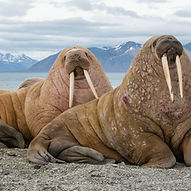
Dr Lucas discusses theories on why an all-meat diet is able to cure scurvy, guessing that the value is in fresh or immediately frozen meat.
p913 "Sir, —In a foot-note to page 49G of his " Manual of Practical Hygiene,", fifth edition, (London, Churchill, 1878), Parkes says : —"For a good deal of evidence up to 1848, I beg to refer to a review I contributed on scurvy in the British and Foreign. Medico-Chirurgical Review in that year. The evidence since this period has added, I believe, little to our knowledge, except to show that the preservation and curative powers of fresh meat in large quantities, and especially raw meat (Kane's Arctic Expedition), will not only prevent, but will cure scurvy. Kane found the raw meat of the walrus a certain cure. For the most recent evidence and much valuable information, see the Report of the Admiralty Committee on the Scurvy which occurred in the Arctic Expedition of 1875-76 (Blue Hook, 1877)."
I think that the last sentence in the above is not Parkes' own, but that it must have been added by the editor in order to bring it up to the date of the issue of the current edition. The experience since then of the Arctic Expedition in the Eira coincides with these. I refer to that portion of the report where the author tells us that "our food consisted chiefly of bear and walrus meat, mixing some of the bear's blood with the soup when possible." And again: "I do not think that, spirits or lime-juice is much use as an antiscorbutic, for if you live on the flesh of the country, even, I believe, without vegetables, you will run very little risk of scurvy. There was not a sign of scurvy amongst us, not even an anaemic face," (Lancet, Aug. 26th.)
So that, as far as this question of fresh meat and raw meat and their prophylactic and curative properties are concerned, ample evidence will be found in other published literature to corroborate that of the Eira. But when you take up the question of the particular change which takes place in meat from its fresh to its stale condition, you will find a great deal of diversity and little harmony at opinion. Without taking up other authors on the subject, we stick to Parkes and compare his with Dr Ralfe's views on this point. Parkes thought "fresh, and especially raw meat, is also useful, and this is conjectured to be from its amount of lactic acid; but this is uncertain,"1 while on the other hand Dr. Ralfe repeats, as a probable explanation, too, of the reason of fresh meat being an anti-scorbutic, but that it is due to the absence of lactic acid. For, from well-known chemical facts he deduces the following: — "In hot climates meat has to be eaten so freshly killed that no lime is allowed for the development of the lactic acid : in arctic regions the freezing arrests its formation. The muscle plasma, therefore, remains alkaline. In Europe the meat is invariably hung, lactic acid is developed freely, and the muscle plasma is consequently acid. If, therefore, scurvy is, as I have endeavoured to show ("Inquiry into the General Pathology of Scurvy"), due to diminished alkalinity of the blood, it can be easily understood that meat may be antiscorbutic when fresh killed, or frozen immediately after killing, but scorbutic when these alkaline salts have been converted into acid ones by lactic acid decomposition. The view of the alkalinity of the blood coincides with Dr. Garrod's theory, which, however, appears to have as a sine qua turn the absence of a particular salt- namely, potash. I am inclined to think that, taking into account the nervous symptoms which are not infrequently associated with a certain proportion of scorbutic cases, resulting probably from the changes taking place in the blood, not unlike those which occur in gout and rheumatism, there must be some material change produced in the sympathetic system. In many of the individuals tainted with scurvy there were slight and severe attacks of passing jaundice in the cases which occurred in Afghanistan. Can we possibly trace this icteric condition to this cause? This is but a conjecture so far. But there certainly is in Garrod's observations an important point which, if applicable to all countries, climates, and conditions of life, is sufficiently weighty to indicate the necessity for farther research in that direction, and that point is this : the scorbutic condition disappeared on the patient being given a few grains of potash, though kept strictly on precisely the same diet which produced scurvy.
—I am, Sir, yours truly, Ahmedabad, India, 30th Sept., 1882.
JOHN C. LUCAS."
January 1, 1883
A book of medical discourses: in two parts

The first female African American doctor, Rebecca Crumpler, wrote this book in 1883 and describes how a broiled lamb chop or beef should be added to an infant's diet while weaning. The full book is easy to read and is again a fascinating mix of religion and observation, typical of the time period.
Now since we have noticed to some extent how sudden emotions, as of grief, anger or fright may shock the child at the breast through the agency of those little organs called nerves,— we will pass on to notice some of the causes of bowel com plaints arising from the nature of the food eaten by the nurse. Probably there is no cause more frequently productive of infantile bowel com plaints, both during and after the month, than that of the too early indulgence in a mixed diet.
It may be well to enumerate some of the more objectionable articles of diet from the first day of confinement to the seventh or ninth month, or time for weaning.
Of the vegetables, — beans, dry or green, cabbage, cooked or raw, beets, turnips, cucumbers, green peas, dandelions, spinach and Carolina potatoes. Pickles of all kinds.
All of the finny tribe ; oysters and lobsters being the most dangerous. Of the meats, fresh pork and veal.
Of the desserts, egg custards, pastry, cheese and preserved fruits.
Of the fluids — coffee — unless ordered for medicinal purposes — raw milk, wines, ales or beers.
As a matter of convenience I will introduce what in reason should constitute the proper diet for the same period of time ; the modes of preparation being left to those acting as nurses. A large number of women detest gruel, or " baby-food," as they term it. In this, many, no doubt, are excusable, owing to the condition in which it may previously have been presented to them ; you can make a horse leave his oats by sprinkling pepper over them. But to the point : There are about an equal number who enjoy it, and it is always best to try and avoid whims and deny one's self in every possible manner till after the milk flows freely. A woman cannot sink on plenty of nice oat, corn-meal, or flour-gruel, minute pudding or toast panacea, given often in small quantities. Of course if any article, however well liked, is made by the gallon, so to speak, and warmed over and again, it will become to be loathed ; and too great quantities taken may cause much distress in the stomach. Gruels of all kinds should be well mixed with boiling water in a clean, block tin, covered pail; then set in a clean vessel of water to boil, stirring it till well done. Coarse grain porridges should always be strained; as also should broths.
For fluids : — Shells, broma, hot milk, pure or watered to suit, are each of themselves nourishing. If the mother's milk is scant, a tea made of Indian posy or life everlasting, and drunk as table tea, with milk and sugar, if desirable, is good to increase it. The diet should become gradually solid, say in the early part of the day a broiled lamb chop, broiled beef, liver, tripe, sirloin steak, or broths without vegetables. Broiled meats retain the nutritive principles better than when otherwise cooked. If tea or coffee is found to lessen the flow of milk, it may be inferred that if continued, all of the fluids of the body will materially change.
November 22, 1883
On the Treatment of Diabetes - A Clinical Lecture by Professor Dojardin-Beaumetz

In a clinical lecture in Paris in 1883, Professor Dojardin-Beaumetz explains how Rollo, Bouchardat, Cantani, and Seegen figured out how to remove starch and carbohydrates from the diet to help diabetics.
ON THE TREATMENT OF DIABETES. A CLINICAL LECTURE DY PROFESSOR DOJARDIN-BEAUMETZ, Member of the Academy of Medicine Physician to the Hôspital St. Antoine, Paris, France
GENTLEMEN,
The dietetic treatment of diabetes deserves the first place. Ever since John Rollo at the end of the last century first called attention to the influence of foods in the production of glycosuria, all authorties have felt the obligation to regulate rigorously the diet of diabetic patients. At their head is Bouchardat; after him I will mention especially Seegen, a German writer, and Cantani, an Italian, and what I have now to offer respecting the hygienic regime of this affection will be based on a careful study of the contributions of these three men. The hygienic treatment is founded on the endeavor, far as possible, to exclude from the food all substances capable of forming glucose. This glucose may be derived from sugar in the ingesta, or from starch which has undergone conversion in the alimentary canal. These glycogenous principles, then, should bo suppressed. All this, however, though simple in theory, is difficult in practice.
Ancient History
Germany
50000
B.C.E.
Palaeolithic and Mesolithic kill-butchering sites: the hard evidence
The upper paleolithic is characterized by advanced hunting of large animals with various weapons, and planning to maximize easy prey
Upper Palaeolithic and Mesolithic Hunting:
the archaeological record leaves us some direct evidence of man's hunting activities. At Meiendorf (Rust 1937) and Stellmoor (Rusf 1937), some bones of reindeer and birds still conserve weapon marks and a few pieces of silex have remained thrusted in mammalian bones; man kills reindeer with harpoons and sticks (fractured skulls), birds with bows and maybe slings. Three fractured skulls of red deer in Abri Pataud (Bouchud, 1975), and one bovid skull with a circular orifice in Saint Marcel (Allain, 1952) suggest the practice of the so called " co'up de merlin": man has delivered a blow similar to the one used today to butcher cattle. Probably the animal already immobilized (wounded or entrapped) was hit on the frontal with a big stone. At Kokorevo I (Siberia), a large scapula of bison is pierced by the upper end of a point made of bone (Boriskowksi, 1965). At High Furlong (Mesolithic), an elk was discovered with the marks of L7 wounds made by barbed points, of which two were found in the site, and by other arms. The animal had apparently been attacked at two distinct occasions: during the first one, hunters aimed at the legs to lame the animal (fig. 6), later hunters hit the thoracic region and the lungs to kill it. However the elk died in a little lake, perhaps imprisoned in the ice, and man had no access to the meat. The animal represents in fact a hunting loss (Hallam et a1.,1973).
Planning: very good. Many sites belong to Wpe e, were occupied periodically or seasonally and specialised in the capture of a particular game (e.g., horse, reindeeq, ibex). Game drive towards cliffs have been claimed and Solutre (Combier & Thevenot,1976) has long figured as an example, but the evidence is far from conclusive.
Scavenging: no doubt H. sapiens still killed or exploited animals in the occasional and opportunistic way of Lower Palaeolithic times. According to Lindner (Lindner,1941), hunters at Predmost utilised the carcasses of hundreds of mammoths that probably succumbed as a result of natural catastrophes, as food.
Food transport: selective transport of the most useful animal parts is claimed for many sites.
Specialised activities: sometimes the material is dislocated in distinct clusters that could reflect specialised activity areas as for example at Solutre (Combier & Thevenot, 1976). Site topography: some hunting sites were located in valleys enclosed by steep slopes as at Rascano (Gonziilez-Echegaray, 1979), Stellmoor (Rust, 1937), Meiendorf (Rust 1937), or at the foot of rocky cliffs at Solutr6 (Combier & Th6venot, 1,976).
4. Conclusions
Most of the Lower Palaeolithic sites analysed here belong to category a (butchering sites); other kind of concentrations are rare and difficult to ascertain. A number of hunting stations (category e) and a hunting stop (category f) form my sample for the age of Neanderthal man and related people. The Upper Palaeolithic is characterised by many hunting stations, while in Mesolithic times a hunting loss (category d ) was found as well as several sighting sites (category g). The foregoing distribution seems to reflect in a vague way an evolution from scavenging and haphazard opportunistic hunting to well organised, selective hunting activities. However, this reflection results no doubt in part from a priori assumptions concerning the evolution of hominid meat procurement often colouring the interpretations offered for the osseous "hard" data; these are frequently equivocal.
Vindija, 42000, Varaždin, Croatia
28500
B.C.E.
Neanderthal diet at Vindija and Neanderthal predation: The evidence from stable isotopes
The isotope evidence overwhelmingly points to the Neanderthals behaving as top-level carnivores, obtaining almost all of their dietary protein from animal sources
Archeological analysis of faunal remains and of lithic and bone tools has suggested that hunting of medium to large mammals was a major element of Neanderthal subsistence. Plant foods are almost invisible in the archeological record, and it is impossible to estimate accurately their dietary importance. However, stable isotope (13C and 15N) analysis of mammal bone collagen provides a direct measure of diet and has been applied to two Neanderthals and various faunal species from Vindija Cave, Croatia. The isotope evidence overwhelmingly points to the Neanderthals behaving as top-level carnivores, obtaining almost all of their dietary protein from animal sources. Earlier Neanderthals in France and Belgium have yielded similar results, and a pattern of European Neander- thal adaptation as carnivores is emerging. These data reinforce current taphonomic assessments of associated faunal elements and make it unlikely that the Neanderthals were acquiring animal protein principally through scavenging. Instead, these findings portray them as effective predators.
Stable Isotope Analyses.
Mammal bone collagen δ13C and δ15N values reflect the δ13C and δ15N values of dietary protein (14). They furnish a long-term record of diet, giving the average δ13C and δ15N values of all of the protein consumed over the last years of the measured individual's life. δ13C values can be used to discriminate between terrestrial and marine dietary protein in humans and other mammals (15, 16). In addition, because of the canopy effect, species that live in forest environments can have δ13C values that are more negative than species that live in open environments (17). δ15N values are, on average, 2–4‰ higher than the average δ15N value of the protein consumed (18). Therefore, δ15N values can be used to determine the trophic level of the protein consumed. By measuring the δ13C and δ15N values of various fauna in a paleo-ecosystem, it is possible to reconstruct the trophic level relationships within that ecosystem. Therefore, by comparing the δ13C and δ15N values of omnivores such as hominids with the values of herbivores and carnivores from the same ecosystem, it is possible to determine whether those omnivores were obtaining dietary protein from plant or animal sources.
Cheddar Reservoir, Cheddar BS26, UK
12000
B.C.E.
FOCUS: Gough’s Cave and Sun Hole Cave Human Stable Isotope Values Indicate a High Animal Protein Diet in the British Upper Palaeolithic
We were testing the hypothesis that these humans had a mainly hunting economy, and therefore a diet high in animal protein. We found this to be the case, and by comparing the human δ15N values with those of contemporary fauna, we conclude that the protein sources in human diets at these sites came mainly from herbivores such as Bos sp. and Cervus elaphus
We undertook stable isotope analysis of Upper Palaeolithic humans and fauna from the sites of Gough's Cave and Sun Hole Cave, Somerset, U.K., for palaeodietary reconstruction. We were testing the hypothesis that these humans had a mainly hunting economy, and therefore a diet high in animal protein. We found this to be the case, and by comparing the human δ15N values with those of contemporary fauna, we conclude that the protein sources in human diets at these sites came mainly from herbivores such as Bos sp. and Cervus elaphus. There are a large number ofEquus sp. faunal remains from this site, but this species was not a significant food resource in the diets of these Upper Palaeolithic humans.
If the humans hunted and consumed mainly horse, then their 15N values should be c. 3–5‰ (Equus 15N value of 0·7‰+enrichment of 2–4‰). Instead, their 15N values make more sense if they lived mostly off Bos and Cervus elaphus (Bos and Cervus values of c. 3‰+enrichment of 2–4‰=the observed values c. 6–7‰). It is also possible that other species, including Rangifer tarandus, were consumed by these individuals. Rangifer tarandus has 15N values similar to Cervus elaphus (Richards, 1998), and has more positive 13C values, which may explain the observed slight enrichment in the human 13C values. A number of artefacts made from Rangifer tarandus have been found at Gough’s, but there is no other evidence that this species was being exploited for food
Province of Crotone, Italy
500
B.C.E.
On the Sociology of Ancient Sport
One report states that a trainer named Pythagoras recommended a meat diet to the Olympic athletes he trained.
A lack of animal-derived protein seems to have been rectified early in history, as there are two reports of the introduction of meat into the athletes’ diet. One report states that a trainer named Pythagoras recommended a meat diet to the athletes he trained. https://www.omicsonline.org/open-access/a-comparison-of-ancient-greek-and-roman-sports-diets-with-modern-day-practices-2473-6449-1000104.php?aid=69865
8 He [Pythagoras] is said to have been the first to train athletes on a meat diet. The first athlete he did this with was Eurymenes. Formerly they had trained on dried figs, moist cheese, and wheat. Some say that it was a trainer named Pythagoras and not the philosopher who was responsible for this innovative diet. For our Pythagoras prohibited killing, not to mention eating, life which possessed souls like our own.
Diogenes Laertius, Lives of the Philosophers 8.12
Sport and Recreation
To all appearances medical knowledge in general and nutrition in particular was widespread in Pythagorean circles in Southern Italy, especially in Kroton. Burkert has pointed out that the fmaous doctor Alcmaeon came from the Pythagorean center of Kroton. From the akousmata (secret doctrines), which doubtless contain old religious traditions, we learn that the Pythagoreans were not originally strict vegetarians; the consumption of meat was permitted, with the exception of lamb and the meat of draft oxen. Burkert considers there is some likelihood that Pythagoras introduced a meat diet for athletes. He believes this tradition arose when Pythagorean vegetarianism had not yet been completely developed. In later times, when vegetarianism had prevailed, a second tradition has possibly been invented, in which it was not Pythagoras, the philosopher from Samos and Kroton, but a homonymous person who wrot the great 'trainer's recipe book'.
57: There are similar issues regarding the transmission in later sources of Pythagoras advising the successful heavy athlete Eurymenes of Samos to use a special meat-based diet instead of the dried figs and cheese he had previously been eating.
On the Sociology of Ancient Sport - page 43.
Mantineia 221 00, Greece
480
B.C.E.
A Comparison of Ancient Greek and Roman Sports Diets with Modern Day Practices
Dromeus, a long-distance runner, is said to have first thought of eating meat for training instead of just cheese and won multiple victories.
The second report is that of Pausanias, who writes of Dromeus, a long-distance runner from Stymphalos [23].
“...he won two victories in the dolichos at Olympia, the same number in the Pythian Games, three at the Isthmian and five at the Nemean. He is said to have first thought of eating meat (as part of his training diet). Until then the food for athletes was cheese fresh out of the basket.”
Clearly, if his success is anything to go by, then Dromeus had really found a winner’s diet. There are also reports of athletes eating meat from oxen, bulls, goats and deer, a very” red-meat” diet which is a rich form of protein. Moreover, with meat as a part of their diet, the performance of competing athletes would most certainly have improved noticeably.
5 A man named Dromeus from Mantineia was said to have been the first we know of to have won the pankration by default [ = akoniti]. Pausanias 6.11.4
Dromeus, Long-Distance Runner
There was a man from Stymphalos, named Dromeus, whose record as a long-distance runner was exceptional: he won two victories in the dolichos at Olympia, the same number in the Pythian Games, three at the Isthmian and five at the Nemean. He is said to have first thought of eating meat (as part of his training diet). Until then the food for athletes was cheese fresh out of the basket.


