


Recent History
October 1, 1891
An abstract of the symptoms, with the latest dietetic and medicinal treatment of various diseased conditions : the food products, digestion and assimilation : the new and valuable preparations manufactured by Reed and Carnrick

Reed and Carnrick explain dietary treatments for tuberculosis "Tuberculosis in the human subject is most frequently found in starch and sugar-fed subjects. The only line of treatment that has yielded any satisfactory results has been the sending of such cases to the wild mountain regions where the diet of necessity is largely of the animal class, such as game and fish. "
Observations among the animal kingdom show that the carnivora rarely have tuberculosis, while the vegetable feeders are particularly prone to this form of disease. Carnivora, while fed upon an animal diet, cannot be successfully innoculated with tubercular matter ; confined and fed upon an opposite class of food products and the experiments rapidly become successful.
Tuberculosis in the human subject is most frequently found in starch and sugar-fed subjects and in those who are compelled to live in close quarters.
The only line of treatment that has yielded any satisfactory results has been the sending of such cases to the wild mountain regions where the diet of necessity is largely of the animal class, such as game and fish. With this out- of-door life, an almost exclusive use of an animal diet, and a moderate amount of alcohol and cod-liver oil to supply what CHO element the system absolutely demands, has resulted in the positive cure of a fair percentage of genuine tubercular subjects.
January 2, 1892
Emmet Densmore
Obesity, Carnivore
How Nature Cures

Dr Emmet Densmore describes the rationale of the meat diet basing it on Dr Salisbury and Emma Stuart's recent work. "A good quality of beef or mutton, roasted or broiled, to the average stomach will be found quite easy of digestion. All persons who are at all corpulent, having more adipose tissue or fat than is natural, will find this diet of special value."
Important as the hot water treatment is, the meat diet is far more so. The Salisbury treatment may be said to consist of two factors : first, the practice of taking a large amount of hot water on an empty stomach ; and second, confining the patient to lean flesh, preferably beef, minced or scraped to thoroughly break down and as far as possible remove the connective tissue. The leg or ham of beef — that portion usually sold as round or buttock steak — is the part preferred. It is recommended in the case of very delicate stomachs that the fat, gristle, and like parts be removed, and that the lean flesh be run through a meat-chopper two or three times to insure a thorough breaking down of the connective tissue. This minced meat should be loosely made up into round balls from half an inch to an inch or more in thickness, and three or four inches in diameter. Let a frying-pan be made very hot, and the meat balls placed in it, shaking the frying-pan to keep the meat from burning; when the surface has been browned, turn the ball over, cover- ing the frying-pan to keep in the steam, and set it back where the meat will cook gently but continuously. It should be cooked until all the red color has disappeared. A small portion of salt, and when desired a very little pepper, may be added. All persons taking this treatment who are not too stout are advised to add fresh butter to the meat ; and when the butter is salted no further addition of salt is necessary. When preferred, the meat cakes can be placed on a common grill or broiler, turning the grill often until the red has disappeared from the center of the balls.
Mrs. Stuart prefers a preparation of stewed meat, as follows : In preparing beef for a Salisbury steak, a considerable portion of valuable meat must be discarded. This is utilized by slow and long boiling until the value of the meat is extracted in soup. Then to one and a half pounds of the minced meat add about a pint of the meat soup, which has first been allowed to cool and the fat removed. Add a little salt and pepper, and stew over a gentle fire until the redness of the meat has disappeared. It will be found that it is not necessary to boil the meat; boiling dissipates some of the valuable elements, and distinctly damages it, but it can be thoroughly cooked without boiling. Many people prefer this method of cooking to the broiled cakes, and it affords a variety to those who care for it.
Most persons reading these directions for the first time will think at once that such a diet would be very repulsive and cloying to the appetite. Surprising as it may seem, a majority of those who confine themselves to this food come to relish it greatly, and not particularly to miss the lack of bread or other usual foods. It has long been known that hunger is the best sauce ; and when an adequate food is furnished to a hungry man, the food is relished, digested, assimilated, and passed off, leaving the system with a good appetite when the time comes for more food.
It will be found by all persons who try this diet that it is not difficult if they resolutely abstain from the use of all other foods. If, however, they indulge themselves at the outset by tasting, in what may seem to be trifling quantities, other and accustomed kinds of food, the appetite for the beef is very likely to vanish, and the patient will find considerable difficulty in sticking to it. Fortunately, for all those not obese and who are not taking this diet largely for effecting a reduction of their weight, it is not necessary to be wholly confined, as Dr. Salisbury recommends, to the minced beef. We have found that all the conditions that may be obtained from a strict adherence to the beef and hot water regime are obtained by the addition of some food-fruits to this diet. These fruits may be dates, stewed figs, prunes, raisins, sultanas, and — when thoroughly ripe and of good quality before drying — peaches or apricots. If too much of this fruit be eaten it will cause acidity and flatulence ; on the other hand, if those persons confining themselves to the Salisbury diet will gradually add such food-fruits, they will find a distinctly better relish with the meals, the removal of more or less longing that is inevitable with those who are eating only the meat, and a greatly improved tendency toward the removal of constipation.
At the same time, it must be borne in mind that to some patients there appears to be nothing so easily digested, that at the same time gives anything like so much nourishment and vitality, as the pulp of lean meat; and if the addition of fruits even when made cautiously produces flatulence, heartburn, or other evidences that there is fermentation instead of digestion, to such very weak stomachs it is best to rely for the time upon beef alone, and until the stomach is so far restored that such fruits may be safely added.
The rationale of the beef and hot water treatment is easily understood; that of the hot water is already given. Health depends upon nourishment; a food may be rich in all the elements of nutrition, and yet be valueless to a person either because it is of itself unfitted to human digestion, or because the digestion of such person has been weakened by wrong habits, or by heredity, or by both, and is thus rendered unable to get nourishment from such ill-adapted food. All persons out of health, and all whose digestion is weak, and whose nervous system has been overstrained — and this classification includes vast numbers, a great majority in civilization — are in need of a food which will give greatest nourishment for the least expenditure of vital force. The lean meat of our domestic animals, and of some kinds of game, and especially that of beef, answers this demand in a remarkable degree. A good quality of beef or mutton, roasted or broiled, to the average stomach will be found quite easy of digestion, and is more conveniently obtained than the minced meat, though flesh that has been well chopped or minced has its connective tissue largely destroyed, and this connective tissue offers the chief obstacle in the way of digestion. This can also be broken down by continuous cooking for hours in succession. A simple method of accomplishing this is to put the meat into a covered tin or copper vessel, and place this in a large stewing vessel. Insert a piece of brick, coal or like substance between the bottom of the vessel containing the meat and the bottom of the stewpan or boiler; fill with water that will surround the inside vessel but not enter it; cover also the larger vessel, bring it to a boil, and keep it gently boiling for about five hours. No water is to be placed in the vessel containing the meat; and it will be found after long cooking that the connective tissue is substantially destroyed, the meat is exceedingly tender, its juices are all retained, and many of the advantages secured that result from mincing the beef. A good way of cooking such meat, also, is to boil in an ordinary boiler with but little water until thoroughly done — from four to six hours. In whatever way meat is cooked, skin, gristle, and indigestible lumps must not be eaten; these substances are very difficult to digest, and must be avoided.
If this food be taken only in such quantities as the needs of the system demand, it will be found to be less liable to fermentation than most foods, and persons troubled with flatulence or any other evidence of a weakened state of the stomach and bowels will find this food especially favourable to the recovery of strength and vigorous digestive power.
All persons who are at all corpulent, having more adipose tissue or fat than is natural, will find this diet of special value; and all such will do well to exclude, until they are reduced to a normal weight, the fat portions of the meat, and refrain from the use of butter or sweet fruits. A continuous exclusive diet of lean beef in quantities barely sufficient for the needs of the systern, with the addition of stewed tomatoes or spinach and a moderate amount of lettuce and like salads, is sure to reduce almost any obese person to their normal weight. When such weight is reached, butter and oil may be gradually added to the dietary, and also the food fruits. One great advantage of a diet composed of a moderate amount of animal flesh, as beef and mutton, and a considerable portion of the food-fruits — dates, figs, prunes, sultanas, apples, etc. — is that these fruits are distinctly aperient, and overcome the tendency to constipation which is quite sure to be induced by an exclusive meat diet. When for any reason these fruits are excluded from the dietary, recourse must be had to a mild aperient. A leading symptom by which to differentiate between health and illness is the color and appearance of the skin. Persons accustomed to a free use of cereals and starchy vegetables, when out of health are quite apt to have a pale or anaemic color, and a rough and blotchy skin. All such persons who will adopt the diet herein recommended will be gratified to see in a few weeks' time improvement in their complexion. A pink, healthy hue takes the place of the pale color, and the skin becomes soft and pliable. Many persons in middle life have more or less accumulations of dandruff in the head and hair, which is sometimes so plentiful as to need brush- ing from the clothes several times a day. This condition is frequently changed by the adoption of this diet, and sometimes entirely overcome.
January 2, 1892
Emmet Densmore
Obesity, Carnivore
How nature cures: comprising a new system of hygiene; also the natural food of man; a statement of the principal arguments against the use of bread, cereals, pulses, potatoes, and all other starch foods.

Dr Densmore promotes an "exclusive flesh diet" to cure obesity and comments how family doctors give poor advice.
"A fat person, at whatever period of life, has not a sound tissue in his body: not only is the entire muscular system degenerated with the fatty particles, but the vital organs--heart, lungs, brain, kidneys, liver, etc.,--are likewise mottled throughout, like rust spots in a steel watch spring, liable to fail at any moment. The gifted Gambetta, whom M. Rochefort styled the fatted satrap died--far under his prime--because of his depraved condition; a slight gunshot wound from which a clean man would have speedily recovered ended this obese diabetic's life. Events sufficiently convincing are constantly occuring on both sides of the Atlantic; every hour men are rolling into ditches of death because they do not learn how to live. These ditches have fictitious names--grief, fright, apoplexy, kidney troubles, heart disease, etc.,--but the true name is chronic self abuse."
Fortunately there is a considerably greater apprehension in the public mind now than a few years ago as to the evils of growing fat. The writings of Mr. Banting, an enthusiastic layman who was greatly helped by a reduction of obesity, and whose interest in his fellow men prompted him to make as widely known as possible some thirty years ago his method of cure, has done much to dispel dense ignorance concerning this topic; and in more recent years the illness of Bismarck, and his restoration through the reduction of his obesity, was also a great help to spread knowledge on this most important subject.
The exciting cause of obesity is the ingestion of more food that the system requires, together with the weakening of the excretory organs, which results in the failure of the system to adequately throw off its waste matter. But the profound and primal cause of obesity will one day be recognized to be the use of cereal and starch foods. An obese person weighing two, four or six stone, twenty-five, fifty, or eighty pounds, or even a still larger amount, more than is natural, may be given a diet of flesh with water with or without the addition of starchless vegetables, as lettuce, watercress, tomatoes, spinach, and the like, excluding bread, pulses and potatoes, and the patient will be gradually but surely reduced to his normal weight. As soon, however, as the patient returns to his usual diet of bread and potatoes he straightway begins to increase in weight; and while an obese patient can easily be reduced eight pounds per month when placed upon a flesh diet, he will gain fully this much or more upon returning to a free use of bread and starch vegetables. If this patient who has been reduced, and who has again developed obesity, is persuaded to again adopt the exclusive flesh diet, again the reduction is sure to take place; and in the course of our practice this process has been repeated among many patients, and in a few a reduction and return to flesh has been repeated three times. It is plain from such demonstrations that without starch foods corpulency would not exist. Chemically starch foods are chiefly carbon; adipose tissue is also carbon, and it would naturally be expected that a diet of oil and the fat of animal flesh would contribute quite as much to obesity as bread and starch foods. But experience proves that such is not the case. The reason for this is not, in the present state of science, understood; it will likely be found in the fact that starch foods undergo a complicated process of digestion, whereas oils require only emulsion to render them assimilable by the system.
The courage and strength of conviction possessed by the average family doctor is curious to behold. It will be found to be inversely to the ratio of his knowledge. The less conversant he is with this malady the greater confidence he seems to have in his opinions. During the years that we were in practice some hundreds of patients came to us for assistance in this trouble, a large number of whom were under the control of their family physician. Many of these patients came in defiance of the express orders of their physicians; and while they had assumed courage enough to disobey their orders and come to us, they needed much encouragement to enable them to proceed with any confidence. They were usually told by their medical advisers that in them it was natural to be stout, that they had "better leave well enough alone," and the direst results were prophesied in the event that they had the temerity to proceed. In point of fact these patients quite invariably experienced nothing but the happiest results. many of them came out of an interest in their personal appearance; finding their figures destroyed and their beauty going, they desired restoration to their youthful form and feature. Others, again, were annoyed at clumsiness in getting about, shortness of breath in climbing stairs, and the general awkwardness and inconvenience that result from this "too, too solid flesh." Only a small proportion of these patients came from a knowledge that obesity is a disease, that it encourages other states of inflammation and other diseases, and that its reduction is a great aid in the return of health. But while thees patients as a rule did not come to us with this expectation, it was common for them to testify to geat benefits that had resulted from their treatment. These benefits were quite frequently greater than the patient would readily admit or remember. It was our custom, with all patients beginning treatment, to take the name, age, height, weight, and a list of the infirmities, if any, from which they were suffering. These details were elicited by a series of questions, and the answers duly recorded. Out of sight out of mind is the old adage; and human beings are fortunately so conditioned that when their aches and pains have taken flight they forget not infrequently that they were ever present. many of these patients would have stoutly denied the benefit rendered but for the diagnosis taken at the beginning of treatment, and a reference to wich only would convince them of the coniditon they had been in.
January 1, 1893
Vilhjalmur Stefansson
My Life with the Eskimo - Bowhead Whales

The Eskimos were accustomed to pursue the bowhead whale from their skin-covered umiaks and kill them with stone-headed lances, valuing the whale for its meat and blubber and not for the "whalebone” or baleen
Order CETACEA
Cetaceans Balæna mysticetus Linn . Arctic Bowhead Whale. Ak'virk (Alaskan Mackenzie, and Coronation Gulf).
The Bowhead Whale, the largest animal of the Arctic regions, if not directly the most important animal, on account of being the chief means of support of a number of Eskimo communities, has, through the large fleets of vessels engaged in the whaling industry, indirectly been the most responsible agent for bringing the white man's civilization into the western Arctic, with its concomitant effects upon population and fauna. Although whaling had long been prosecuted in the Bering Sea and the Arctic Ocean west of Point Barrow , the first ship wintered at Herschel Island in 1889–1890 . Later other ships wintered at Baillie Island, Langton Bay, Cape Parry, and two small schooners even wintered as far east as Victoria Island. Whaling was prosecuted independently by Eskimos from Cape Prince of Wales, Point Hope, to Cape Smyth and Point Barrow , Alaska, and east of the Mackenzie, at Warren Point, Baillie Islands, Langton Bay, and other points, before the advent of white men. The Eskimos were accustomed to pursue the whale from their skin-covered umiaks and kill them with stone-headed lances, valuing the whale for its meat and blubber and not for the "whalebone” or baleen. Nowadays there is no Eskimo whaling east of Point Barrow, and the western Eskimos use modern weapons. The whaling industry by white men has become practically dead within the past few years. One ship and one gasoline schooner, the only vessels which whaled in the Beaufort Sea, killed twelve whales apiece during the summer of 1912, but the voyages were considered unprofitable on account of the unsaleability of bone.
The largest number of ships which wintered at Herschel Island at one time was fourteen in 1893–1894.
The largest catches are said to have been 69 whales by Captain Smith in the Narwhal, 1893–1895 ;
67 whales by Captain Norwood in the Balæna in 1893–1895,
and 64 whales by Captain Bodfish in the Beluga in a two-year voyage about the same time. At that time whales were frequently killed near Herschel Island and Baillie Islands, but now they are much less seldom seen inshore.
A good many Bowhead Whales are killed in the spring by the Siberian natives at their whaling stations at Indian Point, Plover Bay, and East Cape. Whalers say that in the spring the Bowheads do not follow the Siberian coast farther than East Cape, but strike across from there to Point Hope, Alaska, and follow up the American coast around Point Barrow, passing Point Barrow , going to the eastward from about April 20th to June 1st.
After the Bowheads pass Point Barrow in April and May, little is known of their movements. Whalers are apt to be met with anywhere in Amundsen Gulf in July and August, as early as ships can get out of winter quarters. Whales are sometimes seen spouting off shore in Franklin Bay early in June. In August, in the region between Cape Parry and Banks Island, the whales usually seem to be coming south along the west side of Banks Island , and going west, although they often are seen in Franklin Bay until September . Following them up , the whalers usually find whales most abundant on the “offshore ” or “pea-soup grounds” off Capes Dalhousie and Brown, where the water is rather shoal, eighteen to thirty fathoms. The whales often remain here for some time and if scared away, soon come back. Whales killed here sometimes have mud on their backs as if they had been rolling on a mud bottom , i.e. , whales which are killed without sinking. A dead whale which sinks to the bottom often brings up mud as a matter of course. Bowheads have been chased into fresh water three fathoms deep near Pullen Islands, off the mouth of the Mackenzie River. No parasites are found on Bowhead Whales, like the barnacles and “lice” found on Right Whales and Humpbacks.
The method of Bowhead whaling is to cruise about under sail, keeping a sharp lookout from the masthead during the whole twenty four hours. Bowhead Whales are very easily frightened and are very seldom if ever seen from a steamship while the propellor is working. Furthermore, after a whale is struck by a bomb, it is extremely infrequent for another whale to be seen in the same vicinity for an hour or more, even though there may have been many in sight before. When a whale is “ raised ,” the ship lowers all its available whale -boats. Each boat usually has a ship's officer as boat header in the stern-sheets, a boat-steerer (harpooner) in the bow , and a crew of four oarsmen . A whale usually stays below the surface for a regular period, from twenty minutes to an hour or more, according to his individual peculiarity. When up, the whale moves slowly along, the top of back just above the water, sometimes just below , making a wake, every minute or two blowing up a white column of vapor to a height of from eight to twelve feet. After spouting several times the whale usually “ turns flukes, " raises his tail out of water, and dives down. After two or three risings, the boat-header can usually tell the rate of speed at which the whale is traveling, the direction of his course, and the time he is apt to stay below. The boat heads for the place of his probable reappearance, keeping a little to windward if possible. When the whale spouts again, the boat-header tries to run the boat directly across the top of the whale's head ,the most favorable chance. As the boat passes over, the boat-steerer (harpooner) in the bow thrusts one or two tonnite (or sometimes black -powder) bombs into the whale's neck with the darting -gun. The darting - gun is a heavy lance - shaft with set-gun at tip. When the point of the harpoon enters, a stiff parallel wire explodes the eight-gauge cartridge which shoots the bomb into the whale. The handle is immediately dis engaged, the barbed harpoon -head remaining in the wound, and attached to the lance -warp (rope) , of which ten fathoms are kept in a box in the bow and one hundred or more fathoms in a tub in the boat. Sometimes a shoulder -gun is used after the darting- gun, if opportunity offers. The shoulder -gun is a heavy eight-bore, shooting a long feathered tonnite bomb with no warp attached . If struck fairly in the neck vertebræ , a whale is sometimes killed instantly with one shot, but sometimes eight or ten shots are required. The whale often tows a boat a long distance if only slightly wounded, and is sometimes lost by going under a large ice - field . As soon as the whale is " struck ” by one boat, the other boats come up as soon as possible, and as the whale rises he is struck as often as possible. On small ships the whalebone baleen from the upper jaw is sometimes cut off in the water, but on the larger ships the upper portion of the whale's skull is cut off and hoisted on deck entire, and the bone removed later. Ordinarily the practice of the Bowhead whalers in recent years has been to remove only the baleen, turning the carcass with its fifty or more barrels of oil, adrift. This is a most wasteful practice, but when "bone” was high in price, a single whale might be worth $10,000 in bone, and the captains preferred not to spend a day saving a thousand dollars' worth of oil, and perhaps lose a possible second whale. The meat of the Bowhead is good, the young whale's flesh in particular being much like beef. The " blackskin ,” or muk -tok , as it is called by the Eskimo, is considered a great delicacy, being usually eaten raw by the Eskimo, and boiled fresh or pickled by the white whalers. At Point Barrow, Alaska, the " Aloe-whaling” is done principally in Eskimo skin - umiaks, and the whalebone is cut out at the edge of the floe. A male which I saw killed August 23d, 1910, in Franklin Bay, was about 57 feet long, flukes 18 feet 4 inches across, and right fin or flipper 10 feet 4 inches around outer curvature. The whale yielded 2100 pounds of whalebone, the longest slabs (from middle of jaw) being about 11 feet in length.
January 1, 1894
Samuel Hearne
A Journey from Prince of Wales's Fort in Hudson's Bay to the Northern Ocean
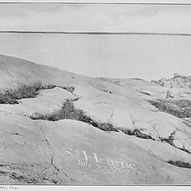
The editor of Samuel Hearne's book travels over the Northern Canadian wilderness 123 years later after Hearne and finds the population had changed from Chipewyans to Eskimos who were dependent entirely on the caribou for food and clothing.
Being possessed of much more than the average amount of ability and enthusiasm, he was chosen by Moses Norton, the energetic Governor of Fort Prince of Wales, to go out with the Indians into the vast, and as far as that was then known, limitless, territory west of Hudson Bay, in order to find and prospect the place where the native copper had been found which the Indians often brought with them to the fort.
During the year preceding his departure on his first expedition, he had had an excellent opportunity to perfect himself in a knowledge of astronomical and geodetic work, for in the summer of 1768 the annual ship had brought William Wales, F.R.S., and Joseph Dymond from London, commissioned by the Royal Society to remain at Fort Prince of Wales throughout the ensuing year in order to observe the transit of Venus over the sun on the 3rd of June 1769.[2] They remained at the fort until the ship left again for London in August of the following year (1769). Mr. Wales was one of the foremost astronomers, mathematicians, and litterateurs of his age. Shortly after his return to England he was appointed to accompany Captain Cook on his voyage around the world in the Resolution in 1772-74, and again on his last voyage in 1776-79. His presence for more than a year among the little band of white men assembled at this remote fur-trading post on Hudson Bay must have had a helpful influence in preparing Hearne for his great explorations overland to the Arctic Ocean. This book is an account of three journeys which he undertook in rapid succession into the country west of Hudson Bay and north-west of Fort Prince of Wales in search of the fabled bed of copper ore, from which pure copper could be loaded directly into ships at trifling expense. In the first and second journeys he was obliged to turn back before reaching his destination, but in the third journey all difficulties were finally overcome, and he was taken to and shown the "mine" of copper.
It has been my good fortune to travel over parts of the same country through which Hearne had journeyed one hundred and twenty-three years before me, and into which no white man had ventured during the intervening time. The conditions which I found were just such as he describes, except that the inhabitants had changed. The Chipewyan Indians, whom he found occupying advantageous positions everywhere as far as the north end of Dubawnt Lake, had disappeared, and in their places the country had been occupied by scattered bands and families of Eskimos, who had almost forgotten the ocean shores of the north, from which they had come. They were depending entirely, for food and clothing, on the caribou, which they killed on the banks of the inland streams and lakes. Traces of old Indian encampments were seen in a few of the scattered groves that are growing along the banks of Dubawnt and Kazan Rivers, but these camps had evidently not been occupied for many years.[3]
Ancient History
Vindija, 42000, Varaždin, Croatia
28500
B.C.E.
Neanderthal diet at Vindija and Neanderthal predation: The evidence from stable isotopes
The isotope evidence overwhelmingly points to the Neanderthals behaving as top-level carnivores, obtaining almost all of their dietary protein from animal sources
Archeological analysis of faunal remains and of lithic and bone tools has suggested that hunting of medium to large mammals was a major element of Neanderthal subsistence. Plant foods are almost invisible in the archeological record, and it is impossible to estimate accurately their dietary importance. However, stable isotope (13C and 15N) analysis of mammal bone collagen provides a direct measure of diet and has been applied to two Neanderthals and various faunal species from Vindija Cave, Croatia. The isotope evidence overwhelmingly points to the Neanderthals behaving as top-level carnivores, obtaining almost all of their dietary protein from animal sources. Earlier Neanderthals in France and Belgium have yielded similar results, and a pattern of European Neander- thal adaptation as carnivores is emerging. These data reinforce current taphonomic assessments of associated faunal elements and make it unlikely that the Neanderthals were acquiring animal protein principally through scavenging. Instead, these findings portray them as effective predators.
Stable Isotope Analyses.
Mammal bone collagen δ13C and δ15N values reflect the δ13C and δ15N values of dietary protein (14). They furnish a long-term record of diet, giving the average δ13C and δ15N values of all of the protein consumed over the last years of the measured individual's life. δ13C values can be used to discriminate between terrestrial and marine dietary protein in humans and other mammals (15, 16). In addition, because of the canopy effect, species that live in forest environments can have δ13C values that are more negative than species that live in open environments (17). δ15N values are, on average, 2–4‰ higher than the average δ15N value of the protein consumed (18). Therefore, δ15N values can be used to determine the trophic level of the protein consumed. By measuring the δ13C and δ15N values of various fauna in a paleo-ecosystem, it is possible to reconstruct the trophic level relationships within that ecosystem. Therefore, by comparing the δ13C and δ15N values of omnivores such as hominids with the values of herbivores and carnivores from the same ecosystem, it is possible to determine whether those omnivores were obtaining dietary protein from plant or animal sources.
Cheddar Reservoir, Cheddar BS26, UK
12000
B.C.E.
FOCUS: Gough’s Cave and Sun Hole Cave Human Stable Isotope Values Indicate a High Animal Protein Diet in the British Upper Palaeolithic
We were testing the hypothesis that these humans had a mainly hunting economy, and therefore a diet high in animal protein. We found this to be the case, and by comparing the human δ15N values with those of contemporary fauna, we conclude that the protein sources in human diets at these sites came mainly from herbivores such as Bos sp. and Cervus elaphus
We undertook stable isotope analysis of Upper Palaeolithic humans and fauna from the sites of Gough's Cave and Sun Hole Cave, Somerset, U.K., for palaeodietary reconstruction. We were testing the hypothesis that these humans had a mainly hunting economy, and therefore a diet high in animal protein. We found this to be the case, and by comparing the human δ15N values with those of contemporary fauna, we conclude that the protein sources in human diets at these sites came mainly from herbivores such as Bos sp. and Cervus elaphus. There are a large number ofEquus sp. faunal remains from this site, but this species was not a significant food resource in the diets of these Upper Palaeolithic humans.
If the humans hunted and consumed mainly horse, then their 15N values should be c. 3–5‰ (Equus 15N value of 0·7‰+enrichment of 2–4‰). Instead, their 15N values make more sense if they lived mostly off Bos and Cervus elaphus (Bos and Cervus values of c. 3‰+enrichment of 2–4‰=the observed values c. 6–7‰). It is also possible that other species, including Rangifer tarandus, were consumed by these individuals. Rangifer tarandus has 15N values similar to Cervus elaphus (Richards, 1998), and has more positive 13C values, which may explain the observed slight enrichment in the human 13C values. A number of artefacts made from Rangifer tarandus have been found at Gough’s, but there is no other evidence that this species was being exploited for food


