


Recent History
January 1, 1854
J.H. Salisbury
Salisbury Steak: Civil War Health Food: After 30 years of research Dr. Salisbury finally published his ideas, setting off one of the earliest American fad diets

Salisbury describes how he discovered the all meat diet: "In 1854 the idea came to me, in one of my solitary hours, to try the effects of living exclusively upon one food at a time."
The first step is to wash out the sour stomach and bowels , and to change the food. The food selected should be such as is least liable to ferment with alcohol and acid yeasts. This is muscle pulp of beef, prepared as heretofore described, when it affords the maximum of nourishment with the minimum of effort to the digestive organs. Nothing else but this food, except an occasional change to broiled mutton.
In the preface, Salisbury described the research that led him to his conclusion:
"In 1854 the idea came to me, in one of my solitary hours, to try the effects of living exclusively upon one food at a time. This experiment I began upon myself alone at first…. I opened this line of experiments with baked beans. I had not lived upon this food over three days before light began to break. I became very flatulent and constipated, head dizzy, ears ringing, limbs prickly, and was wholly unfitted for mental work. The microscopic examination of passages showed that the bean food did not digest."
Did the intrepid scientist stop there? Of course not! In 1858 he enlisted six other schlemiels to come live with him and eat nothing but baked beans. He did not mention whether he had a wife who had to put up with seven flatulent, dizzy mopes in her home; my guess is no. Later he and four other guys subsisted solely on oatmeal porridge for 30 days. Other single-food experiments followed, leading him to the conclusion that lean beef, minced to break down any connective tissue and fully cooked, was the best and most easily digested food. By the time the Civil War started, in 1861, he was ready to test his theories on suffering soldiers.
August 1, 1854
The White Indian Boy - The Story of Uncle Nick among the Shoshones
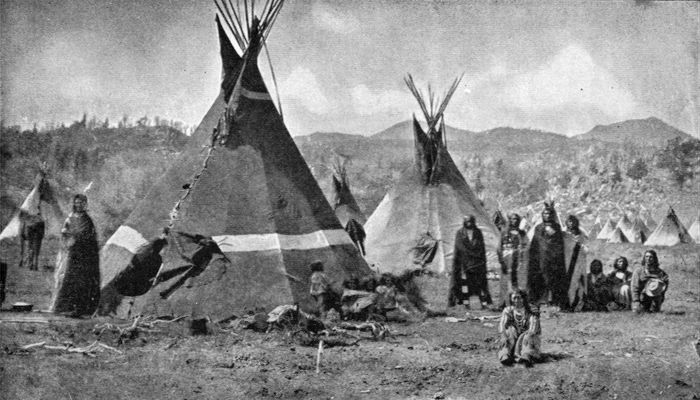
A white pioneer in Utah learns Native American language and then at 12 years old runs away to eat meat with the Indians. He is adopted as a chieftain's brother and then lives the life of hunting and fishing. His fascinating accounts points out importance of fatty meat over lean while describing a lush world just 200 years ago.
Quotes relating to meat, fat, hunting.
I was born in Illinois in 1842. I crossed the plains by ox team and came to Utah in 1850. My parents settled in Grantsville, a pioneer village just south of the Great Salt Lake. To protect themselves from the Indians, the settlers grouped their houses close together and built a high wall all around them. Some of the men would stand guard while others worked in the fields. The cattle had to be herded very closely during the day, and corralled at night with a strong guard to keep them from being stolen. But even with all our watchfulness we lost a good many of them. The Indians would steal in and drive our horses and cows away and kill them. Some times they killed the people, too.
The savages that gave us the most trouble were called Gosiutes. They lived in the deserts of Utah and Nevada. Many of them had been banished into the desert from other tribes because of crimes they had committed. The Gosiutes were a mixed breed of good and bad Indians.
They were always poorly clad. In the summer they went almost naked; but in winter they dressed themselves in robes made by twisting and tying rabbit skins together. These robes were generally all they had to wear during the day and all they had to sleep in at night.
They often went hungry, too. The desert had but little food to give them. They found some edible roots, the sego, and tintic, which is a kind of Indian potato, like the artichoke; they gathered sunflower and balzamoriza seeds, and a few berries. The pitch pine tree gave them pine nuts; and for meat they killed rabbits, prairie dogs, mice, lizards, and even snakes. Once in a great while they got a deer or an antelope. The poor savages had a cold and hungry time of it; we could hardly blame them for stealing our cattle and horses to eat. Yes, they ate horses, too. That was the reason they had no ponies, as did the Bannocks and Shoshones and other tribes.
A few tame Indians hung around the settlements begging their living. The people had a saying, “It is cheaper to feed them than to fight them,” so they gave them what they could; but the leaders thought it would be better to put them to work to earn their living; so some of the whites hired the Indians. My father made a bargain with old Tosenamp (White-foot) to help him. The Indian had a squaw and one papoose, a boy about my age. They called him Pantsuk.
At that time my father owned a small herd of sheep, and he wanted to move out on his farm, two miles from the settlement, so he could take better care of them. Old Tosenamp thought it would be safe to do so, as most of the Indians there were becoming friendly, and the wild Indians were so far away that it was thought they would not bother us; so we moved out on the farm.
Father put the Indian boy and me to herding the sheep. I had no other boy to play with. Pantsuk and I became greatly attached to each other. I soon learned to talk his language, and Pantsuk and I had great times together for about two years. We trapped chipmunks and birds, shot rabbits with our bows and arrows, and had other kinds of papoose sport.
Some months after this the poor little fellow took sick. We did all we could for him, but he kept getting worse until he died. It was hard for me to part with my dear little Indian friend. I loved him as much as if he had been my own brother.
After Pantsuk died, I had to herd the sheep by myself. The summer wore along very lonely for me, until about the first of August, when a band of Shoshone Indians came and camped near where I was watching my sheep. Some of them could talk the Gosiute language, which I had learned from my little Indian brother. The Indians seemed to take quite a fancy to me, and they would be with me every chance they could get. They said they liked to hear me talk their language, for they had never heard a white boy talk it as well as I could.
One day an Indian rode up to the place where I was herding. He had with him a little pinto pony. I thought it was the prettiest animal I ever saw. The Indian could talk Gosiute very well. He asked me if I did not want [10]to ride the pony. I told him that I had never ridden a horse. He said that the pony was very gentle, and helped me to mount it. Then he led it around for a while. The next day he came again with the pony and let me ride it. Several other Indians were with him this time. They took turns leading the pony about while I rode it. It was great sport for me. I soon got so I could ride it without their leading it. They kept coming and giving me this fun for several days.
One day, after I had ridden till I was tired, I brought the pony back to the Indian who had first come, and he asked me if I did not want to keep it.
“I would rather have that pony,” I replied, “than anything else I ever saw.”
“You may have it,” he said, “if you will go away with us.”
I told him I was afraid to go. He said he would take good care of me and would give me bows and arrows and all the buckskin clothes I needed. I asked him what they had to eat. He said they had all kinds of meat, and berries, and fish, sage chickens, ducks, geese, and rabbits. This sounded good to me. It surely beat living on “lumpy dick”(Made by cooking moistened flour in milk.) and greens, our usual pioneer fare.
“Our papooses do not have to work,” he went on, “they have heap fun all the time, catching fish and hunting and riding ponies.”
That looked better to me than herding a bunch of sheep alone in the sagebrush. I told him I would think it over. That night I talked with old Tosenamp. The Indians had tried to get him to help them induce me to go with them. He refused; but he did tell me that they would not hurt me and would treat me all right. The next day I told them I would go.
My parents knew nothing about it. They would never have consented to my going. And it did look like a foolish, risky thing to do; but I was lonely and tired and hungry for excitement, and I yielded to the temptation. In five days the Indians were to start north to join the rest of their tribe. This Indian was to hide for two days after the rest had gone and then meet me at a bunch of willows about a mile above my father’s house after dark with the little pinto pony. The plan was carried out, as you will see. I went with them, and for two years I did not see a white man. This was in August, 1854. I was just about twelve years old at the time.
The night came at last when we were to leave. Just after dark I slipped away from the house and started for the bunch of willows where I was to meet the Indian. When I got there, I found two Indians waiting for me instead of one. The sight of two of them almost made me weaken and turn back; but I saw with them my little pinto pony and it gave me new courage. They had an old Indian saddle on the pony with very rough rawhide thongs for stirrup straps. At a signal from them, I jumped on my horse and away we went. Our trail led towards the north along the western shore of the Great Salt Lake.
The Indians wanted to ride fast. It was all right at first; but after a while I got very tired. My legs began to hurt me, and I wanted to stop, but they urged me along till the peep of day, when we stopped by some very salt springs. I was so stiff and sore that I could not get off my horse, so one of them lifted me off and stood me on the ground, but I could hardly stand up. The rawhide [14]straps had rubbed the skin off my legs till they were raw. The Indians told me that if I would take off my trousers and jump into the salt springs it would make my legs better; but I found that I could not get them off alone; they were stuck to my legs. The Indians helped me, and after some very severe pain we succeeded in getting them off. A good deal of skin came with them.
I ate some duck and dried meat and felt better.
We traveled all day over a country that was more like the bottom of an old lake than anything else. We camped that night by another spring. The Indians lifted me from my horse, put me down on a robe and started a fire. Then they caught some fish and broiled them again on the coals. It was a fine supper we had that night.
The next morning I felt pretty well used up; but when I had eaten some fish and a big piece of dried elk meat for breakfast, I felt more like traveling. Then we started again.
The old squaw put her hand on my head and began to say something pitiful to me, and I began to cry. She cried, too, and taking me by the arm, led me into the tepee, and pointed to a nice bed the chief’s wife had made for me. I lay down on the bed and sobbed myself to sleep. When I awoke, this new mother of mine brought [17]me some soup and some fresh deer meat to eat. I tell you it tasted good.
The next morning my new mother thought she would give me a good breakfast. They had brought some flour from the settlements, and she tried to make me some bread, such as I had at home. They had no soda, nothing but flour and water, so the bread turned out to be pretty soggy. I think she didn’t like it very well when she found I didn’t eat it, but I simply couldn’t choke it down. I did make a good meal, however, of the fried sage chicken and the fresh service berries that she brought with the bread.
Nothing else of importance happened until we reached Big Hole Basin. There I saw the first buffalo I had seen since crossing the plains. Seven head of them appeared one morning on a hill about a mile away. Ten Indians started after them. One, having a wide, blade-like spear-head attached to a long shaft, would ride up to a buffalo and cut the hamstrings of both legs, then the others would rush up and kill the wounded animal.
About fifteen squaws followed the hunters to skin the buffaloes and get the meat. Mother and I went with them. The squaws would rip the animals down the back from head to tail, then rip them down the belly and take off the top half of the hide and cut away all the meat on that side from the bones. They would tie ropes to the feet of the carcass and turn it over with their ponies, to strip off the skin and flesh from the other side in the same way.
The meat was then carried to camp to be[23] sliced in thin strips and hung up to dry. When it was about half dry, the squaws would take a piece at a time and pound it between two stones till it was very tender. It was then hung up again to dry thoroughly. The dried meat was put into a sack and kept for use in the winter and during the general gatherings of the tribe. The older it got the better it was. This is the way the Indians cured all of their buffalo meat. Washakie had about five hundred pounds of such meat for his own family when we reached Deer Lodge Valley, now in Montana, the place of our great encampment.
Washakie’s wife was there and she told me to dash ahead and tell the chief to hurry back. When he came, he ordered the band to stop and pitch camp. We had to stay there a week to let mother get well enough to travel again. There were a great many antelope in the valley and plenty of fish in the stream by the camp. When mother would go to sleep, I would go fishing. When she awoke Hanabi would call, “Yagaki come,” and I would get back in double-quick time.
One day while we were camped here waiting for mother to get better, I went out with Washakie and the other Indians to chase antelope. About fifty of us circled around [31]a bunch and took turns chasing them. The poor little animals were gradually worn out by this running and finally they would drop down one after another, hiding their heads under the bushes, while the Indians shot them to death with their bows and arrows. I killed two myself. When I got home and told mother about it, she bragged about me so much that I thought I was a “heap big Injun.”
Mother’s arm soon got well enough for her to travel, for the medicine man had fixed it up very well, so we took up our journey again. There were a great many buffaloes and antelope too, where we next pitched camp. We stayed there for about three weeks. During the times that she could not watch me, mother had Washakie take me out on his hunting trips. That just suited me. It was lots of fun to watch the Indian with the big spear dash up and cut the hamstrings of the great animals. When they had been crippled in this way, we would rush up and shoot arrows into their necks until they dropped dead. The first day we killed six, two large bulls and four cows.
I told Washakie that my bow was too small to kill buffaloes with. He laughed and said I should have a bigger one. When we got back to camp, he told some Indians what I had said and one very old Indian, whose name was Morogonai, gave me a very fine bow and another Indian gave me eight good arrows. I felt very proud then; I told mother that the next time I went out I would kill a whole herd of buffaloes. She said she knew I would, but she did not know what they could do with all the meat.
Washakie said that I was just like the rest of the white men. They would kill buffaloes as long as there were any in sight and leave their carcasses over the prairies for the wolves. He said that was not the way of the Indians. They killed only what they needed and saved all the meat and hides.
“The Great Spirit,” he said, “would not like it if we slaughtered the game as the whites do. It would bring bad luck, and the Indians would go hungry if they killed the deer and buffaloes when they were not needed for food and clothing.”
Two or three days after this we went out again and killed two more buffaloes. When we got back mother asked how many I had killed. I told her that I shot twice at them and I believed I had hit one. She said that I would be the best hunter in the tribe afterwhile, and some day, she said, I would be a big chief.
We now started for the elk country. When we got there, the Indians killed about one hundred elk and a few bear; but by that time it was getting so cold that we set out for our winter quarters. After traveling a few days we reached a large river, called by the Indians Piatapa, by the whites the Jefferson River; it is now in Montana. Here we pitched camp to stay during the “snowy moons.”
Most of the buffaloes by this time had left for their winter range; but once in a while we saw a few as they passed our camp. The Indians did not bother them, however, because we had plenty of dried meat, and for fresh meat there were many white-tail deer that we could snare by hanging loops of rawhide over their trails through the willows. There were also a great many grouse and sage hens about in the brush. I have killed as many as six or seven of these a day with my bow and arrows.
My old mother also told me many things that happened when she was a little girl. She said that her father was a Shoshone, and her mother a Bannock. She said she was sixty-two “snows” (years) old when I came. She had had four children, three boys and a girl. When the girl was seven years old, she was dragged to death by a horse. Her two sons were killed by the snowslide, so Washakie and I were the only ones she had left.
For three or four more days we all traveled south again. The game was plentiful here, elk, deer, antelope, and buffalo, so we camped for several days and stocked up with fresh meat.
It was a great game country, too. We could see buffaloes at any time and in any direction that we looked. There were herds of antelope over the flats. I had great fun running them. Washakie said that I was riding my horse too much, that he was getting thin. He told me to turn the pony out, and he would give me another horse. I was very glad to let my little pinto have a rest and get fat again.
The next morning I went with mother and another squaw to get the elk. Washakie asked me if I thought I could find it. I told him that I knew I could, so we started and I led them right to it. As we were skinning the elk, mother said that I had spoiled the skin by shooting it so full of holes. But the meat was fat and tender.
The Indians killed a great many elk, deer, and moose while in this valley, and the squaws had all they could do tanning the skins and drying the meat. I asked Washakie if he was planning to winter in this valley.
“Oh, no,” he replied. “The snow falls too deep here. After the buffalo get fat, and we kill all we want for our winter use, we will go a long way west out of the buffalo country, but where there are plenty of deer and antelope and fish. Some of the fish,” he said, “are as long as you are.”
Berries were getting ripe, so we papooses would go with our mothers up in the hills and gather them to dry. It was great fun.
By this time we had gathered most of the berries that grew along the foothills; the squaws were afraid to go farther into the mountains after the bear excitement; so then they stopped berry picking and went to work in earnest tanning buckskin and drying meat for winter use. The Indians quit hunting for elk and deer; for they already had all of the skins that the women could get ready for the trading trip they had planned.
It was the custom of the tribe to make a journey almost every fall to Salt Lake City, and other White settlements, and swap their buckskin and buffalo robes for red blankets, beads, ammunition, and other things they needed. Mother and Hanabi worked all day and away into the night to get their skins ready in time, and I helped them all I could. I got an old horse and dragged down enough wood to last while we stayed there. I carried all the water for them, and no kid dared to call me a squaw either.
Finally the time came for us to begin killing buffaloes for our winter’s supply of meat. We did not have to hunt them, however, for we could see them at any time in almost any direction. Many a time I went out with Washakie to watch the hunters kill the buffaloes. Washakie wanted only five and we soon got them; but it took mother and Hanabi a good many days to tan their hides and get the meat ready for winter.
Mother was afraid that I would get sick from not having bread and milk to eat, for I told her that was what I always had for supper when I was home. She thought that eating meat all the time would not agree with me and would make me unhealthy. Often she would have fried fish and fried chickens or ducks for supper. When I first went to live with her, she made a small sack and tied it to my saddle. She would keep this sack full of the best dried fish when we were traveling, so that I could eat if I got hungry; for she said that I could not go all day without eating anything, as the Indians often did. Every morning she would empty my lunch sack and refill it with fresh food. She soon found out what I liked best, and she always had it for me; so you see I had plenty to eat, even if I was with Indians; and that is more than a great many white children had at that time.
I was very healthy while I was with the Indians.
Spring came at last. We moved down the river about fifteen miles where we could get better grass for our horses. Here were plenty of white-tailed deer and antelope, some elk, and a few mountain sheep. Ducks and geese also were plentiful.
We stayed here until about the middle of May. The big fish they had told me about began to come up the river. And they were really big ones; two of them made all the load I could carry. They must have weighed thirty or thirty-five pounds each. Mother and Hanabi dried about two hundred pounds of these fish. I afterwards learned that they were salmon. The first that came up were fat and very good, but they kept coming thicker and thicker until they were so thin that they were not fit to eat.
The Indians killed a great many black-tailed deer and antelope and dried the meat. I think Washakie and I killed seventeen while we stayed here.
While we were staying here, one of the War Chief’s boys was accidentally shot and killed. Oh, what crying we had to do! Every one in camp who could raise a yelp had to cry for about five days. I had to mingle my gentle voice with the rest of the mourners. They killed three horses and buried them and his bow and arrows with him. The horses were for him to ride to the Happy Hunting Grounds. When they got ready to bury him, every one in camp had to go up to him and put a hand on his head and say he was sorry to have him leave us. When it came my turn, I went into our tepee and would not come out. Mother came after me. I told her I would not go, that I was not sorry to see him go, for he was no good anyhow.
“Don’t say that so they will hear it,” she said. Then she went back and made excuses for me.
They took him up to a high cliff and put him in a crevice with his bedding, a frying pan, an ax, his bow and arrows, and some dried buffalo meat. After this they covered him with rocks. When they got back to camp, they let out the most pitiful howls I ever heard. I joined them too, just as loud as I could scream, as if I was the most broken-hearted one in the camp, but it seemed so foolish to keep up this howling, as they did for five days. I got so hoarse I could hardly talk.
Here we did nothing but fish. The buffalo were not fat enough to kill, and besides, we had all of the dried elk and deer meat we wanted. It was a beautiful place to camp, and we had the finest of grass for our horses.
I broke a few more colts, two for mother and four for Washakie. Our horses by this time were getting fat and looking fine, but my little pinto was the prettiest one of all. Hardly a day passed but some Indian would try to trade me out of him. One Indian offered me two good horses if I would swap, but I thought too much of the pony to part with him even for a whole band of horses. He was just as pretty as a horse could be.
Our next journey took us a long way northeast. Washakie said that we were going where the buffaloes were too many to count. After about a week of travel, we reached the north fork of the Madison River, about on a line with the Yellowstone Park; and oh, the kwaditsi (antelope) and padahia (elk) and kotea (buffalo) there were! Every way we looked we could see herds of them.
While we were at this camp another boy was killed by a horse. He was dragged almost to pieces through the rocks and brush.
When I heard of it, I told mother to get her voice ready for another big howling.
“Aren’t you ashamed to talk that way?” asked Hanabi.
“I am afraid you are a hard-hearted boy,” said mother.
After the poor fellow was buried, we went up the Madison River about ninety miles and camped there for a month. The buffalo were now in better condition, so we killed a good many, drying their meat and making their hides into robes. Then we went on south and came to the beautiful lake where we had had such a good time the summer before. It is now called Henry’s Lake, and is the head of the north fork of the Snake River. We did nothing here but fish, for we had enough dried meat to last till we reached the usual hunting grounds.
“We did not know,” said the old arrow maker, “what whooping cough, measles, and smallpox were until the whites brought these diseases among us. A train of emigrants once camped near us; some of their white papooses had the whooping cough; our papooses caught it from them. Our medicine man tried to cure it as he would a bad cold, and more than half of our papooses died from the disease and the treatment. Hundreds of our people have been killed with the smallpox brought to us by the white man.
“The white men keep crowding the Indians that are east of here out west, and they keep crowding us farther west. Very soon they will have us away out in Nevada where there is nothing but lizards and snakes and horned toads to live on. If they crowd us farther than that, we shall have to jump off into the Great Water.”
January 1, 1856
Mr. Harvey's Remarks

Dr. Harvey knew that a diet of purely animal foods helped cure diabetes and would likely help obesity as well.
“My patient, Mr. Banting having published for the benefit of his fellow sufferers, some account of the diet which I recommended him to adopt with a view to relieve himself of a distressing degree of hypertrophy of the adipose tissue. I have been frequently urged by him to explain the principles upon which I was enable to treat with success the inconvenient and in some instances distressing condition of the system.
“The simple history of my finding occasion to investigate the subject is as follows: when in Paris in the year 1856, I took the opportunity of attending a discussion on the views of M. Bernard who was at that time propounding his now generally admitted theory of the liver functions. After he had discovered by chemical processes and physiological experiments, which it is unnecessary for me to recapitulate here, that the liver not only secreted bile, but also a peculiar amyloid or starch-like product which he called glucose, and which in its chemical and physical properties appeared to be nearly allied to saccharine matter, he further found that this glucose could be directly produced in the liver by the ingestion of sugar and its ally starch and that in diabetes it existed there in considerable excess.
It had long been well known that a purely animal diet greatly assisted in checking die secretion of diabetic urine; and it seemed to follow, as a matter of course, that the total abstinence from saccharine and farinaceous matter must drain the liver of this excessive amount of glucose, aid thus arrest in a similar proportion the diabetic tendency. Reflecting on this chain of argument and knowing too that a saccharine and farinaceous diet is used to fatten certain animals and that in diabetes, the whole of the fat in the body rapidly disappears, it occurred to me that excessive obesity might be allied to diabetes as to its cause, although widely diverse in its development: and that if a purely animal diet was useful in the latter disease, a combination of animal food with such vegetable matter as contained neither sugar nor starch, might serve to arrest the undue formation of fat.
I soon afterwards had an opportunity of testing this idea. A dispensary patient who consulted me for deafness, and who was enourmously corpulent, I found to have no distinguishable disease of the ear. I therefore suspected that his deafness arose from the great development of adipose matter in the throat, pressing upon and stopping up the eustachian tubes. I subjected him to a strict non-farinaceous and non-saccharine diet, and treated him with the volatile alkali alluded to in his Pamphlet, and occasional aperients and in about seven months he was reduced to almost normal proportions, his hearing restored and his general health immensely improved. The case seemed to give substance and reality to my conjectures, which further experience has confirmed.
“When we consider that fat is what is termed hydrocarbon, and deposits itself so insidiously and yet so gradually amongst the tissues of the body it is at once manifest that we require such substances as contain a superfluity of oxygen and nitrogen to arrest its formation and to vitalize the system. That is the principle upon which the diet suggested in his pamphlet works, and explains on the one hand the necessity of abstaining from all vegetable roots which hold a large quantity of saccharine matter, and on the other beneficial effects derivable from those vegetables, the fruits of which are on the exterior of the earth, as they lose, probably by means of the sun’s action a large proportion of their sugar.
“With regard to the tables of Dr. Hutchinson, referred to in his Pamphlet, it is no doubt difficult, as he says, to determine what is a man’s proper weight, which must be influenced by various cases. Those tables, however, were formed by him on the principle of considering the amount of air which the lungs in their healthy state can receive and apply to the oxidation of the blood. I gave them to Mr. Banting as an indication only of what the approximate weight of persons in proportion to their stature should be, and with the view of proving to them the importance of keeping down the tendency to grow fat; for, as that tendency increases, the capacity of the lungs, and consequently the vitality and power of the whole system must diminish. In conclusion, I would suggest the propriety of advising a dietary such as this in diseases that are in any way influenced by a disordered condition of the hepatic functions as they cannot fail to yield in some degree to this simple method of treatment if fairly and properly carried out; it remains for me to watch its progress in a more limited sphere.
WILLIAM HARVEY, F.R.C.S.
Surgeon to the Royal Dispensary for Diseases of the Ear 2, Soho Square
April, 1864
January 1, 1856
The Philosophy of the Stomach; on, an Exclusively Animal Diet (Without any vegetable or condiment whatever) is the Most Wholesome and Fit for Man. Illustrated by Experiments upon Himself.

German writer, Bernard Moncriff, discovers an exclusively animal based diet and conducts several dietary experiments that lead him to conclude this diet is superior to a mixed or vegetarian diet.
https://www.reddit.com/r/zerocarb/comments/hnuott/the_philosophy_of_the_stomach_or_an_exclusively/
I have recently come across a vintage book that caught my attention. It was published by a German writer, Bernard Moncriff, in 1856 in London. The author supposedly experienced remarkable health benefits on an exclusively animal diet and even conducted a few dietary experiments. He also attempted to bring attention of the contemporary scientific community and general public to this diet as being superior to the mixed and vegetarian ones. In his opinion, humans could and should live exclusively on an animal diet.
Below are some of the highlights I made while reading it that you may find interesting:
"I cannot help looking upon much of what has been written about the stomach and digestion with a similar smile to that of modern astronomers when perusing astrological works".
"I like the sweetness of milk better than that of sugar, and the acidity of meat better than that of fruits".
"Among all beverages I like milk best, hence I take no other fluid but milk. Of all eatables I like meat best, I eat, therefore, of it in preference to anything else".
"Wholesomeness, was, and is my principal motive in adhering to an exclusively animal diet".
"I do not eat for the mere sake of gratifying my palate, but to satisfy my appetite, I cease eating when I have had enough. But with your condiments, drugs, and drinks, you cannot say when you have had enough".
"Leave the appetite sole master to determine the hours and frequency of the meals, as well as the quantity of food. I now make most frequently only two meals of meat daily, while I take a glass of milk whenever I please. As a rule, however, I take nothing in the last two hours before going to bed, which greatly contributes to the uninterrupted soundness of sleep".
"The most wholesome diet is that which requires the least quantity of matter to be introduced into the digestive cavity for the support of the system".
"The quantity of animal food required for the full support of the system is so much smaller, as to constitute a very considerable diminution of blood flowing into the heart and the lungs, - I hope to see it generally admitted that the strength of men would be much increased by their adoption of my diet. I myself have experienced a considerable increase of the strength of my body, especially as far as locomotion is concerned. I run over the same distance in nearly the third part of the time it took me formerly".
"Plain butcher's meat, from a roast joint, is more than six times as nutritive as potatoes, and more than seven times as nutritive than wheaten bread".
"It has also been found, not alone as a matter of general personal experience, but by direct experiment, that animal food is more digestible than vegetable food".
"Men had better abstain altogether from fruits and everything else unfavorable to the teeth or the stomach. Fruits, it would appear, are destined in the economy of nature for birds, which are destitute of teeth, and the bill of which is constructed exactly of that substance Professor Valentin would have our teeth made of. All vegetables are, in my opinion, fit only for animals, which in their turn are to serve as food for man".
"There will be a time when the entire human race will live upon an exclusively animal diet".
"An exclusively animal diet, on the contrary, is capable of being adopted by the entire human race, and in all corners of the globe, under the burning sun of Africa as well as the Arctic regions".
"Children brought up with an exclusively animal diet, and made conscious of the great advantages of such diet, would stand proof against the temptations of pot-houses as well as of divans".
"The matter introduced into my stomach daily is not much more than the third part of that previous to my change of diet, my appetite is much better satisfied, and my body stronger than formerly".
"Meat is the food which does the least, if any injury to the teeth, either mechanically or chemically. Not to speak of vegetable fibers and grains by which the teeth of the vegetarian animals are being worn away, even mealy and pulpy vegetables, as bread and potatoes, are acting in the same direction, though to a less degree, by their attrition".
"An exclusively animal diet is unique, simple, and harmonious in its character, although the articles may be derived from animals of various orders. Because there is less chemical difference between the flesh of an elephant and that of a chicken, or a salmon, then there often exists between the potatoes of one and the same field".
“My face, from being rather shallow, became clear and youthful, my eyes serene and mirrors of happiness. It gave me unknown, or rather, forgotten pleasure, to jump over ditch and hedge, and to make those exercises which required muscular strength”.
"I have not felt the slightest disagreeableness arising from the bowels, either in the shape of eructations from the stomach, or obstruction, or dysentery, or of any denomination whatever. Indeed, it if was not from memory, and from books, I should not know that I had such things as a stomach and intestines. The evacuation of the bowels takes place with ease and regularity once every other day. The quantity of both urine and feces is, as might be expected, much less than formerly. My nasal secretion has also very much diminished; and my throat and mouth being perfectly clean, I have no occasion to spit".
"My nasal secretion has, together with the other secretions, greatly diminished, especially since I replaced a quantity of milk by meat".
"It is extremely probable that my bladder, liver, stomach, and the rest of the intestinal canal have gradually decreased in size, which is the case with every animal changing a vegetable for a carnivorous diet. So, for instance the tadpole, which lives upon vegetables, possesses an extremely long digestive tube; but in its perfect state, and when its appetite has become altogether carnivorous, the intestines become very much shortened, losing four-fifths of the length".
"The mouth of man has not been made to kill the prey, but to eat its flesh, for which purpose the teeth, tongue, and the whole gustatory apparatus, are admirably adapted".
"The mere form of the human teeth matters very little in a dietetical point of view. Knife and fork will outmatch the most formidable cutting teeth of any lion or any antediluvian monster".
"The stomach, however, does not tax the articles by their marketable price, but by their weight, digestibility, and other chemical and mechanical properties. There is no such thing as neutrality in our system. Everything that enters it must do something - either good or bad".
"For six days consecutively I took, instead of meat, two pounds and a quarter of baked potatoes daily, without salt or any other ingredient. My appetite was not at all as well satisfied as with the three-quarters of a pound of meat, and I felt also a greater thirst to quench, for which I was obliged to take more than two pounds weight of water, besides the usual quantity of milk".
"I made a similar experiment with home-made wheaten bread, free from salt and other ingredients, for eight days continually. I took two pounds and a half of bread instead of meat, without my appetite being satisfied, while the thirst was still greater than was the case with respect to the potatoes so as to oblige me taking, besides the milk, more than two pounds and a half of water".
"Of omnivorous animals it has also been observed, that they preferred animal to vegetable food".
"The teeth of carnivorous animals in a state of nature have not been seen to be decayed, what is always the case with those of vegetable eaters. The dog, which is often subject to toothache, has probably to thank this to the corruption his natural diet is undergoing in the domesticated state".
"The domesticated cat, which lives on a mixed diet, has its intestines two-fifths longer than the wild cat".
"While colds and pulmonary diseases are common among cattle, they are rarely, if at all to be met with among carnivorous animals".
"I may assert without fear of contradiction, that all dead animal matter introduced somehow or other into the digestive cavity of every animal, without an exception, is being converted into living matter of the same animal".
"Some plants live upon some other plants, but no plant can convert every other vegetable matter into its own living matter, and the mutual convertibility is entirely wanting. I presume, therefore, that the unlimited mutual convertibility is a single character, sufficient to mark the line between the two kingdoms; it being present in the animal, and absent from the vegetable kingdom. It is this chemical similarity and mutual convertibility which gives to an exclusively animal diet the character of singleness, simplicity, and harmony".
"The great superiority of strength of the carnivorous over the vegetarian animals is due to this double ration, namely, the greater development of the lungs, and the smaller size of the abdominal contents".
"The first repulsive effects of most condiments, liquors, tea, coffee, and etc, are quite forgotten by most people, these articles being, unfortunately, introduced into the diet of children of all classes. Yet it is frequently to be observed of children, not yet quite habituated differently, that they reject, when left to their own choice, everything salt, sour, bitter, and hot".
"The popular notion is still in vogue, according to which every eatable and drinkable thing, either in a state of nature or manufactured, is to be presumed as wholesome and fit for man, until the contrary be proven. This notion is based upon another popular notion, that everything has been made to suit man. The truth, however, is, that man, though entitled to eat, or use otherwise, everything he can take hold of, meets with a comparatively very small number of vegetables that suit him well".
"I have been very scrupulous to observe the rule, not to take of anything but as much as my stomach can easily digest, and to use those things only which agree with me".
"A sound appetite ought not to be restrained, such appetite being the indication of the wants of the system, which must be satisfied to the full".
"A perfectly healthy man could have only one appetite, and this a sound one, while the false appetite could only exist with imperfect health".
"Man should have been furnished with a sense of taste so perverted as to make him like those things best which are the least wholesome for him".
"Brutes spurn whatever is hurtful to them, and distinguish poisonous plants from salutary by natural instinct; and that they eat only of noxious plants when pressed by extreme hunger".
"Men had better eat to live, than live to eat".
Another Review also helps elucidate Moncriff's writing.
Moncriff sets out an ambitious project of arguing against the traditionally accepted view by the medical doctors that mixed diet or  eating vegetables is more nutritious for us, and instead takes a view that an exclusive animal diet is the true path to follow if we want to be healthy. He argues that consulting doctors about what our diet should be is ridiculous, since “the healthy want no doctors, and if they wish to know how to preserve their health, they must first study themselves, and then learn from others the means by which these have actually succeeded,” and warns the doctors that they too should learn from his principles, which offers “perfect health and true enjoyment of life.” He repeatedly instructs us that it is important not to consume anything that is disagreeable to our stomach, however agreeable it may appear to be to our palate. It is in this spirit that he writes his account of the philosophy of the stomach as “a seed of life strewn in the future.”
He begins his investigation by supposing that we should be able to tell naturally what food is hurtful to us and what is not, just as “brutes can spur whatever is hurtful to them, and distinguish poisonous plants from salutary, by natural instinct… [and] only such as either accidentally or pressed by extreme hunger eat of it.” But our experience tells us that we taste junk food agreeable to our palate, even though we know it is bad for us. Can we really tell what is disagreeable to our stomach simply by something’s being agreeable or disagreeable to our palate?
Having first complained that his paper was rejected by a number of journals for his novel, and consequently incredible, idea of commencement of exclusive animal diet, he explains to us that the present condition of our palate is not conducive to the experiment to finding out that animal diet is in fact the healthiest human diet. This is because our palate, after a long abuse by eating artificially added condiments on cooked food, has been confused as to what tastes essentially good to us. So his first step is to get rid of this confusion from our palate, and only then can we have a sound appetite, as he is convinced that “there could be no unison between a sound, or true appetite, and a false one; that a perfectly healthy man could have only one appetite, and this a sound one, while the false appetite could only exist with imperfect health.” He argues that had we been truly healthy and our palate not corrupted, we would be able to know instinctively, just like those brutes in the wild, what is wholesome and would come to “reject everything unwholesome to [us], not out of a knowledge of its unwholesomeness, but simply because it was repulsive or indifferent to [our] taste.” In order to achieve a immaculate taste, as if in infancy, he spends six months or so “exclusively or mainly upon plain milk, without sugar, salt, or any condiment whatever,” and “I thus made myself, as it were, a baby again, fancying for a moment dietetics as a ‘tabula rasa,’ and myself as having nothing to guide me except my own experience.”
After six months of nothing but milk and almonds, “[m]y face, from being rather shallow, became clear and youthful, my eyes serene and mirrors of happiness,” and “[i]t gave me unknown, or rather, forgotten pleasure, to jump over ditch and hedge, and to make those exercises which required muscular strength.” In this way, he recounts that he had never been happier and felt healthier than before, resulting in him being “always cheerful, indulging frequently in songs.” Indeed, he now tells us that it is such a miserable pittance to have a sumptuous dinner, compared to having a single hour of perfect health and true enjoyment of life.
However, this is only the first phrase of his project. He now spends the next twelve months eating only fresh meat and milk. It has frequently been said in opposition to animal diet that it can be least economical in supporting us. Yet, he fends off this claim by providing us with the information about how much quantity of meat and milk he has consumed, and proves that it is much more economical than mixed diets.
He further reports that since he began his exclusive animal diet, he has “not felt the slightest disagreeableness arising from the bowels, either in the shape of eructations from the stomach, or obstruction, or dysentery, or of any denomination whatever.” Further, he entertains us with the empirical account of his that the “quantity of both urine and feces is, as might be expected, much less than formerly,” and is pleasantly surprised that “no bad odour is to be detected in the latter.”
He also has a rather teleological as well as functional argument that meat does not injure our teeth either mechanically or chemically, as vegetables are known to do with fibres and grains mechanically, and with fruits chemically, for “[a]cid, even when considerably diluted, corrode the enamel, and penetrate in small quantities into the dental sac,” not to mention there is this inconvenience arising from “the cracking of hady substances, as nuts, &c., by which the enamel is often being broken,” which results in the “subsequent destruction of the teeth unavoidable.”
In like manner, he argues that fruits are to be consumed only by birds who are destitute of teeth,” and concludes that “there is not a slightest doubt in my mind that there will be a time when the entire human race will live upon an exclusively animal diet.”
His extensive empirical study of the stomach is resonant of the period in many ways, as his argument is based on a quantitative science as is echoed from his citation from Lavoisier, yet his argument from functions and teleology shows the kind of science done during the period, as Darwin would publish his book on the Origin of Species in the following years. His inclination to empiricism does not, however, reject a rational theoretical science, as he says at one point that “a man without grand theories will never arrive at a great fact.” Yet in the end, his commitment in the science lies in the belief often seen in the progressive thinkers that when the fact is found, “the theories must be relinquished or corrected without hesitation.” In sum, this book offers an alternative view on a rational ground to the currently predominant view that vegetable diet is healthier than and preferable to the exclusive animal diet.
September 13, 1856
J.H. Salisbury
EXPERIMENTS WITH " BAKED BEANS " AS AN EXCLUSIVE DIET, UPON STRONG HEALTHY MEN.

Dr Salisbury hires six men to live upon a diet of only baked beans and coffee, but after 18 days, they "all presented such a forlorn, dilapidated appearance" that the doctor ordered a beef only diet to help them recover so that in just a few days "All felt unusually well, clear headed and happy."
XLIX. EXPERIMENTS WITH " BAKED BEANS " AS AN EXCLUSIVE DIET, UPON STRONG HEALTHY MEN.
In September, 1856, I engaged six strong, healthy men, in the vigor of life, ranging in age from 25 to 40 years, to feed upon a special line of diet solely, with the understanding that I would pay them $30 per month each, if they submitted faithfully to the rigid discipline laid down. At the same time I explained to them the kind of food upon which I should require them to live, the exercise and other regulations marked out. All thought the diet and drinks could be easily endured, in fact, enjoyed, especially as they would have no manual labor to perform. They all entered upon the undertaking with the feeling that they would have a fine time at my expense. The diet consisted first of baked beans and coffee. This to continue for one month or until otherwise ordered by me. Exercise to be a two-mile walk, morning and evening. To retu'e at 9 p. m. and rise at 6 a. m. Drinks between meals, cold water. On the 13th of September, the experiments began. Breakfast at 7 a. m., dinner at 12 noon, and supper at 6 p. m. I shall designate my six boarders by the letters A, B, C, D, E, F. All were strong, robust, free from disease, and having one regular movement of the bowels every day.
A weighed 160 lbs. Age 36 yrs.
B --145 lbs--30 yrs
C--155--40
D--166-- 34
E--172--28
F--148--25
The first day all felt well and enjoyed themselves greatly.
Towards evening began to bloat, but had no special feeling of discomfort. Slept well. Entered upon the second day feeling about as well as on the first, except that all were flatulent and constipated. Yet all had a scanty, hard movement of the bowels before evening. In the after part of the day they were very uncomfortable from the bloating. Took them on a brisk walk of two miles, which was something of a relief.
Symptoms of Progressive Paralysis or Locomotor Ataxy began to show themselves in all six cases on tenth clay. These paralytic and peculiar symptoms increased each day after the tenth. On sixteenth day the disease was so marked, that not one of the six could walk straight without support. All wobbled and dragged their legs, not being able to lift them clear of the floor.
My boarders, on the 19th morning, all presented such a forlorn, dilapidated appearance, that I feared I should lose my reputation as a caterer, and also all my guests, unless I changed my diet list. They had all lost heavily in weight, and were much debilitated.
A weighed 138 lbs. Loss in 18 days 22 lbs.
B 116 " " " 29 "
C " 136 " " " 19 "
D " 143 " " " 23 "
E " 147 " " " 25 "
F " 126 " " " 22 "
"When on the morning of the 19th day, I set before them nice beefsteaks, freed from fat and white tissue, they were all greatly delighted and ate ravenously of them. I gave to each 10 ounces of meat, with a good cup of clear coffee. Beef seasoned with butter, pepper and salt ; no other food or drinks. At dinner gave each 12 ounces of beefsteak, prepared as for breakfast, and half a pint of clear tea. The meal was hugely enjoyed.
All now began to breathe easier and to feel clearer about the head. Passages less frequent, though still large and numerous. During the afternoon, all were in a state of enjoyable relief, and were ready to speak a good word for their host and his house.
At supper, gave each 10 ounces of beefsteak, with a cup of clear tea. The meal was greatly relished. The eveuing was a pleasant one, all having a sense of relief from the extreme flatidence, bewildered heads, oppressed breathing and numbness of previous days. Retired at 9 p. m. All slept soundly and were ready to rise at 6 a. m. on the 20th morning. For breakfast, gave to each 12 ounces of broiled steak and haK a pint of clear coffee. Passages from bowels greatly lessened in quantity and frequency. Bloating almost gone. Heads quite clear, and all cheerful and happy. At dinner, gave each 1 lb. of nice broiled steak and half a pint of clear tea : meal greatly relished. All felt well and began to lose their haggard, shrunken look. Circulation good ; heads clear ; bloating gone ; movements beginning to be quite natural and few in number. At supper gave to each 12 ounces of broiled steak and half a pint of clear tea. All felt well during the evening. Retired at 9 p. m. Slept soundly.
Called up on 21st day at 6 a. m. All feeling well and anxious for breakfast. Gave each 1 lb. of broiled steak and half a slice of bread, with half a pint of clear coffee. All enjoyed the breakfast. Half an hour after breakfast gave them a brisk walk of two miles. All well, and felt better, brighter and clearer than before the experiments began. Bloating, diarrhoea, ringing in ears and dizzy head all gone. At dinner gave to each 1 lb. beefsteak, 1 slice of bread and half a pint of clear tea. No diarrhoea ; stools quite natural except more profuse. At supper gave each 14 ounces of broiled steak, half a shce of bread, and half a pint of clear tea. Meal greatly enjoyed. All gaining rapidly in strength and feeling splendidly. Retired at 9 p. m. All slept soundly.
Called up on 22d morning at 6 a. m. All in good trim, and loud in their praise of their host and his table. Gave each 1 lb. of broiled steak, half a pint of clear coffee and a slice of bread and butter. The meal was much enjoyed. All felt unusually well, clear headed and happy. Half an hour after breakfast gave them a long walk. At 12 m. each had 1 lb. of broiled steak, a slice of bread and a cup of clear coffee, which they took with great relish. After finishing the meal, I paid off my boarders and discharged them. With a feeling of regret and reluctance (I think on both sides) we separated. Still, they could not realize how I could keep up and "make both ends meet," while running a boarding house on this plan. I may add that I had throughout shared their diet, discipline and experiences in all respects.
Ancient History
Germany
50000
B.C.E.
Palaeolithic and Mesolithic kill-butchering sites: the hard evidence
The upper paleolithic is characterized by advanced hunting of large animals with various weapons, and planning to maximize easy prey
Upper Palaeolithic and Mesolithic Hunting:
the archaeological record leaves us some direct evidence of man's hunting activities. At Meiendorf (Rust 1937) and Stellmoor (Rusf 1937), some bones of reindeer and birds still conserve weapon marks and a few pieces of silex have remained thrusted in mammalian bones; man kills reindeer with harpoons and sticks (fractured skulls), birds with bows and maybe slings. Three fractured skulls of red deer in Abri Pataud (Bouchud, 1975), and one bovid skull with a circular orifice in Saint Marcel (Allain, 1952) suggest the practice of the so called " co'up de merlin": man has delivered a blow similar to the one used today to butcher cattle. Probably the animal already immobilized (wounded or entrapped) was hit on the frontal with a big stone. At Kokorevo I (Siberia), a large scapula of bison is pierced by the upper end of a point made of bone (Boriskowksi, 1965). At High Furlong (Mesolithic), an elk was discovered with the marks of L7 wounds made by barbed points, of which two were found in the site, and by other arms. The animal had apparently been attacked at two distinct occasions: during the first one, hunters aimed at the legs to lame the animal (fig. 6), later hunters hit the thoracic region and the lungs to kill it. However the elk died in a little lake, perhaps imprisoned in the ice, and man had no access to the meat. The animal represents in fact a hunting loss (Hallam et a1.,1973).
Planning: very good. Many sites belong to Wpe e, were occupied periodically or seasonally and specialised in the capture of a particular game (e.g., horse, reindeeq, ibex). Game drive towards cliffs have been claimed and Solutre (Combier & Thevenot,1976) has long figured as an example, but the evidence is far from conclusive.
Scavenging: no doubt H. sapiens still killed or exploited animals in the occasional and opportunistic way of Lower Palaeolithic times. According to Lindner (Lindner,1941), hunters at Predmost utilised the carcasses of hundreds of mammoths that probably succumbed as a result of natural catastrophes, as food.
Food transport: selective transport of the most useful animal parts is claimed for many sites.
Specialised activities: sometimes the material is dislocated in distinct clusters that could reflect specialised activity areas as for example at Solutre (Combier & Thevenot, 1976). Site topography: some hunting sites were located in valleys enclosed by steep slopes as at Rascano (Gonziilez-Echegaray, 1979), Stellmoor (Rust, 1937), Meiendorf (Rust 1937), or at the foot of rocky cliffs at Solutr6 (Combier & Th6venot, 1,976).
4. Conclusions
Most of the Lower Palaeolithic sites analysed here belong to category a (butchering sites); other kind of concentrations are rare and difficult to ascertain. A number of hunting stations (category e) and a hunting stop (category f) form my sample for the age of Neanderthal man and related people. The Upper Palaeolithic is characterised by many hunting stations, while in Mesolithic times a hunting loss (category d ) was found as well as several sighting sites (category g). The foregoing distribution seems to reflect in a vague way an evolution from scavenging and haphazard opportunistic hunting to well organised, selective hunting activities. However, this reflection results no doubt in part from a priori assumptions concerning the evolution of hominid meat procurement often colouring the interpretations offered for the osseous "hard" data; these are frequently equivocal.
Vindija, 42000, Varaždin, Croatia
28500
B.C.E.
Neanderthal diet at Vindija and Neanderthal predation: The evidence from stable isotopes
The isotope evidence overwhelmingly points to the Neanderthals behaving as top-level carnivores, obtaining almost all of their dietary protein from animal sources
Archeological analysis of faunal remains and of lithic and bone tools has suggested that hunting of medium to large mammals was a major element of Neanderthal subsistence. Plant foods are almost invisible in the archeological record, and it is impossible to estimate accurately their dietary importance. However, stable isotope (13C and 15N) analysis of mammal bone collagen provides a direct measure of diet and has been applied to two Neanderthals and various faunal species from Vindija Cave, Croatia. The isotope evidence overwhelmingly points to the Neanderthals behaving as top-level carnivores, obtaining almost all of their dietary protein from animal sources. Earlier Neanderthals in France and Belgium have yielded similar results, and a pattern of European Neander- thal adaptation as carnivores is emerging. These data reinforce current taphonomic assessments of associated faunal elements and make it unlikely that the Neanderthals were acquiring animal protein principally through scavenging. Instead, these findings portray them as effective predators.
Stable Isotope Analyses.
Mammal bone collagen δ13C and δ15N values reflect the δ13C and δ15N values of dietary protein (14). They furnish a long-term record of diet, giving the average δ13C and δ15N values of all of the protein consumed over the last years of the measured individual's life. δ13C values can be used to discriminate between terrestrial and marine dietary protein in humans and other mammals (15, 16). In addition, because of the canopy effect, species that live in forest environments can have δ13C values that are more negative than species that live in open environments (17). δ15N values are, on average, 2–4‰ higher than the average δ15N value of the protein consumed (18). Therefore, δ15N values can be used to determine the trophic level of the protein consumed. By measuring the δ13C and δ15N values of various fauna in a paleo-ecosystem, it is possible to reconstruct the trophic level relationships within that ecosystem. Therefore, by comparing the δ13C and δ15N values of omnivores such as hominids with the values of herbivores and carnivores from the same ecosystem, it is possible to determine whether those omnivores were obtaining dietary protein from plant or animal sources.
Cheddar Reservoir, Cheddar BS26, UK
12000
B.C.E.
FOCUS: Gough’s Cave and Sun Hole Cave Human Stable Isotope Values Indicate a High Animal Protein Diet in the British Upper Palaeolithic
We were testing the hypothesis that these humans had a mainly hunting economy, and therefore a diet high in animal protein. We found this to be the case, and by comparing the human δ15N values with those of contemporary fauna, we conclude that the protein sources in human diets at these sites came mainly from herbivores such as Bos sp. and Cervus elaphus
We undertook stable isotope analysis of Upper Palaeolithic humans and fauna from the sites of Gough's Cave and Sun Hole Cave, Somerset, U.K., for palaeodietary reconstruction. We were testing the hypothesis that these humans had a mainly hunting economy, and therefore a diet high in animal protein. We found this to be the case, and by comparing the human δ15N values with those of contemporary fauna, we conclude that the protein sources in human diets at these sites came mainly from herbivores such as Bos sp. and Cervus elaphus. There are a large number ofEquus sp. faunal remains from this site, but this species was not a significant food resource in the diets of these Upper Palaeolithic humans.
If the humans hunted and consumed mainly horse, then their 15N values should be c. 3–5‰ (Equus 15N value of 0·7‰+enrichment of 2–4‰). Instead, their 15N values make more sense if they lived mostly off Bos and Cervus elaphus (Bos and Cervus values of c. 3‰+enrichment of 2–4‰=the observed values c. 6–7‰). It is also possible that other species, including Rangifer tarandus, were consumed by these individuals. Rangifer tarandus has 15N values similar to Cervus elaphus (Richards, 1998), and has more positive 13C values, which may explain the observed slight enrichment in the human 13C values. A number of artefacts made from Rangifer tarandus have been found at Gough’s, but there is no other evidence that this species was being exploited for food
Province of Crotone, Italy
500
B.C.E.
On the Sociology of Ancient Sport
One report states that a trainer named Pythagoras recommended a meat diet to the Olympic athletes he trained.
A lack of animal-derived protein seems to have been rectified early in history, as there are two reports of the introduction of meat into the athletes’ diet. One report states that a trainer named Pythagoras recommended a meat diet to the athletes he trained. https://www.omicsonline.org/open-access/a-comparison-of-ancient-greek-and-roman-sports-diets-with-modern-day-practices-2473-6449-1000104.php?aid=69865
8 He [Pythagoras] is said to have been the first to train athletes on a meat diet. The first athlete he did this with was Eurymenes. Formerly they had trained on dried figs, moist cheese, and wheat. Some say that it was a trainer named Pythagoras and not the philosopher who was responsible for this innovative diet. For our Pythagoras prohibited killing, not to mention eating, life which possessed souls like our own.
Diogenes Laertius, Lives of the Philosophers 8.12
Sport and Recreation
To all appearances medical knowledge in general and nutrition in particular was widespread in Pythagorean circles in Southern Italy, especially in Kroton. Burkert has pointed out that the fmaous doctor Alcmaeon came from the Pythagorean center of Kroton. From the akousmata (secret doctrines), which doubtless contain old religious traditions, we learn that the Pythagoreans were not originally strict vegetarians; the consumption of meat was permitted, with the exception of lamb and the meat of draft oxen. Burkert considers there is some likelihood that Pythagoras introduced a meat diet for athletes. He believes this tradition arose when Pythagorean vegetarianism had not yet been completely developed. In later times, when vegetarianism had prevailed, a second tradition has possibly been invented, in which it was not Pythagoras, the philosopher from Samos and Kroton, but a homonymous person who wrot the great 'trainer's recipe book'.
57: There are similar issues regarding the transmission in later sources of Pythagoras advising the successful heavy athlete Eurymenes of Samos to use a special meat-based diet instead of the dried figs and cheese he had previously been eating.
On the Sociology of Ancient Sport - page 43.
Mantineia 221 00, Greece
480
B.C.E.
A Comparison of Ancient Greek and Roman Sports Diets with Modern Day Practices
Dromeus, a long-distance runner, is said to have first thought of eating meat for training instead of just cheese and won multiple victories.
The second report is that of Pausanias, who writes of Dromeus, a long-distance runner from Stymphalos [23].
“...he won two victories in the dolichos at Olympia, the same number in the Pythian Games, three at the Isthmian and five at the Nemean. He is said to have first thought of eating meat (as part of his training diet). Until then the food for athletes was cheese fresh out of the basket.”
Clearly, if his success is anything to go by, then Dromeus had really found a winner’s diet. There are also reports of athletes eating meat from oxen, bulls, goats and deer, a very” red-meat” diet which is a rich form of protein. Moreover, with meat as a part of their diet, the performance of competing athletes would most certainly have improved noticeably.
5 A man named Dromeus from Mantineia was said to have been the first we know of to have won the pankration by default [ = akoniti]. Pausanias 6.11.4
Dromeus, Long-Distance Runner
There was a man from Stymphalos, named Dromeus, whose record as a long-distance runner was exceptional: he won two victories in the dolichos at Olympia, the same number in the Pythian Games, three at the Isthmian and five at the Nemean. He is said to have first thought of eating meat (as part of his training diet). Until then the food for athletes was cheese fresh out of the basket.


