


Recent History
January 1, 1870
Food in Health and Disease

Yeo describes the scientific knowledge concerning the metabolism of fat and protein, alluding to rabbit starvation where only protein is eaten. "The supporting influence of fat under great muscular fatigue is strongly maintained by Ebstein and it is stated that the German Emperor, in the war of 1870, recognised this fact by requiring that each soldier should have served out to him daily 250 grammes of fat bacon!"
In the next place we must consider the purposes achieved by the class of fats or hydrocarbons in nutrition. Liebig's views with regard to this subject also have been shown to be erroneous. He considered the function of fats to be entirely respiratory, and that by combining with oxygen, admitted into the system in respiration, they were consumed in the production of heat, and that the completeness of this combustion depended on the amount of inspired oxygen. But it has been observed that when an exclusive diet of fat has been taken, there has been less fat metabolised and less oxygen absorbed than in fasting, and also that, in certain circumstances, the whole of the albumen in the food is metabolised in the body, and the fat is appropriated to increase the body-weight ; an inversion of the formerly assumed roles of hydrocarbons and albuminates. From which it would appear that, under certain conditions, fat is split up into simpler bodies with greater difficulty than albumen, and must not, therefore, be regarded as the same easily combustible substance in the organism that it is outside.
It is not, then, through the direct action of oxygen that the non-nitrogenous foods any more than the nitrogenous ones are split up into simpler products, but by the agency of the cellular tissues, and the oxygen enters into these products "little by little." Indeed, under the influence of fat tissue-waste is lessened, and, therefore, less oxygen is taken into the system ; less oxygen being abstracted from the blood by the products of metabolism.
We thus see that one of the great purposes served by fat in the food is to diminish albuminous metabolism, and it is, therefore, regarded as an "albumen-sparing" food. "If flesh alone be given, large quantities are required in order that nutrition and waste may balance one another, but if fat be added the demand for flesh is less." (Bauer.)
But the fats have also an important relation in the body to the production of force and heat, to body-work and body-temperature. While, unlike the albuminates, the metabolism of hydrocarbons is independent of the amount taken in as food, it is notably affected by bodily exercise, which produces little effect on nitrogenous metabolism. The fats, therefore, undoubtedly minister to force-production, and undergo destruction and oxidation in the process ; so that the amount of carbonic acid given off" during exercise is much greater than during rest.
External temperature also influences the meta- bolism of the hydrocarbons, and therefore the amount of carbonic acid excreted ; the lower the temperature, so long as that of the body itself is maintained, the greater the metabolism of non-nitrogenous foods, and the greater the amount of carbonic acid discharged from the body. This is one of the chief means of regulating the temperature of the body, and keeping it constant.
When, however, the temperature of the body itself is disturbed, as in fever, then the higher the tempera- ture the greater the waste of the non-nitrogenous, as well as of the nitrogenous, constituents of the body, and the greater the excretion of carbonic acid, as well as of urea.
It is probably through the nervous system that the exteiThil temperature influences the metabolic processes in the body, and especially through the peripheral sensory nerves.
It would appear that albuminates and fats are, to a certain extent, opposed to one another in their action on the organism, as the former increase waste and promote oxidation, while the latter have the effect of diminishing them, and this they do prbably by affecting the metabolic activity of the cells of the tissues themselves. It is a matter of common observation that fat animals bear privation of food better than thin ones ; in the latter, their small store of fat is quickly consumed, and then the albumen is rapidly decomposed. It is for the same reason that corpulent persons, even on a very moderate amount of food, are apt to become still more corpulent.
The influence of fat in the storage of albumen is exemplified by the fact that if 1,500 grammes of lean meat be given alone, it will be wholly decomposed ; but if 100 to 150 grammes of fat be added, then it will yield only 1,422 grammes of waste. It has also been shown that the balance of income and expenditure of albuminates, although the amount taken in the food may be very small, is readily established as soon as one adds a certain quantity of fat. A dog who took daily 1,200 grammes of lean meat was observed to be still losing some of the albuminous constituents of the body ; whereas, with only 500 grammes of flesh and 200 grammes of fat, the nutritive balance was rapidly re-established. The same has been observed in man. Rubncr found that an individual taking daily 1,435 grammes of meat, containing 48.8 grammes of nitrogen, lost by the kidneys 50.8 grammes of nitrogen ; whereas another taking meat and bread containing 23.5 grammes of nitrogen, to which were added 191 grammes of fat, only eliminated 19 grammes of nitrogen on the second day of the diet ; so that a small quantity of albumen, when combined with fat, is sufficient to maintain the albuminous structures of the body. As a practical conclusion from these considerations, we should note, that if we wish to increase the weight of the body and add to its con- stituents, we must not rely on an excess of albu- minates, as these given alone only lead to increased waste ; but if we combine fats with albuminates in proper proportions, an appreciable increase of both the nitrogenous and non-nitrogenous constituents of the body can be maintained for a considerable time.
We see, then, how a proper use of fat economises the albuminous elements of food and checks the waste of the albuminous tissues. Fat enters into all the tissues. By its decomposition and oxidation it yields muscular force and heat, and it is therefore largely consumed in muscular exercise. By its capacity of being stored up in the body as adipose tissue, it provides a reserve store of force-producing and heat- generating material which can be utilised as required.
The supporting influence of fat under great muscular fatigue is strongly maintained by Ebstei : and it is stated that the German Emperor, in the war of 1870, recognised this fact by requiring that each soldier should have served out to him daily 250 grammes of fat bacon!
February 22, 1870
Diabetes Mellitus and its dietetic treatment
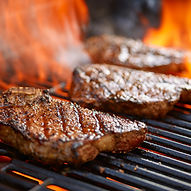
Cantani describes the first case of a diabetic patient he had who he cured diabetes with an all meat diet for 8 days. The patient said originally he was on the correct diet but realized that he had not believed such a rigourous diet was required.
https://babel.hathitrust.org/cgi/ssd?id=uc1.31378008338645;page=ssd;view=plaintext;seq=76;num=62
Clinical observations of fully cured cases of diabetes. SUMMARY. - A new theory from the author. - Cases of diabetes mellitus observed by me. Clinical observations of cured cases of diabetes (I to LXXIII). - Healings obtained by others and which have been communicated to me. Statistics of diabetes cures. GENTLEMEN, 7 To so many theories on the pathogenesis of diabetes, we are going to add one more, which is specific to us: it is based on our clinical observations, is based on the singular efficacy of the corresponding treatment, and is found demonstrated by the following proof: the sugar of diabetic blood is not glycose, but a new sugar, the discovery of which gives our theory the sanction of positive experience. But it takes first that I report to you the cases observed, so that you can see, like ourselves, the theory springing from clinical observations, with that spontaneity which imposes a scientific conviction. I have observed over 150 cases of diabetes in all. Several were studied with all the rigor possible in front of this clinic: others were treated by us in our private clientele, and these were observed as best we could. It seemed useful to me to divide all these cases into two large groups: in the first I put the diabetics completely cured, in the second diabetics who were not cured, whether or not their condition had been improved by treatment, whether with that spontaneity which imposes scientific conviction,
Page 63:
the treatment itself was or was not rigorously followed. Among the cases of recovery there are some which date from three or four years, and which have been perfectly maintained, for I have recent proofs that the urine of these former patients does not contain any trace of sugar, although they are returned for several years to mixed feeding, with the sole precaution of never again abusing flour, and especially sweets. I must warn that I also included among the cured cases, the patients who, after a complete recovery maintained for a year or two, returned to diabetes and returned to an exclusively starchy and sweet diet. In my opinion, these are not the cases of D. cidivitis: these are diabetes contracted again; because we cannot demand, to declare an effective treatment, ensures immunity with regard to diabetes, if the cured patient returns to the conditions in which he contracted his disease the first time.
OBSERVATION I
Ferdinando Grosso, tailor of clothes, from Naples, 36 years old, entered the Clinic on February 22, 1870. This man hardly ever ate nothing but flour and fruit, eating only meat on rare occasions: before being ill, he experienced long and cruel sorrows. He had been diabetic for about two years, and already reduced to great weakness, considerable weight loss, with sexual impotence, and the inability to continue his work, extraordinary hunger and thirst, so profuse polyuria and urination so frequent that he could not sleep. When he entered the clinic, he assured us that he was already much better, because for a month he had followed the treatment with the exclusive meat diet and lactic acid, which had been advised to him by a distinguished young doctor, our pupil and your fellow student; however, the cure was not rigorous enough; there was less thirst and polyuria, and a little more strength. At the time of entry, it was emitting 2,700 cc of urine, specific gravity 1029; 168 gr. of sugar in the twenty-four it emitted 2,700 cc of urine, specific gravity 1029; hours.
After eight days of an exclusively meat diet, with a little lactic acid, only a few traces of sugar remained in the urine: by the tenth day, they had completely disappeared. After having experienced our cure in its absolute rigor, our patient admitted that he had not at first believed in such a rigorous diet, and that at home he had eaten, albeit in moderation, foods which were now forbidden to him. On the day of his entry, he weighed 58k11.5 after six weeks of rigorous diet, he weighed 59k1.3. Returning home, but continuing the treatment exactly, he weighed 60 kilograms on May 1.
In January 1871, he weighed 65kil, and although he had returned four months ago to the moderate use of flour, his urine was free of sugar; in fact, he no longer presented any symptoms of diabetes, but he was fat and robust, more so than before he was ill. I begged him to come today, in order to introduce him to you, he kindly answered my call, and you see him so fresh and so strong, that those of you who have seen him diabetic must have grown up 'hard to recognize it. Professor Primavera examined his urine today: no sugar, full recovery for two years. Each new year, this good man sends me a letter of good wishes in which he informs me of his state of health; I saw him again in June 1874, he is perfectly fine, although his resources do not always allow him to procure a dish of meat for his dinner.
March 9, 1870
Diabetes Mellitus and its dietetic treatment

Cantani's second patient, Luigi Vinci of Naples, was put on an all meat diet and is cured, but Vinci is too addicted to flour and sugar and dies two years later of illness.
https://babel.hathitrust.org/cgi/ssd?id=uc1.31378008338645;page=ssd;view=plaintext;seq=78;num=64
OBSERVATION II. - Mr. Luigi Vinci, from Naples, retired from the Italian army, 46 years old, entered the Clinic on March 9, 1870. Sick for an indefinite time, following the abuse of flour: four months before entering the Clinic, the urinalysis had recognized diabetes, accused also by extreme weakness, thinness, ardent thirst, excessive polyuria: several weeks before entering the Clinic he had decided, on the advice of Dr. Fienga, to submit to the exclusive meat diet, which greatly improved several symptoms, including polyuria and thirst; but he did not feel able to continue the diet. We wanted to add to this observation, and to several others, the chromolithographic tables which accompany them in the Italian edition, and which establish, day by day, the quantity of urine, its density, the quantity. amount of sugar, temperature of the patient, number of pulsations, etc. Material execution difficulties were opposed. (Translator's note.)
On March 10 he emitted 2900 cc of urine: specific gravity 1031; 229 gr. of sugar within twenty-four hours. The same day, the patient was put on a meat diet: on March 12, after having eaten only meat, if not every day, at lunch, where he had taken coffee with milk with a little bread, we had 1755 CC of urine, specific gravity 1033; 83 gr. of sugar per liter, 142 gr. within twenty-four hours.
Subjected then to all the rigor of the cure, the sugar decreased quickly and went down to 66 gr. per day, then to 4267.5 to go back up to 64, and back down to 23, then to 28, to 25, to 20, to 8, to 11, to 4 and finally to zero. On March 26 the sugar completely disappeared, but an acute catarrh of the stomach and intestines with vomiting forced us to modify the diet, and the sugar reappeared: finally, the helping lactic acid, the catarrh was defeated, the meat diet resumed on March 29, the sugar fell on March 31 to 23 gr., then to 15, 12, 4, and finally on April 6 it disappeared again and this time not to reappear. It is interesting to note that in this case the constant disappearance of sugar took place only after refusing the patient even limes, vinegar, eggs, butter, wine, liver oil from cod, and even the chops, when we noticed that the cook was putting a little breading on it. In short, the glycosuria ceased completely after 27 days of treatment: it would have ceased earlier with more rigorous treatment from the first day, and without the intervention of intestinal catarrh. Upon entry, this patient weighed 48k11.7, in six weeks he reached 54 kilog. Out of the hospital on April 26, he continued the cure for a month, then resumed eating everything. I saw him again a year later, he told me he had gained another 12 kilog. since leaving the Clinic, which would total nearly 18 kilog. Note that with Grosso as with the captain, we only saw the fat accumulate when the patients were able to eat everything: with the meat diet, they increased in weight, up to a certain point, but a more complete diet was needed to gain weight quickly. This increase in weight is undoubtedly very important in judging the effects of a treatment on the material renewal of certain individuals: with it end all the doubts as to the efficacy of the treatment, and also as to its reason for. be. Before treatment, suddenly at 37 ° normal, under the influence of acute gastroenteric catarrh. He also presented a large quantity of urea in his urine, and this quantity increased in proportion to the meat eaten: this proves that he burned in great abundance the albuminates introduced, using them for physiological combustion. From this fact that it burned the albumin in excess, while it did not burn the sugar, we must conclude that there is a displacement of organic combustion, a displacement which aims to maintain the temperature at a degree compatible with the conservation. - elevation of life, although lower than that of health. We also understand why the forces return, as well as the flesh and fat, when we have introduced a much larger quantity of albumin, and therefore sufficient for the needs of combustion, respiration and thermogenesis. M. Vinci was in good health until October 1871; however, he ate, and even to the point of abuse, flour and even candy; he himself admitted it, but he pleaded his mediocre financial resources. I learned later that further abuse of the hay feed made him ill again, that he had not received any treatment, and that he had died in January 1872 of a subsequent phthisis, before some, pneumonia according to others.
May 3, 1870
Diabetes Mellitus and its dietetic treatment

Cantani's third patient, Mr Nicola Cardinale, a priest, was guilty of "abuse of flour for a year" and Cantani realized the priest was eating carbohydrates during mass and thus forbade him from celebrating it.
OBSERVATION III. - Mr. Nicola Cardinale, priest, 65, received at the Clinic on May 3. Diabetic by abuse of flour for a year, with large soil, polyuria, weight loss; he too had been following our treatment for two months, but not with sufficient rigor, and he continued to have 74 gr. of sugar per liter of urine, total amount for 24 hours; specific weight 1028. Subjected to the full rigor of treatment, it improved rapidly, but persisted in presenting 4 to 8 gr. of sugar per day. After having studied the causes of this singular persistence, I forbade him to celebrate mass. The sugar disappeared immediately. This fact shows to what excess of rigor this treatment must be carried out in advanced cases of diabetes. The urine went down as a weight to 1014. This patient weighed on entering 49kil, 5, after six weeks 50kil, 2; in view of his advanced age, the declared senile marasmus, this increase in weight is not to be despised.
September 15, 1870
Diabetes mellitus and its dietetic treatment.
Cantani's diabetic patient observations 21 - 30 are shown, all of whow he put on a carnivore diet to cure them. The scale of the diabetes epidemic even in 1870 Italy seems to be due entirely to carbohydrates.
OBSERVATION XXI. - Mr. Antonio G., notary of Ajello del Sabato (Avellino), had suffered for two years from a dry mouth, and for a year from a sharp thirst, with polyuria, increase of the appetite, impotence and perspiration: for three months, very remarkable loss of weight, with general weakness. He is a man with a flaccid temperament, with an adipose tendency, he has already had ten attacks of gout; for the past two years he has been rid of it: he particularly abused floury foods. Recognized as diabetic by Doctor De Capraris of Atripalda on September 12, 1870, he presented himself to me on September 15 with a polyuria of 5 to 6 liters, the specific weight being 1032, and 72 gr. of sugar per liter. Submitted to the cure, and seen again on November 24, 1870, he was doing perfectly well, had gained in strength and in nutrition and presented urine of the weight of 1022, entirely free of sugar. He resumed with impunity the moderate use of flour; I have long lost sight of him.
OBSERVATION XXII. Canon Vito M., 59 years old, of S. Agata dei Goti, archpriest of T., abused during all his life mealy and fruit; he had been diabetic for eight months, with 8-10 liters of urine per day, severe weight loss, and beginning to darken his eyesight. He came to see me in March 1872. After twenty days of treatment, he no longer presented any sugar: he continued the treatment for a few months, then returned to mixed food. - Even today (September 1874), he is doing perfectly well, eats everything, and as a precaution has adopted the following diet: three days a week, he eats absolutely nothing but meat.
OBSERVATION XXIII .-- Canon Francesco F., aged 61, episcopal vicar of Malta, ate meat very rarely, ate almost exclusively flour and sweet fruits, and also abused sugar, to the point of almost constantly having a piece of it in your mouth. Since a long time suffering, weakened, emaciated, recognized diabetic for seven months, he came to see me on August 3, 1872, with notable polyuria (3 to 4 liters per day): the urine, with a specific weight of 1032, contained 60 gr. of sugar per liter: subjected to the cure, the urine, after eight days, was free of sugar, and their weight fell to 1018. It gradually returned to the use of starches, without any unfortunate result, and until the last news he continued to enjoy the best health. I had another report about him in June 1874, from his brother who had come to Naples for an illness; I have learned with pleasure that he is doing very well, eats everything, but mealy foods with wise moderation.
OBSERVATION XXIV. Mr. C. Pietro B., 44 years old, from Malta, a large consumer of flour, of fruit and sugar, for he ate, even at night, candied fruit and candy. Recognized as diabetic for two years, he presented himself to me on July 14, 1872, with 100 gr. of sugar per liter; the specific gravity of his urine was 1041: he had, moreover, a weakness of sight, attributed by Professors Castorani and Del Monte, whom he had consulted successively, to hyperemia of the optic papilla. Submitted to my cure, the urine was free of sugar from July 22, its specific weight reduced to 1025; he then thought he could use milk, but was quickly punished by the reappearance of sugar in the urine at a dose of 6 gr. per liter, with an increase to 1028 of their specific weight: the milk removed, and the rigorous treatment instituted again, the analysis of the urine carried out on August 3, by Professor Primavera, demonstrated that the sugar had disappeared, and that the specific weight had returned to 1025 (weight still high and due to the abundance of urea and urates); this condition persisted for a long time, then the patient was lost to follow-up.
OBSERVATION XXV. - M. Domenico 2., lawyer, from Oppido (Calabria), 56 years old, of fat constitution, presented himself to me on May 14, 1871. He has never had only intermittent fevers, and has always eaten a lot of starchy foods. Having come to live in a very humid country, he began to experience a torment in his feet and in his hands, and then tautness and contractions in his whole person which his doctors altered to rheumatism. At the same time, he suffered from polyuria which made him fill two or three vases a day. The demonstration that the sugar had disappeared, and that the specific weight had returned to 1025 (weight still high and due to the abundance of urea and urates); this condition persisted for a long time, then the patient was lost to follow-up. May 16 his urine showed 100 gr. of sugar per liter: submitted to the treatment, on May 19 the sugar was hardly appreciable: this patient having experienced a little diarrhea and some visceral pains, one had to order opium and gum at that time. He later resumed the cure, and was completely cured of the diabetes, as the news received at the beginning of 1874 confirms to me.
OBSERVATION XXVI. Mr. Francesco P., from Corato (Bari), owner, aged 44, rarely ate meat, and always in very small quantities: he ate almost exclusively starches, fruits and above all made a very - great abuse of sweets. Sick for three years, with no known cause: impotence, thirst, polyuria up to about 4 liters per day, and, for several months, weakened eyesight; he came to me on July 29, 1872; his urine analyzed by Professor Primavera contained 45 gr. of sugar per liter, and presented a specific weight of 1033. Subjected to the treatment on July 31, the urine was, from August 8, of the specific weight of 1014, and completely deprived of sugar. These urine were therefore very poor in urates. After three months of very rigorous treatment, the patient had two months of a mixed diet, but ate mainly meat: the urine was maintained normal. From December 23, 1872, the patient ate everything, like a healthy man, and yet the urine, examined on January 12 and June 7, 1873 by Professor Primavera, was found completely free of sugar: thus the patient could consider himself cured of diabetes, by this ordeal of eight months of mixed diet followed with impunity: this does not prevent that, fearing his old and pronounced penchant for sweets, I urged him to never return to this fatal habit, which could give him the diabetes a second time, as she had done a first (1). .. (1) I learn, when I am correcting the proofs, that a diabetic from Corato, seen by nioi and by Professor PRIMAVERA, and who, for a year, had been perfectly well, had fallen ill again of diabetes, following a new abuse of flour and sweets, and that, as he had not wanted to immediately return to a rigorous cure, he was reduced to the saddest state. It may be Francesco P., but it could also be M. Mat., From Corato, whom I also treated, but that I did not see again, so that I did not know anything positive about it. (Author's note.)
OBSERVATION XXVII. - M. le Baron D'A., Of Naples, aged 50, a great consumer of flour and frozen candies, suffered, without appreciable cause, for two and a half years, from polyuria, general weakness and incapacity ; for a year the thirst, especially after meals, had been so extraordinary that, to quench it, he usually took three or four ice creams (rich in sugar, as we know), after which he was even more thirsty than before. On July 3, 1872 he had his urine examined by Professor Primavera, and they found 40 gr. of sugar per liter: the specific weight was 1025. Submitted to the cure, his urine presented on July 26, the specific weight of 1017, and was absolutely free of sugar: he has continued to do very well since then. though he returned to ordinary food. In the fall of 1873, as a result of an excessive absorption of flour and frozen candies, the sugar reappeared in the urine, but taken in time, and treated for only a month, health returned, the urine remained free of sugar until March 1874: I have no further information.
OBSERVATION XXVIII. - Mr. Diego della R., diabetic for two years, who absolutely never ate meat, and who, however subjected to my rigorous treatment, got used to it so well that he digested it perfectly, even without lactic acid. His urine had, on July 18, 1872, for specific weight 1040, and containing 100 gr. of sugar per liter: on August 15, they were starved of sugar, and their specific gravity was 1014. He continued to do well, until to the last news received: but it is already some time ago.
OBSERVATION XXIX. - Baron Francesco TS, of Nicastro, client of Doctor Staglianò: interesting case especially by the intermittences of his diabetes. This patient was doing well when he put himself on the absolute meat diet, and even when he took only moderate quantities of starchy substances. But when he used it extensively for a few consecutive days, he became melituric again, and suffered from drought, thirst and polyuria. His nutrition, however, was still quite good. He did my treatment, not however with all its rigor, on the advice of Doctor Stagliano, and recovered to the point of doing well for a whole year, eating everything. Finally, however, there was a relapse, and this time more serious, October 15, of sugar per liter. The patient subjected to the cure, the sugar disappeared very quickly, reappeared sometimes for a very short time, as I have since learned, and disappeared again, all this as regulated by the diet. - According to later news received in January 1873, his urine was free of sugar, but he suffered from intermittent fevers with hemoptysis; this last accident was, according to his doctor, dependent on the malarial infection. In September 1874, I knew he was fine.
OBSERVATION XXX. - Mr. Antonio Tirabelli, from Villarica, owner, aged 35, client of Dr. Domenico Majone, abused flour and sweets, had intermittent fevers, and was exposed to colds: no other cause of diabetes can be found in him. For some time, he suffered from polyuria with thirst, without great hunger, and without impotence. For two months, we had observed, in the urine, the presence of sugar, which, on January 5, 1872, reached 80 gr. per liter. The patient submitted to my treatment, and after only three days the urine was free of sugar. He continued the cure for two months, very rigorous for 25 days, but allowing himself three times the use of chicory: later on he softened it even more. The urine, reexamined on January 31, specifically weighed 1019 and did not contain any sugar: it remained that way, as I was convinced by doing my own qualitative analysis of the urine. The patient was well for more than a year, and looked at himself as completely healed, having gained much in nutrition, strength and good looks. The last information received in 1874, by Doctor Majone, is as follows: the patient felt so well that, relying too much on his recovery, he began to eat sugar in great excess, and especially sugar sweet dishes: he noticed at the same time that, each time he made a similar deviation in diet, thirst and polyuria reappeared: sugar was even observed in the urine. If he resumed the rigorous treatment for a single day, the urine became free of sugar again. But he too often repeated these abuses of sweets, for he very much disliked submitting to this suggestion, and, in a fit of mistrust, he decided that he would run the chance, without following any further treatment: so noticeable, impotence, aphonia and general weakness. This last recurrence lasted four months, during which he continued to abuse sugary foods in this way, to eat them every day for 3 or 4 francs ..... and he made all these deviations, because, having become edematous until groin from weakness of the heart, and also a little from excessive fatigue of the kidneys which caused a slight nephritis with albuminuria, he persuaded himself that he would die fatally from dropsy, even though he would be cured of diabetes.
Finally, at the insistence of his friends, he resumed the treatment, but not rigorously enough: after two weeks, the sugar, which was very abundant on board, had come down to 30 g. per liter, the edema decreased, the strength returned a little, while the thirst and the quantity of urine were normal, and that manly power had reappeared. On March 9, 1874, he underwent the rigorous treatment which I had prescribed for him again, and after a few days the edema had disappeared entirely. The urine examined on April 27, 1874, by Professor Primavera, was completely free of sugar, but contained a small, though quite evident amount of albumin. However, a serious gastric catarrh had developed with complete inappetence; the alvine evacuations were abundant and discolored, according to his attending physician, which made me suspect that the atrophy of the pancreas and the liver were too advanced, as well as the defect of assimilation and absorption of intestines, resulting in thinning and discoloration of feces.
In the hope, however, that he was not a primary degeneration of the pancreas and the liver, but an incomplete atrophy of these organs, which could still be remedied, (if it was consecutive to the diabetic exhaustion, which could be oppose an improvement in nutrition), I advised adding to lactic acid and pepsin, already ordered by the attending physician, pancreatic fats; and behold, immediately after their use, the patient began to digest better, the stools improved and nutrition was restored. Dr Majone then wrote to me: “Under the influence of this treatment, the patient has always gotten better and better. After five days, the voice became natural, the forces gradually improved, the pulse became stronger and more frequent, the moral state improved, thirst completely extinguished, because he never drinks outside of meals; appetite has become normal, with desire for various foods, and with this peculiarity remarkable, an instinctive tendency towards broths and towards pancreatic fats, all things he hated at first; the stools are regular in quantity, and even in their necks, although they are not absolutely normal. The urine examined by Professor Primavera on May 18, 1874, had a specific gravity of 1018, and, although it was free from sugar, contained some traces of albumin, with a normal proportion of urea and urates. - This patient is still doing well now, September, 1874. This case is still very important, by its apparent form of intermittent diabetes; the intermittences were related to food. After being cured of diabetes, the patient continued to be well, although making use of a mixed diet, provided that it was not too rich in sugary materials, and his urine remained normal: with each excess of sweetness, the urine became sweet and abundant. The organism could therefore overcome and burn a mediocre quantity of hydrocarbons, but it could not overcome the excess of these, and when it had been, for some time, encumbered with these hydrocarbon elements, it lost tolerance towards them, - and intermittent diabetes reverted to the state of continuous diabetes. This case shows again that one can cure diabetes, by following the treatment long enough and rigorously, and that one can continue it again when one is well; but that we must no longer fall back into the excess of hydrocarbons, and especially sweets; it also shows that, even a very slight case of diabetes may change and become very serious, to the point of threatening life in the near future.
Ancient History
Germany
50000
B.C.E.
Palaeolithic and Mesolithic kill-butchering sites: the hard evidence
The upper paleolithic is characterized by advanced hunting of large animals with various weapons, and planning to maximize easy prey
Upper Palaeolithic and Mesolithic Hunting:
the archaeological record leaves us some direct evidence of man's hunting activities. At Meiendorf (Rust 1937) and Stellmoor (Rusf 1937), some bones of reindeer and birds still conserve weapon marks and a few pieces of silex have remained thrusted in mammalian bones; man kills reindeer with harpoons and sticks (fractured skulls), birds with bows and maybe slings. Three fractured skulls of red deer in Abri Pataud (Bouchud, 1975), and one bovid skull with a circular orifice in Saint Marcel (Allain, 1952) suggest the practice of the so called " co'up de merlin": man has delivered a blow similar to the one used today to butcher cattle. Probably the animal already immobilized (wounded or entrapped) was hit on the frontal with a big stone. At Kokorevo I (Siberia), a large scapula of bison is pierced by the upper end of a point made of bone (Boriskowksi, 1965). At High Furlong (Mesolithic), an elk was discovered with the marks of L7 wounds made by barbed points, of which two were found in the site, and by other arms. The animal had apparently been attacked at two distinct occasions: during the first one, hunters aimed at the legs to lame the animal (fig. 6), later hunters hit the thoracic region and the lungs to kill it. However the elk died in a little lake, perhaps imprisoned in the ice, and man had no access to the meat. The animal represents in fact a hunting loss (Hallam et a1.,1973).
Planning: very good. Many sites belong to Wpe e, were occupied periodically or seasonally and specialised in the capture of a particular game (e.g., horse, reindeeq, ibex). Game drive towards cliffs have been claimed and Solutre (Combier & Thevenot,1976) has long figured as an example, but the evidence is far from conclusive.
Scavenging: no doubt H. sapiens still killed or exploited animals in the occasional and opportunistic way of Lower Palaeolithic times. According to Lindner (Lindner,1941), hunters at Predmost utilised the carcasses of hundreds of mammoths that probably succumbed as a result of natural catastrophes, as food.
Food transport: selective transport of the most useful animal parts is claimed for many sites.
Specialised activities: sometimes the material is dislocated in distinct clusters that could reflect specialised activity areas as for example at Solutre (Combier & Thevenot, 1976). Site topography: some hunting sites were located in valleys enclosed by steep slopes as at Rascano (Gonziilez-Echegaray, 1979), Stellmoor (Rust, 1937), Meiendorf (Rust 1937), or at the foot of rocky cliffs at Solutr6 (Combier & Th6venot, 1,976).
4. Conclusions
Most of the Lower Palaeolithic sites analysed here belong to category a (butchering sites); other kind of concentrations are rare and difficult to ascertain. A number of hunting stations (category e) and a hunting stop (category f) form my sample for the age of Neanderthal man and related people. The Upper Palaeolithic is characterised by many hunting stations, while in Mesolithic times a hunting loss (category d ) was found as well as several sighting sites (category g). The foregoing distribution seems to reflect in a vague way an evolution from scavenging and haphazard opportunistic hunting to well organised, selective hunting activities. However, this reflection results no doubt in part from a priori assumptions concerning the evolution of hominid meat procurement often colouring the interpretations offered for the osseous "hard" data; these are frequently equivocal.
Vindija, 42000, Varaždin, Croatia
28500
B.C.E.
Neanderthal diet at Vindija and Neanderthal predation: The evidence from stable isotopes
The isotope evidence overwhelmingly points to the Neanderthals behaving as top-level carnivores, obtaining almost all of their dietary protein from animal sources
Archeological analysis of faunal remains and of lithic and bone tools has suggested that hunting of medium to large mammals was a major element of Neanderthal subsistence. Plant foods are almost invisible in the archeological record, and it is impossible to estimate accurately their dietary importance. However, stable isotope (13C and 15N) analysis of mammal bone collagen provides a direct measure of diet and has been applied to two Neanderthals and various faunal species from Vindija Cave, Croatia. The isotope evidence overwhelmingly points to the Neanderthals behaving as top-level carnivores, obtaining almost all of their dietary protein from animal sources. Earlier Neanderthals in France and Belgium have yielded similar results, and a pattern of European Neander- thal adaptation as carnivores is emerging. These data reinforce current taphonomic assessments of associated faunal elements and make it unlikely that the Neanderthals were acquiring animal protein principally through scavenging. Instead, these findings portray them as effective predators.
Stable Isotope Analyses.
Mammal bone collagen δ13C and δ15N values reflect the δ13C and δ15N values of dietary protein (14). They furnish a long-term record of diet, giving the average δ13C and δ15N values of all of the protein consumed over the last years of the measured individual's life. δ13C values can be used to discriminate between terrestrial and marine dietary protein in humans and other mammals (15, 16). In addition, because of the canopy effect, species that live in forest environments can have δ13C values that are more negative than species that live in open environments (17). δ15N values are, on average, 2–4‰ higher than the average δ15N value of the protein consumed (18). Therefore, δ15N values can be used to determine the trophic level of the protein consumed. By measuring the δ13C and δ15N values of various fauna in a paleo-ecosystem, it is possible to reconstruct the trophic level relationships within that ecosystem. Therefore, by comparing the δ13C and δ15N values of omnivores such as hominids with the values of herbivores and carnivores from the same ecosystem, it is possible to determine whether those omnivores were obtaining dietary protein from plant or animal sources.
Cheddar Reservoir, Cheddar BS26, UK
12000
B.C.E.
FOCUS: Gough’s Cave and Sun Hole Cave Human Stable Isotope Values Indicate a High Animal Protein Diet in the British Upper Palaeolithic
We were testing the hypothesis that these humans had a mainly hunting economy, and therefore a diet high in animal protein. We found this to be the case, and by comparing the human δ15N values with those of contemporary fauna, we conclude that the protein sources in human diets at these sites came mainly from herbivores such as Bos sp. and Cervus elaphus
We undertook stable isotope analysis of Upper Palaeolithic humans and fauna from the sites of Gough's Cave and Sun Hole Cave, Somerset, U.K., for palaeodietary reconstruction. We were testing the hypothesis that these humans had a mainly hunting economy, and therefore a diet high in animal protein. We found this to be the case, and by comparing the human δ15N values with those of contemporary fauna, we conclude that the protein sources in human diets at these sites came mainly from herbivores such as Bos sp. and Cervus elaphus. There are a large number ofEquus sp. faunal remains from this site, but this species was not a significant food resource in the diets of these Upper Palaeolithic humans.
If the humans hunted and consumed mainly horse, then their 15N values should be c. 3–5‰ (Equus 15N value of 0·7‰+enrichment of 2–4‰). Instead, their 15N values make more sense if they lived mostly off Bos and Cervus elaphus (Bos and Cervus values of c. 3‰+enrichment of 2–4‰=the observed values c. 6–7‰). It is also possible that other species, including Rangifer tarandus, were consumed by these individuals. Rangifer tarandus has 15N values similar to Cervus elaphus (Richards, 1998), and has more positive 13C values, which may explain the observed slight enrichment in the human 13C values. A number of artefacts made from Rangifer tarandus have been found at Gough’s, but there is no other evidence that this species was being exploited for food
Province of Crotone, Italy
500
B.C.E.
On the Sociology of Ancient Sport
One report states that a trainer named Pythagoras recommended a meat diet to the Olympic athletes he trained.
A lack of animal-derived protein seems to have been rectified early in history, as there are two reports of the introduction of meat into the athletes’ diet. One report states that a trainer named Pythagoras recommended a meat diet to the athletes he trained. https://www.omicsonline.org/open-access/a-comparison-of-ancient-greek-and-roman-sports-diets-with-modern-day-practices-2473-6449-1000104.php?aid=69865
8 He [Pythagoras] is said to have been the first to train athletes on a meat diet. The first athlete he did this with was Eurymenes. Formerly they had trained on dried figs, moist cheese, and wheat. Some say that it was a trainer named Pythagoras and not the philosopher who was responsible for this innovative diet. For our Pythagoras prohibited killing, not to mention eating, life which possessed souls like our own.
Diogenes Laertius, Lives of the Philosophers 8.12
Sport and Recreation
To all appearances medical knowledge in general and nutrition in particular was widespread in Pythagorean circles in Southern Italy, especially in Kroton. Burkert has pointed out that the fmaous doctor Alcmaeon came from the Pythagorean center of Kroton. From the akousmata (secret doctrines), which doubtless contain old religious traditions, we learn that the Pythagoreans were not originally strict vegetarians; the consumption of meat was permitted, with the exception of lamb and the meat of draft oxen. Burkert considers there is some likelihood that Pythagoras introduced a meat diet for athletes. He believes this tradition arose when Pythagorean vegetarianism had not yet been completely developed. In later times, when vegetarianism had prevailed, a second tradition has possibly been invented, in which it was not Pythagoras, the philosopher from Samos and Kroton, but a homonymous person who wrot the great 'trainer's recipe book'.
57: There are similar issues regarding the transmission in later sources of Pythagoras advising the successful heavy athlete Eurymenes of Samos to use a special meat-based diet instead of the dried figs and cheese he had previously been eating.
On the Sociology of Ancient Sport - page 43.
Mantineia 221 00, Greece
480
B.C.E.
A Comparison of Ancient Greek and Roman Sports Diets with Modern Day Practices
Dromeus, a long-distance runner, is said to have first thought of eating meat for training instead of just cheese and won multiple victories.
The second report is that of Pausanias, who writes of Dromeus, a long-distance runner from Stymphalos [23].
“...he won two victories in the dolichos at Olympia, the same number in the Pythian Games, three at the Isthmian and five at the Nemean. He is said to have first thought of eating meat (as part of his training diet). Until then the food for athletes was cheese fresh out of the basket.”
Clearly, if his success is anything to go by, then Dromeus had really found a winner’s diet. There are also reports of athletes eating meat from oxen, bulls, goats and deer, a very” red-meat” diet which is a rich form of protein. Moreover, with meat as a part of their diet, the performance of competing athletes would most certainly have improved noticeably.
5 A man named Dromeus from Mantineia was said to have been the first we know of to have won the pankration by default [ = akoniti]. Pausanias 6.11.4
Dromeus, Long-Distance Runner
There was a man from Stymphalos, named Dromeus, whose record as a long-distance runner was exceptional: he won two victories in the dolichos at Olympia, the same number in the Pythian Games, three at the Isthmian and five at the Nemean. He is said to have first thought of eating meat (as part of his training diet). Until then the food for athletes was cheese fresh out of the basket.


