


Recent History
January 1, 1898
Elma Stuart
What Must I Do to Get Well? And How Can I Keep So?

Stuart describes the beef and water treatment plan of the Salisbury System
1898. Excerpt: ... GENERAL OBSERVATIONS. 'He who gains a new idea, or has a fresh insight into an old one, is thereby invested with a new responsibility. He has no right to live exactly as he did before. A duty is laid upon him to bring it into practical operation for his own guidance, and, as far as possible, for the general welfare.'
ANY persons seem to imagine that when they have said 'mince and hot water' they have polished off in a word the whole Salisbury treatment. They were never more at sea in all their lives. The Salisbury System is not one--but many-sided. Beef and hot water form a part and an all-important part; but here besides is a wide-embracing plan that minutely takes into account everything that concerns the patient, and provides for every day's contingencies. All doings, takings, quantities, etc. are considered and regulated so that every condition may be made and kept advantageous for the furthering of Nature's processes, and that the patient and his family may be continually aiding and fostering these as far as possible. The Salisbury treatment looks narrowly to the patient's eating, drinking, to the when, what, how, and how much he eats, to the cooking of his food, to the digesting of his food (for sensible people, like you and me, Reader, know that the proof of the pudding is--not the eating,--alas, no! it is the digesting!), to the internal cleansings, the thorough tranquil restings; the encouragement of a brave, placid frame of mind, a cheerful, hopeful spirit, with special avoidance of fatigue, friction, and worry; and it seeks besides to judiciously accommodate to its wise requirements every hour of the patient's day and every one of his doings.
January 1, 1898
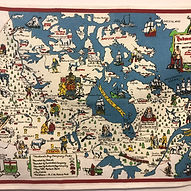
But at the inland trading posts, where flesh foods alone were to be had, and where they were not overcooked, neither whites nor their Indian affiliates ever had scurvy.
Before the ninety-eighters came, everybody along the Slave and Mackenzie rivers had at least heard of both toothache and scurvy, and some knew one or both from their own experience. As to scurvy, it was well known that Company people did have it at the ocean ports on Hudson Bay, where victuals were cooked European style and where most of the food came from Europe by ship.
At these seaports the Indian wives of white men got scurvy nearly as often as the white wives of others. But at the inland trading posts, where flesh foods alone were to be had, and where they were not overcooked, neither whites nor their Indian affiliates ever had scurvy. The like was the case with tooth decay — nobody suffered tooth decay on the Mackenzie except those who had brought decay with them in their mouths from some such place as Hudson Bay or Scotland.
It was all a matter, the bishop thought, of what food you ate and of how it was stored and cooked. Scurvy cured itself when you left the Bay for the interior. Decayed teeth were not exactly cured by the all-flesh diets of the inland posts, but the tooth cavities ceased growing larger.
This was what everyone formerly believed on the Mackenzie about toothache and scurvy. Many of the Athapaskans had never seen an active case of either; but with the gold rush a lot of people came into the fur lands who not merely had rotten teeth already but who also brought with them quantities of the sort of food that would help continue the decay processes and, as the event showed, would also produce in the Mackenzie District the sort of scurvy they had heard of as suffered by the Company's people on Hudson Bay.
January 1, 1898
Health Reformer Volume 33, Issue 01

Dr John Harvey Kellogg, a 7th Day Adventist believer, writes: "Recent studies of the dietetics of diabetes have clearly demonstrated the great danger involved in the use of an exclusive meat diet."
Recent studies of the dietetics of diabetes have clearly demonstrated the great danger involved in the use of an exclusive meat diet. The rapid tissue disintegration taking place in severe cases of diabetes results in flooding the system with waste matters, which are, of course, toxic in character. When to these are added the toxic substances contained in the flesh of animals under the best conditions, together with the ptomains resulting from the decomposition which always takes place to a greater or less extent in flesh food before it is eaten, and still further by the urea and other excrementitious products resulting from the excess of nitrogenous material contained in the system when meat is largely used, it becomes apparent that the diabetic who makes use of an exclusive meat diet or a diet consisting largely of flesh foods, is in a state of chronic auto-intoxication. Such a person is constantly on the verge of diabetic coma; if he escapes, it is simply because his liver and kidneys are still able to do a sufficient amount of work in the destruction and elimination of poisons to save his life ; but sooner or later he will certainly reach a point at which a failure of these important organs to do the excessive amount of work demanded of them will result in the accumulation of toxic substances to such a degree as to produce the universal poisoning which is so graphically pictured in diabetic eoma.
July 15, 1900
How to Become Thin

The Washington Post publishes a short article with advice to use a low carb diet for obesity. "Simple Rules for a Successful Reduction Cure. IT ALL DEPENDS ON THE DIET. Food Containing Sugar and Starch Must Be put aside - The Quantity of Food Eaten Is Not of Importance if the material is of the proper kind— Ice cream, potatoes, and bread must be abolished."
Simple Rules for a Successful
Reduction Cure.
IT ALL DEPENDS ON THE DIET
Food Containing Sugar and Starch Must Be put aside - The Quantity of Food Eaten Is Not of Importance if the material is of the proper kind— Ice cream, potatoes, and bread must be abolished-- No water or Liquors at meals.
"This is the season of the year in which people who want to reduce their flesh would do best to begin," said a doctor who has made himself more famous in this particular field than any other American physician. "For one reason, there are fewer privations which the patient is compelled to endure now. Very few of the things that are delicacies at this time of the year are prohibited by a course of diet intended to reduce one's flesh. As a matter of fact, the forbidden articles are very few indeed, so surprisingly few that I always wondered why people look upon a course of banting as a hardship. Practically the only spring vegetables which should not be eaten are potatoes, beets, and peas, and no fruits are on the proscribed list.
"Patients who come to me receive one invariable prescriptlon. All fat comes from the same natural cause, and can be made to disappear in the same way.
I never can give any medicine beyond what is needed to put the patient in a state of good natural health. After I have accomplished that the reduction begins by following a method so publicly known that there is no reason why I should hesitate to reveal its use in my own case. It is wrong to say that only by a regimen of eating can a person's flesh be reduced. What is drunk has quite as much to do with the result.
"I begin by refusing to allow my patients to eat anything containing either starch or sugar. Bread must first of all be given up. There is enough fat-making material in one breakfast roll to counteract the effects of mineral water treatment taken for months. Bread must absolutely be kept off the bill of fare of any one who wants to get thin. Sometimes very dry toast may be eaten in very small quantities, but nowadays there are excellent substitutes for bread provided, and th ese are quite as toothsome if a person can only break himself for a while of the feeling that he must accompany every meal abundantly with rolls or crackers, as the case may be. The new breads made without any starch are, of course, admissible, because if they are what they pretend to be there can be no fattening substance in them.
"The bread out of the way, one great step has been accomplished. Sugar must follow, and the substitutes for that are so nearly the same in effect that nobody should mind taking saccarine in coffee, instead of several lumps of sugar. It is in puddings, pies, and other similar combinations of flour and sugar that these two substances are most missed, but all pastry, puddings, and desserts of any kind in which sugar is employed are forbidden. Sugar and starch must be left alone. And this includes all corn bread and similar bread foods made of flour, cornmeal, and similar substances.
All Liquors are Fattening.
"With practically no other foods forbidden, it is possible for a person to lose as much as five pounds a week by following the rules outlined. I have known thirty pounds to be lost in six weeks on this sort of a regimen. All meats, all kinds of fish, except salmon, and all vegetables, except beets, peas, lima beans, and potatoes, can be enjoyed. Liquor must in nearly every form be left entirely alone. Beer is, of course, so fattening hat no one with any idea of reducing his weight would ever touch it, and some other alcoholic drinks are very nearly as bad. Whisky is very fattening, and so is champagne. Such concoctions as cocktails, all kinds of punches, and other mixed drinks put on more fat that years of diet could take off. There is no hope in a reduction diet for the person who continues to take alcohol. Candles, of course, and sweets should never be touched, while ice cream and similar edibles are just as high up on the forbidden list.
"This practically completes the entire cure. One need only observe carefully these rules of diet to lose flesh certainly and quickly. More than that, such a selection of food would improve the patient's general health. Abstinence from starch and sugar is known to cure many bad cases of indigestion, and I don't believe there ever was a person following such a course that did not feel better for it. Wine in small quantities and usually white in color, and rather dry in quality, may be taken with a meal, but water."
January 1, 1901
Vilhjalmur Stefansson
My Life with the Eskimo - Chapter 23

Hubert Darrell was a man who understood thoroughly the principle of “doing in Rome as the Romans do,” and he had on many occasions, to my knowledge, in the past applied that principle so well that he was as safe as an Eskimo in his wanderings about the country; and really safer by far, for he had learned all the Eskimo had to teach him, and added to that knowledge the superiority of the white man's trained mind, and a natural energy and resourcefulness that are rare among men of any race.
Another piece of news which did not then bear the aspect of tragedy was that an Englishman, Hubert Darrell, had not reached Fort Macpherson after having visited the Baillie Islands in the fall of 1910. When Dr. Anderson repeated this piece of news to me we discussed it and agreed, as we still do, that Darrell was a man who would not have starved under ordinary circumstances, and we therefore felt sure that he had turned up alive and well somewhere or other unless sickness or accident had overtaken him. Darrell was a man who understood thoroughly the principle of “doing in Rome as the Romans do,” and he had on many occasions, to my knowledge, in the past applied that principle so well that he was as safe as an Eskimo in his wanderings about the country; and really safer by far, for he had learned all the Eskimo had to teach him, and added to that knowledge the superiority of the white man's trained mind, and a natural energy and resourcefulness that are rare among men of any race.
Although it was not until a year later that we became certain that the travels of Darrell over the northland of Canada had come to a tragic ending, I shall insert here a brief sketch of the man and his work. He was one that did not advertise, and although some of the most wonderful journeys ever performed in Arctic lands were done by him, the world would probably never have heard much of them even had he lived a longer time.
Darrell had come from England as a young man and owned a farm in Manitoba. I think it was the gold rush to the Yukon that first drew him thence to the North, although at that time he did not go much beyond Great Slave Lake, where he spent some time with the half caste and Indian hunters and travelers. He had already learned their ways when David T. Hanbury came there in 1901 and induced Darrell to join him on a trip eastward from Slave Lake to Chesterfield Inlet.
After spending the winter near Hudson Bay, a party consisting of Hanbury, Darrell, a third man named Sandy Ferguson, and about twenty Eskimo went inland, crossing north over Back's Great Fish River to the Arctic coast, following the coast west to the Coppermine River and ascending it to Dismal Lake, and there crossing over the divide which separates the waters of the Arctic Ocean from those of Great Bear Lake. Here the Eskimo turned back in August, and on their way home incidentally paid a visit to Captain Amundsen when he was wintering on King William Island, while the three white men proceeded by canoe across Great Bear Lake to the Mackenzie River. This was a journey of more than seven months in which the entire party had lived wholly on the country. It was Hanbury's last trip, but not so with Darrell.
I met Darrell first at Shingle Point on the Arctic coast, just west of the Mackenzie River, when I was spending my first winter among the Eskimo (1906–1907), and when he was on his way guiding a party of mounted policemen from Herschel Island to Fort Mcpherson. That was always his way. He was about as new to that country as the policemen were, but still he was a competent guide, for he never lost his head, and after all, in most places in the North it is not difficult to find your way if you keep your wits about you.
It was the winter before I saw him that he had made one of his most wonderful journeys. That winter Captain Amundsen with the Gjoa was wintering at King Point, halfway between the Mackenzie River and Herschel Island. In the fall of 1905 Captain Amund sen, as the guest of some whalers, traveled south in their company across the Endicott Mountains to the Yukon. The whalers and Amundsen had several sleds, and Eskimo to do the housework and camp making, and they traveled over a well- known road, where it is only a matter of three or four days from the time you leave the last Eskimo camp on the north side of the divide, where you can any time purchase deer meat, condensed milk, flour, or any such article you think you may need, up to the time you come to the first Indian camp on the south side of the divide, where you can supply yourself with dried fish, venison, and other articles of food. Amundsen has of course never said a word to indicate that he considers this Alaskan journey he made a difficult one, which as a matter of fact it is not; but the world at large insists upon considering it a marvelous feat, and the story, which the telegraphs and cables flashed all over the world, of the arduous road over which Amundsen had come to Eagle City, keeps echoing and reëchoing in the speech of men and in the pages of magazines.
That same winter Darrell also made a trip south from the Arctic Ocean to the Yukon. Instead of having whalemen for companions and Eskimo for guides, he went alone. Instead of having several teams and sledges, he had no dogs and only a small hand sledge which he pulled behind him; and on that sledge he carried sixty pounds of mail. He made his way from Fort Macpherson over the mountains by a more difficult road than that followed by Amundsen's party. Although he traveled alone he had no adventures and no mishaps (adventures and mishaps seldom happen to a competent man), and when he arrived on the Yukon the telegraph despatches recorded the simple fact that mail had arrived from the imprisoned whalers in the Beaufort Sea, and not a word of who had brought it or how it had been brought.
On the Yukon Amundsen happened to meet Darrell. He recognized the feat for what it was — one of the most remarkable things ever done in Arctic lands. “ With a crew of men like that,” Amundsen says, “ I could go to the moon.” Although he no doubt never expected to see him again, Captain Amundsen invited Darrell to visit him on the Gjoa at Shingle Point. Darrell does not seem to have agreed to this at once, and Amundsen returned with his party north to the coast, leaving Darrell behind on the Yukon. But one day towards early spring Darrell turned up at Amundsen's camp at King Point. He had come alone again over the mountains by a new route, and without adventure, as always.
From the time I saw him guiding a party of mounted police in November, 1906, I did not see Darrell again until the summer of 1908, when I met him at Arctic Red River, the most northerly Hudson's Bay post on the Mackenzie River proper. In the meantime he had been making his quiet journeys alone, here and there through the north, and that fall I believe he crossed the mountains again to the Yukon. I do not know what his movements were from that on until the fall of 1910, when he appeared at the Eskimo village at the Baillie Islands, without dogs as usual, and dragging his sled behind him. The schooner Rosie H. was wintering there at the time, but Captain Wolki was away and the ship was under the command of her first officer, Harry Slate.
To travel alone and without dogs is an unheard of thing even among the Eskimo, and both they and Mr. Slate tried first to get Darrell to stop over and next offered to give him some dogs to haul his sled, but both without avail. He was used to traveling that way, he said, and it would be too much bother to hitch up the dogs in the morning. He told them further, truly, that nothing would go wrong so long as no accident happened, and that to have dogs with him if an accident did happen would be of no particular use.
Darrell had been with a canoe up Anderson River the previous summer and had left his camp near the mouth of the river at the foot of Liverpool Bay. In order to return there he started southwest from the Baillie Islands, and a few days later he met some Eskimo by whom he sent a letter to Mr. Slate. At first Darrell had intended to come and visit me (for our base at Langton Bay was only ninety miles east of the Baillie Islands), but Slate had told him that I would not be at home, and only Ilavinirk's family were keeping the camp for me. He had therefore decided not to come. The letter he wrote Mr. Slate, which contains some messages to me, is the last positive thing we know of Darrell. In it he says, as he had already told Slate, that he intended to go the three hundred miles or so to Fort Macpherson and thence across the mountains to Dawson, and intended to return the next year. Eskimo information makes it clear that he left his camp in Liverpool Bay, but in what direction he went we do not know. Personally, in making such a journey, I should have traveled along the coast; but Darrell was used to the woodlands, and certainly the woods are an advantage in a way, although the snow is soft among the trees. It may be that he tried to go straight overland through the forested area from Liverpool Bay to Fort Macpherson. It is also possible that he may at the last moment, because of approaching sickness or for some other reason,, have taken to the ice of the Anderson River with the idea of reaching a camp of the Fort Good Hope Indians, who may be expected at one place or another after you get a hundred miles up the Anderson.
The only thing discovered since Darrell was last seen that may possibly be a clew, is that some Eskimo told me at the Baillie Islands in March, 1912, that the previous summer they had been in a boat up the Anderson River and had seen a blazed tree with some writing upon it. As a good many of the Fort Good Hope Indians can read and write, the chances are that this is some of their scribbling. Nevertheless I advised the Eskimo if they went up to the place again to cut down the tree and bring the piece containing the writing down to Captain Wolki at the Baillie Islands. It is not likely we shall ever know what the ultimate end of Darrell was; but whatever it was, those who knew him feel sure that he met it bravely and without heroics.
(Hubert Darrell's writings are in Oxford - https://archiveshub.jisc.ac.uk/search/archives/c5cc2dca-ab2c-3087-aead-cce2545ca9b7?terms=%22Darrell%20Hubert%201875-1910%22)
Ancient History
Germany
50000
B.C.E.
Palaeolithic and Mesolithic kill-butchering sites: the hard evidence
The upper paleolithic is characterized by advanced hunting of large animals with various weapons, and planning to maximize easy prey
Upper Palaeolithic and Mesolithic Hunting:
the archaeological record leaves us some direct evidence of man's hunting activities. At Meiendorf (Rust 1937) and Stellmoor (Rusf 1937), some bones of reindeer and birds still conserve weapon marks and a few pieces of silex have remained thrusted in mammalian bones; man kills reindeer with harpoons and sticks (fractured skulls), birds with bows and maybe slings. Three fractured skulls of red deer in Abri Pataud (Bouchud, 1975), and one bovid skull with a circular orifice in Saint Marcel (Allain, 1952) suggest the practice of the so called " co'up de merlin": man has delivered a blow similar to the one used today to butcher cattle. Probably the animal already immobilized (wounded or entrapped) was hit on the frontal with a big stone. At Kokorevo I (Siberia), a large scapula of bison is pierced by the upper end of a point made of bone (Boriskowksi, 1965). At High Furlong (Mesolithic), an elk was discovered with the marks of L7 wounds made by barbed points, of which two were found in the site, and by other arms. The animal had apparently been attacked at two distinct occasions: during the first one, hunters aimed at the legs to lame the animal (fig. 6), later hunters hit the thoracic region and the lungs to kill it. However the elk died in a little lake, perhaps imprisoned in the ice, and man had no access to the meat. The animal represents in fact a hunting loss (Hallam et a1.,1973).
Planning: very good. Many sites belong to Wpe e, were occupied periodically or seasonally and specialised in the capture of a particular game (e.g., horse, reindeeq, ibex). Game drive towards cliffs have been claimed and Solutre (Combier & Thevenot,1976) has long figured as an example, but the evidence is far from conclusive.
Scavenging: no doubt H. sapiens still killed or exploited animals in the occasional and opportunistic way of Lower Palaeolithic times. According to Lindner (Lindner,1941), hunters at Predmost utilised the carcasses of hundreds of mammoths that probably succumbed as a result of natural catastrophes, as food.
Food transport: selective transport of the most useful animal parts is claimed for many sites.
Specialised activities: sometimes the material is dislocated in distinct clusters that could reflect specialised activity areas as for example at Solutre (Combier & Thevenot, 1976). Site topography: some hunting sites were located in valleys enclosed by steep slopes as at Rascano (Gonziilez-Echegaray, 1979), Stellmoor (Rust, 1937), Meiendorf (Rust 1937), or at the foot of rocky cliffs at Solutr6 (Combier & Th6venot, 1,976).
4. Conclusions
Most of the Lower Palaeolithic sites analysed here belong to category a (butchering sites); other kind of concentrations are rare and difficult to ascertain. A number of hunting stations (category e) and a hunting stop (category f) form my sample for the age of Neanderthal man and related people. The Upper Palaeolithic is characterised by many hunting stations, while in Mesolithic times a hunting loss (category d ) was found as well as several sighting sites (category g). The foregoing distribution seems to reflect in a vague way an evolution from scavenging and haphazard opportunistic hunting to well organised, selective hunting activities. However, this reflection results no doubt in part from a priori assumptions concerning the evolution of hominid meat procurement often colouring the interpretations offered for the osseous "hard" data; these are frequently equivocal.
Vindija, 42000, Varaždin, Croatia
28500
B.C.E.
Neanderthal diet at Vindija and Neanderthal predation: The evidence from stable isotopes
The isotope evidence overwhelmingly points to the Neanderthals behaving as top-level carnivores, obtaining almost all of their dietary protein from animal sources
Archeological analysis of faunal remains and of lithic and bone tools has suggested that hunting of medium to large mammals was a major element of Neanderthal subsistence. Plant foods are almost invisible in the archeological record, and it is impossible to estimate accurately their dietary importance. However, stable isotope (13C and 15N) analysis of mammal bone collagen provides a direct measure of diet and has been applied to two Neanderthals and various faunal species from Vindija Cave, Croatia. The isotope evidence overwhelmingly points to the Neanderthals behaving as top-level carnivores, obtaining almost all of their dietary protein from animal sources. Earlier Neanderthals in France and Belgium have yielded similar results, and a pattern of European Neander- thal adaptation as carnivores is emerging. These data reinforce current taphonomic assessments of associated faunal elements and make it unlikely that the Neanderthals were acquiring animal protein principally through scavenging. Instead, these findings portray them as effective predators.
Stable Isotope Analyses.
Mammal bone collagen δ13C and δ15N values reflect the δ13C and δ15N values of dietary protein (14). They furnish a long-term record of diet, giving the average δ13C and δ15N values of all of the protein consumed over the last years of the measured individual's life. δ13C values can be used to discriminate between terrestrial and marine dietary protein in humans and other mammals (15, 16). In addition, because of the canopy effect, species that live in forest environments can have δ13C values that are more negative than species that live in open environments (17). δ15N values are, on average, 2–4‰ higher than the average δ15N value of the protein consumed (18). Therefore, δ15N values can be used to determine the trophic level of the protein consumed. By measuring the δ13C and δ15N values of various fauna in a paleo-ecosystem, it is possible to reconstruct the trophic level relationships within that ecosystem. Therefore, by comparing the δ13C and δ15N values of omnivores such as hominids with the values of herbivores and carnivores from the same ecosystem, it is possible to determine whether those omnivores were obtaining dietary protein from plant or animal sources.
Cheddar Reservoir, Cheddar BS26, UK
12000
B.C.E.
FOCUS: Gough’s Cave and Sun Hole Cave Human Stable Isotope Values Indicate a High Animal Protein Diet in the British Upper Palaeolithic
We were testing the hypothesis that these humans had a mainly hunting economy, and therefore a diet high in animal protein. We found this to be the case, and by comparing the human δ15N values with those of contemporary fauna, we conclude that the protein sources in human diets at these sites came mainly from herbivores such as Bos sp. and Cervus elaphus
We undertook stable isotope analysis of Upper Palaeolithic humans and fauna from the sites of Gough's Cave and Sun Hole Cave, Somerset, U.K., for palaeodietary reconstruction. We were testing the hypothesis that these humans had a mainly hunting economy, and therefore a diet high in animal protein. We found this to be the case, and by comparing the human δ15N values with those of contemporary fauna, we conclude that the protein sources in human diets at these sites came mainly from herbivores such as Bos sp. and Cervus elaphus. There are a large number ofEquus sp. faunal remains from this site, but this species was not a significant food resource in the diets of these Upper Palaeolithic humans.
If the humans hunted and consumed mainly horse, then their 15N values should be c. 3–5‰ (Equus 15N value of 0·7‰+enrichment of 2–4‰). Instead, their 15N values make more sense if they lived mostly off Bos and Cervus elaphus (Bos and Cervus values of c. 3‰+enrichment of 2–4‰=the observed values c. 6–7‰). It is also possible that other species, including Rangifer tarandus, were consumed by these individuals. Rangifer tarandus has 15N values similar to Cervus elaphus (Richards, 1998), and has more positive 13C values, which may explain the observed slight enrichment in the human 13C values. A number of artefacts made from Rangifer tarandus have been found at Gough’s, but there is no other evidence that this species was being exploited for food
Province of Crotone, Italy
500
B.C.E.
On the Sociology of Ancient Sport
One report states that a trainer named Pythagoras recommended a meat diet to the Olympic athletes he trained.
A lack of animal-derived protein seems to have been rectified early in history, as there are two reports of the introduction of meat into the athletes’ diet. One report states that a trainer named Pythagoras recommended a meat diet to the athletes he trained. https://www.omicsonline.org/open-access/a-comparison-of-ancient-greek-and-roman-sports-diets-with-modern-day-practices-2473-6449-1000104.php?aid=69865
8 He [Pythagoras] is said to have been the first to train athletes on a meat diet. The first athlete he did this with was Eurymenes. Formerly they had trained on dried figs, moist cheese, and wheat. Some say that it was a trainer named Pythagoras and not the philosopher who was responsible for this innovative diet. For our Pythagoras prohibited killing, not to mention eating, life which possessed souls like our own.
Diogenes Laertius, Lives of the Philosophers 8.12
Sport and Recreation
To all appearances medical knowledge in general and nutrition in particular was widespread in Pythagorean circles in Southern Italy, especially in Kroton. Burkert has pointed out that the fmaous doctor Alcmaeon came from the Pythagorean center of Kroton. From the akousmata (secret doctrines), which doubtless contain old religious traditions, we learn that the Pythagoreans were not originally strict vegetarians; the consumption of meat was permitted, with the exception of lamb and the meat of draft oxen. Burkert considers there is some likelihood that Pythagoras introduced a meat diet for athletes. He believes this tradition arose when Pythagorean vegetarianism had not yet been completely developed. In later times, when vegetarianism had prevailed, a second tradition has possibly been invented, in which it was not Pythagoras, the philosopher from Samos and Kroton, but a homonymous person who wrot the great 'trainer's recipe book'.
57: There are similar issues regarding the transmission in later sources of Pythagoras advising the successful heavy athlete Eurymenes of Samos to use a special meat-based diet instead of the dried figs and cheese he had previously been eating.
On the Sociology of Ancient Sport - page 43.
Mantineia 221 00, Greece
480
B.C.E.
A Comparison of Ancient Greek and Roman Sports Diets with Modern Day Practices
Dromeus, a long-distance runner, is said to have first thought of eating meat for training instead of just cheese and won multiple victories.
The second report is that of Pausanias, who writes of Dromeus, a long-distance runner from Stymphalos [23].
“...he won two victories in the dolichos at Olympia, the same number in the Pythian Games, three at the Isthmian and five at the Nemean. He is said to have first thought of eating meat (as part of his training diet). Until then the food for athletes was cheese fresh out of the basket.”
Clearly, if his success is anything to go by, then Dromeus had really found a winner’s diet. There are also reports of athletes eating meat from oxen, bulls, goats and deer, a very” red-meat” diet which is a rich form of protein. Moreover, with meat as a part of their diet, the performance of competing athletes would most certainly have improved noticeably.
5 A man named Dromeus from Mantineia was said to have been the first we know of to have won the pankration by default [ = akoniti]. Pausanias 6.11.4
Dromeus, Long-Distance Runner
There was a man from Stymphalos, named Dromeus, whose record as a long-distance runner was exceptional: he won two victories in the dolichos at Olympia, the same number in the Pythian Games, three at the Isthmian and five at the Nemean. He is said to have first thought of eating meat (as part of his training diet). Until then the food for athletes was cheese fresh out of the basket.


