


Recent History
July 2, 1928
Helge Ingstad
The Land of Feast and Famine - Red Neighbors

Chief Marlo, an old Indian in the Arctic: "My rich country. Caribou, musk-ox, fish, much food. Before, Indians all over. Great hunters. White man come, Indians die, all-a time die."
Chief Marlo has not cut his hair like the others, for he is a member of the old school. Black and straight, it falls down over his shoulders. How old he is, not even he himself knows. " When I little, big battle, Dead Men's Island," he says. Now he is too feeble to join in the hunt. He remains indoors most of the time, smoking his pipe and giving advice. In a face of wrinkled parchment shine a pair of fun-loving eyes, and it may well be, as it is said, that he can still draw as fine a bead on a fleeing caribou as anyone.
Each evening when the sun is setting over Great Slave Lake, Mario emerges from his tent and totters down to the beach. There he sits for a long time. On one occasion I sit down beside him. Not a word has passed between us when he nods toward the sun, just as it is slowly slipping down into the water in an orgy of red, and " Who you think make sun? " he asks.
" Who do you think? " I parry.
"Jesus — mebbe so," he says hesitantly. Just how sincerely he believes this to be true is pretty hard to know, for he immediately begins talking about how the sun, from the very first, has been the all-powerful god of the Indians. He flings out his arms to it and says: " First all water, then sun."
But when Marlo begins to talk about his people, he is bitter and terse: "My rich country. Caribou, musk-ox, fish, much food. Before, Indians all over. Great hunters. White man come, Indians die, all-a time die." He points off toward the north where the woods melt like a bluish mist into the distance behind which lie the Barren Lands, and then he quietly adds: "When caribou come from Land without Trees, Indians choose new chief."
I object by saying that he certainly has a number of years left to live. But Marlo shakes his head conclusively, as though he is positive of his statement. "When caribou come," he repeats, knocks the ashes from his pipe, and totters back up to his tepee.
July 3, 1928
Helge Ingstad
The Land of Feast and Famine - Red Neighbors

A large trout is caught and is thrown to the Indian boys who carve it up and eat it raw "It is a point of honor for each to eat as much as each has cut of."
One day Pierre La Loche pulled from the lake a stalwart beast of a trout. It must surely have weighed in the neighborhood of forty pounds. He drags it into camp, lays it on a pile of dry spruce branches, and covers it over with fresh leaves. Meanwhile all the young boys in the camp gather about him in a laughing, noisy circle. Each of them has a hunting-knife tightly clasped in his fist. I ask what is about to take place, but La Loche replies secretively: " You see." Then he touches a match to the pile of spruce branches, which immediately flare up in a sheet of flame. This is a signal for the youngsters to crowd in close to the fire, their knives held high in the air. Some minutes pass. Then La Loche grasps the trout by the tail and hurls it off in the brush as far as he can. As he does so, the whole band of youngsters are after it and, with yells and shouts of jubilation, begin slashing into it with their knives. The first to reach it cut off good-sized chunks of the flesh and race triumphantly off with them. It is a point of honor for each to eat as much as each has cut off, and down goes that halfraw fish, no matter how large the piece, and soon there is nothing left of the trout save bones and scraps of the skin.
July 9, 1928
STUDIES ON THE METABOLISM OF ESKIMOS.

Peter Heinbecker reports on ketosis in Eskimos eating only meat.
It is well known that in most human subjects ketosis appears -when the material metabolized becomes restricted to protein and fat. This condition is observed after several days of fasting, on diets deficient in carbohydrate, and in diabetes in consequence of the loss of ability to metabolize carbohydrate. These facts have led to the view that a certain minimum combustion of carbohydrate is necessary to avoid ketosis. The diet of the Eskimo has long been recognized as an apparent exception to this view. Being restricted almost wholly to animal tissues and containing therefore ,only a very small proportion of carbohydrate, such a diet might be expected to produce a ketosis. Similar diets fed to human subjects of temperate zones do so. Although the fact appears not to have been investigated, it has been assumed that Eskimos do not exhibit ketosis on their customary diets. To account for this assumed fact it has been suggested that the Eskimos must possess an adaptation to non-carbohydrate diet. In his analysis of the ketogenic and antiketogenic factors, the balance between which seems to determine the appearance or non-appearance of ketosis, Shaffer (1) has considered the Eskimo ,dietary, using the data reported by Krogh (2). According to his analysis the metabolism of the foodstuffs contained in the Eskimo dietary would not be expected to cause ketosis, because the calculated antiketogenic effect of the large protein ingestion was somewhat more than enough to offset the ketogenic effect of fat plus protein. In an effort to obtain more definite information as to the carbohydrate metabolism of the Eskimos and their liability to ketosis, the writer undertook, at Dr. Shaffer’s suggestion, the experiments here reported. The observations were made in July and August, 1927, upon Bapin Island Eskimos, the writer being a member of the Putnam Baffin Island Expedition.
The Eskimo in his natural state eats practically only flesh.
July 15, 1928
Helge Ingstad
The Land of Feast and Famine
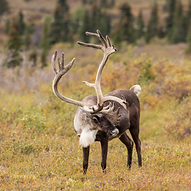
Ingstad ponders the population of the Caribou in the Canadian Arctic but acknowledges the toll of limiting the hunting would have on the natives.
If one accepts Hoare's estimate that there are five million caribou in all, and if one makes due allowance for the losses inflicted by wolf and wolverine, there would still be an appreciable surplus of calves every year. How many of these animals are annually shot by hunters can hardly be computed accurately. If, however, one makes a rough estimate of the human beings who are dependent upon the flesh of the caribou — a handful of white trappers and a few Indian and Eskimo tribes whose numbers are constantly diminishing — it would still seem that a steady increase of caribou is possible. This coincides with the view of the Indians who, influenced by the Canadian police, are, to an ever greater degree, abandoning their practices of purposeless mass slaughter. And now with the advent of the Thelon Game Sanctuary the caribou are assured of safe access to the western territories, provided this protected area is properly administered.
In this connection an additional fact of the utmost importance must be mentioned here. Trappers who live on the flesh of the caribou are simultaneously waging war upon its arch-enemy, the wolf. In order to gain some impression of the havoc wreaked by wolves, one would have to witness with his own eyes their wasteful slaughter. Often they slay for the sheer pleasure of killing and devour but a small portion of each carcass. Their murderous instincts affect, first of all, the calves. To throw some light on this situation, let me give some figures gleaned from the plainsmen east of Slave Lake: the dozen or so trappers who assemble there for the winter hunt, do away with some five hundred wolves annually. When one pauses to reckon that each wolf slays on the average of at least fifty caribou per year, the number of the latter whose lives are saved by men total twenty-five thousand. The deer in turn shot down by the hunters to provide themselves and their dogs with food constitute, in proportion to this, but a meager drain upon the herd.
If one looks a bit more closely at the other side of the question, with regard to the welfare of the people who live in the North, it is clear that their very existence would be threatened were the hunting of the caribou to be limited to any appreciable degree.
It would then no longer be possible for men to fare forth into the mighty wilderness where the dog-sled is the only means of transportation and the caribou the staple food of dog and man. And were we to deny the Caribou-Eaters their free nomad life on the trail of their daily bread, we should be robbing them of the very nerve-spring of their existence.
September 1, 1928
Helge Ingstad
The Land of Feast and Famine - Autumn Journey to the Land of the Caribou-Eaters

Ingstad meets Antoine, a Caribou-Eater who offers to take the trapper to his people near Lake Nonacho to hunt and fish. "From the caribou these Indians derive most of the food they require."
The factors had just returned to Snowdrift with a new stock of merchandise, and the Indians came paddling in from the islands in order to purchase toboggans and their winter supplies of ammunition, tobacco, and tea. Then they set their course eastward to Fond du Lac, whence they would start out for their hunting-grounds in the interior of the Barren Lands.
Dale was bound for the land of the Hudson Bay Eskimos. I, too, had made up my mind to leave Indian country behind, was thinking of going up north on my own, and was in the very act of making last-minute preparations, when I met Antoine.
Antoine was not a member of the Slave Lake tribe of Indians; he was a Caribou-Eater. The hunting-grounds of this tribe lie far off to the east and southeast of the lake. There a mighty arm of the forest extends far into the Barren Lands; it is crossed and recrossed by countless rivers and chains of large lakes. It is richer in fish and game than many another section and in olden times was the scene of many a bitter conflict between the tribes.
From the caribou these Indians derive most of the food they require. They live a more isolated life than the other tribes and are renowned as an energetic, nomadic hunter-folk, covering vast distances in the course of their travels. There exist many legends concerning their adventurous life, and their bitter struggles against hunger and cold when the caribou fail to appear. To be sure, the Indians who live in the neighborhood of Snowdrift are dependent upon the caribou during the greater part of each year, but the name " Caribou-Eater " has a natural association with the eastern plains, where the ancestors of this present folk chose emphatically to settle.
Originally there were large numbers of them, but sickness has claimed its toll, and today only a small group of them are left; these live on the banks of Nonacho Lake (the lake "with a string of islands"). It was from this district that Antoine had come.
I was sitting in front of my tent and struggling to repair a snowshoe when he suddenly appeared in front of me. Without uttering a word he picked up the snowshoe and with swift dexterity laced it with babiche; before I knew it, he smiled and returned the snowshoe to my hand. He then paused to admire my dogs and asked me whither I was bound. I motioned toward the north. Then he said: "Si, nen, Thelon thesi, white fox ihle, nezon (I, you, Thelon River go, many white fox, good)." I asked where we would be able to find fuel so far in the interior of the Barren Lands. He flung his arms out in the direction of the east and answered: " Nacha tue, detchen thle, sentilly (Big lake, lot of trees, all right)."
This interested me, not so much because of the hunting possibilities, but because it would give me an opportunity to live with the Caribou-Eaters and, together with them, penetrate into the country which had haunted my mind ever since I had come north: the country lying at the source of the Thelon River. The lower reaches of the river had been traced out by Tyrell; it winds its way through endless expanses of treeless plain before, at length, it empties as a mighty stream into Hudson Bay. But its head waters are unknown. They have forever been veiled in mystery. It is known, of course, that the Caribou-Eater Indians annually make long journeys by dog-sled to the upper Thelon, but they jealously guard the secrets surrounding this part of the country. Word had been spread abroad concerning a tract of forest growing about several large lakes in the very heart of the Barren Lands.
In the last analysis it is probable that this is the same freak of nature which Samuel Hearne heard mentioned when, in 1770-2, together with the Indians, he made his famous journey across the Barrens from Prince of Wales Fort on Hudson Bay to the mouth of the Coppermine River. In his travel notes, he writes: " For more than a generation past one family only, as it may be called . . . have taken up their Winter abode in those woods, which are situated so far on the barren ground as to be quite out of the track of any other Indians. . . . Few of the trading Northern Indians have visited this place; but those who have, give a pleasing description of it, all agreeing that it is situated on the banks of a river which has communication with several fine lakes. . . . The accounts given of this place, and the manner of life of its inhabitants, would, if related at full length, fill a volume. . . ." *
1 Samuel Hearne: A Journey from Prince of Wales Fort in Hudson's Bay, to the Northern Ocean. Undertaken by Order of the Hudson's Bay Company, for the Discovery of Copper Mines, a North West Passage, &c. In the Years 1769,1770, 1771, & 1772. (London: A. Strahan and T. Cadell; 1795.)
Antoine and I immediately came to an agreement. We decided that we would fish and hunt moose along the Snowdrift River until the caribou should appear from the north. On our first journey by sled we would follow the herd on their customary migration in a southeasterly direction as far as Otter Lake, where Antoine had arranged a meeting with other members of his tribe. Together with them, we would proceed to the main village of the Caribou-Eaters, on the shores of Nonacho Lake, from there making a rapid journey with a large following of Indians in the direction of the Thelon River.
Seven miles east, where the Snowdrift River empties into Stark Lake, was a well-known fishing-place. Thither we paddled, Antoine with his wife and children, and there, on the bank of the river, we raised our tents. We soon made the acquaintance of several other families belonging to the Slave Lake tribe. These, too, had planned to wait for good sledding before proceeding on into the Barrens. They were headed in a more northerly direction than we, in order that they might meet the Indians who, during the autumn, would be traveling through the country by canoe.
Ancient History
Germany
50000
B.C.E.
Palaeolithic and Mesolithic kill-butchering sites: the hard evidence
The upper paleolithic is characterized by advanced hunting of large animals with various weapons, and planning to maximize easy prey
Upper Palaeolithic and Mesolithic Hunting:
the archaeological record leaves us some direct evidence of man's hunting activities. At Meiendorf (Rust 1937) and Stellmoor (Rusf 1937), some bones of reindeer and birds still conserve weapon marks and a few pieces of silex have remained thrusted in mammalian bones; man kills reindeer with harpoons and sticks (fractured skulls), birds with bows and maybe slings. Three fractured skulls of red deer in Abri Pataud (Bouchud, 1975), and one bovid skull with a circular orifice in Saint Marcel (Allain, 1952) suggest the practice of the so called " co'up de merlin": man has delivered a blow similar to the one used today to butcher cattle. Probably the animal already immobilized (wounded or entrapped) was hit on the frontal with a big stone. At Kokorevo I (Siberia), a large scapula of bison is pierced by the upper end of a point made of bone (Boriskowksi, 1965). At High Furlong (Mesolithic), an elk was discovered with the marks of L7 wounds made by barbed points, of which two were found in the site, and by other arms. The animal had apparently been attacked at two distinct occasions: during the first one, hunters aimed at the legs to lame the animal (fig. 6), later hunters hit the thoracic region and the lungs to kill it. However the elk died in a little lake, perhaps imprisoned in the ice, and man had no access to the meat. The animal represents in fact a hunting loss (Hallam et a1.,1973).
Planning: very good. Many sites belong to Wpe e, were occupied periodically or seasonally and specialised in the capture of a particular game (e.g., horse, reindeeq, ibex). Game drive towards cliffs have been claimed and Solutre (Combier & Thevenot,1976) has long figured as an example, but the evidence is far from conclusive.
Scavenging: no doubt H. sapiens still killed or exploited animals in the occasional and opportunistic way of Lower Palaeolithic times. According to Lindner (Lindner,1941), hunters at Predmost utilised the carcasses of hundreds of mammoths that probably succumbed as a result of natural catastrophes, as food.
Food transport: selective transport of the most useful animal parts is claimed for many sites.
Specialised activities: sometimes the material is dislocated in distinct clusters that could reflect specialised activity areas as for example at Solutre (Combier & Thevenot, 1976). Site topography: some hunting sites were located in valleys enclosed by steep slopes as at Rascano (Gonziilez-Echegaray, 1979), Stellmoor (Rust, 1937), Meiendorf (Rust 1937), or at the foot of rocky cliffs at Solutr6 (Combier & Th6venot, 1,976).
4. Conclusions
Most of the Lower Palaeolithic sites analysed here belong to category a (butchering sites); other kind of concentrations are rare and difficult to ascertain. A number of hunting stations (category e) and a hunting stop (category f) form my sample for the age of Neanderthal man and related people. The Upper Palaeolithic is characterised by many hunting stations, while in Mesolithic times a hunting loss (category d ) was found as well as several sighting sites (category g). The foregoing distribution seems to reflect in a vague way an evolution from scavenging and haphazard opportunistic hunting to well organised, selective hunting activities. However, this reflection results no doubt in part from a priori assumptions concerning the evolution of hominid meat procurement often colouring the interpretations offered for the osseous "hard" data; these are frequently equivocal.
Vindija, 42000, Varaždin, Croatia
28500
B.C.E.
Neanderthal diet at Vindija and Neanderthal predation: The evidence from stable isotopes
The isotope evidence overwhelmingly points to the Neanderthals behaving as top-level carnivores, obtaining almost all of their dietary protein from animal sources
Archeological analysis of faunal remains and of lithic and bone tools has suggested that hunting of medium to large mammals was a major element of Neanderthal subsistence. Plant foods are almost invisible in the archeological record, and it is impossible to estimate accurately their dietary importance. However, stable isotope (13C and 15N) analysis of mammal bone collagen provides a direct measure of diet and has been applied to two Neanderthals and various faunal species from Vindija Cave, Croatia. The isotope evidence overwhelmingly points to the Neanderthals behaving as top-level carnivores, obtaining almost all of their dietary protein from animal sources. Earlier Neanderthals in France and Belgium have yielded similar results, and a pattern of European Neander- thal adaptation as carnivores is emerging. These data reinforce current taphonomic assessments of associated faunal elements and make it unlikely that the Neanderthals were acquiring animal protein principally through scavenging. Instead, these findings portray them as effective predators.
Stable Isotope Analyses.
Mammal bone collagen δ13C and δ15N values reflect the δ13C and δ15N values of dietary protein (14). They furnish a long-term record of diet, giving the average δ13C and δ15N values of all of the protein consumed over the last years of the measured individual's life. δ13C values can be used to discriminate between terrestrial and marine dietary protein in humans and other mammals (15, 16). In addition, because of the canopy effect, species that live in forest environments can have δ13C values that are more negative than species that live in open environments (17). δ15N values are, on average, 2–4‰ higher than the average δ15N value of the protein consumed (18). Therefore, δ15N values can be used to determine the trophic level of the protein consumed. By measuring the δ13C and δ15N values of various fauna in a paleo-ecosystem, it is possible to reconstruct the trophic level relationships within that ecosystem. Therefore, by comparing the δ13C and δ15N values of omnivores such as hominids with the values of herbivores and carnivores from the same ecosystem, it is possible to determine whether those omnivores were obtaining dietary protein from plant or animal sources.
Cheddar Reservoir, Cheddar BS26, UK
12000
B.C.E.
FOCUS: Gough’s Cave and Sun Hole Cave Human Stable Isotope Values Indicate a High Animal Protein Diet in the British Upper Palaeolithic
We were testing the hypothesis that these humans had a mainly hunting economy, and therefore a diet high in animal protein. We found this to be the case, and by comparing the human δ15N values with those of contemporary fauna, we conclude that the protein sources in human diets at these sites came mainly from herbivores such as Bos sp. and Cervus elaphus
We undertook stable isotope analysis of Upper Palaeolithic humans and fauna from the sites of Gough's Cave and Sun Hole Cave, Somerset, U.K., for palaeodietary reconstruction. We were testing the hypothesis that these humans had a mainly hunting economy, and therefore a diet high in animal protein. We found this to be the case, and by comparing the human δ15N values with those of contemporary fauna, we conclude that the protein sources in human diets at these sites came mainly from herbivores such as Bos sp. and Cervus elaphus. There are a large number ofEquus sp. faunal remains from this site, but this species was not a significant food resource in the diets of these Upper Palaeolithic humans.
If the humans hunted and consumed mainly horse, then their 15N values should be c. 3–5‰ (Equus 15N value of 0·7‰+enrichment of 2–4‰). Instead, their 15N values make more sense if they lived mostly off Bos and Cervus elaphus (Bos and Cervus values of c. 3‰+enrichment of 2–4‰=the observed values c. 6–7‰). It is also possible that other species, including Rangifer tarandus, were consumed by these individuals. Rangifer tarandus has 15N values similar to Cervus elaphus (Richards, 1998), and has more positive 13C values, which may explain the observed slight enrichment in the human 13C values. A number of artefacts made from Rangifer tarandus have been found at Gough’s, but there is no other evidence that this species was being exploited for food
Province of Crotone, Italy
500
B.C.E.
On the Sociology of Ancient Sport
One report states that a trainer named Pythagoras recommended a meat diet to the Olympic athletes he trained.
A lack of animal-derived protein seems to have been rectified early in history, as there are two reports of the introduction of meat into the athletes’ diet. One report states that a trainer named Pythagoras recommended a meat diet to the athletes he trained. https://www.omicsonline.org/open-access/a-comparison-of-ancient-greek-and-roman-sports-diets-with-modern-day-practices-2473-6449-1000104.php?aid=69865
8 He [Pythagoras] is said to have been the first to train athletes on a meat diet. The first athlete he did this with was Eurymenes. Formerly they had trained on dried figs, moist cheese, and wheat. Some say that it was a trainer named Pythagoras and not the philosopher who was responsible for this innovative diet. For our Pythagoras prohibited killing, not to mention eating, life which possessed souls like our own.
Diogenes Laertius, Lives of the Philosophers 8.12
Sport and Recreation
To all appearances medical knowledge in general and nutrition in particular was widespread in Pythagorean circles in Southern Italy, especially in Kroton. Burkert has pointed out that the fmaous doctor Alcmaeon came from the Pythagorean center of Kroton. From the akousmata (secret doctrines), which doubtless contain old religious traditions, we learn that the Pythagoreans were not originally strict vegetarians; the consumption of meat was permitted, with the exception of lamb and the meat of draft oxen. Burkert considers there is some likelihood that Pythagoras introduced a meat diet for athletes. He believes this tradition arose when Pythagorean vegetarianism had not yet been completely developed. In later times, when vegetarianism had prevailed, a second tradition has possibly been invented, in which it was not Pythagoras, the philosopher from Samos and Kroton, but a homonymous person who wrot the great 'trainer's recipe book'.
57: There are similar issues regarding the transmission in later sources of Pythagoras advising the successful heavy athlete Eurymenes of Samos to use a special meat-based diet instead of the dried figs and cheese he had previously been eating.
On the Sociology of Ancient Sport - page 43.
Mantineia 221 00, Greece
480
B.C.E.
A Comparison of Ancient Greek and Roman Sports Diets with Modern Day Practices
Dromeus, a long-distance runner, is said to have first thought of eating meat for training instead of just cheese and won multiple victories.
The second report is that of Pausanias, who writes of Dromeus, a long-distance runner from Stymphalos [23].
“...he won two victories in the dolichos at Olympia, the same number in the Pythian Games, three at the Isthmian and five at the Nemean. He is said to have first thought of eating meat (as part of his training diet). Until then the food for athletes was cheese fresh out of the basket.”
Clearly, if his success is anything to go by, then Dromeus had really found a winner’s diet. There are also reports of athletes eating meat from oxen, bulls, goats and deer, a very” red-meat” diet which is a rich form of protein. Moreover, with meat as a part of their diet, the performance of competing athletes would most certainly have improved noticeably.
5 A man named Dromeus from Mantineia was said to have been the first we know of to have won the pankration by default [ = akoniti]. Pausanias 6.11.4
Dromeus, Long-Distance Runner
There was a man from Stymphalos, named Dromeus, whose record as a long-distance runner was exceptional: he won two victories in the dolichos at Olympia, the same number in the Pythian Games, three at the Isthmian and five at the Nemean. He is said to have first thought of eating meat (as part of his training diet). Until then the food for athletes was cheese fresh out of the basket.


