

Eskimo
The Inuit lived for as long as 10,000 years in the far north of Canada, Alaska, and Greenland and likely come from Mongolian Bering-Strait travelers. They ate an all-meat diet of seal, whale, caribou, musk ox, fish, birds, and eggs. Their nutritional transition to civilized plant foods spelled their health demise.

Recent History
December 31, 1912
Book of the Eskimos

The Eskimos' dearest pastime is visiting and it's about sharing meat such as frozen fish or meat, and then boiled walrus or seal.
THE ESKIMO'S DEAREST PASTIME is visiting. More often than not, he takes his meals in somebody else's house, his family with him, or else he himself has guests, as many as his provisions can accommodate. Visiting is an important social function and is governed by a great deal of etiquette. A man's reputation is to a large extent dependent upon how often he invites, how well he serves his guests, and the perfection of his manners as a host. Consequently, the best pieces of the game that he catches are reserved for visitors. And when he has had a good catch, he is the happiest man on earth. He stands by the entrance to his house and calls out: "Come visit my house! Come visit me!"
The rest of the four or five families at the settlement—those who have seen him come home with game, and who have more or less been expecting his invitation—come running immediately. As they enter his house, they simply say: "Hereby somebody comes visiting!" The women take off their long kamiks and their outer garments and crawl up on the bunks, the men sit down on the skins that cover the floor, while the children and the youngsters either sit or stand in a flock by the entrance.
Then the man in the house says how happy he is to see while everybody just sits around talking about the hunt, the dogs, or the weather. Suddenly the host gets a bright idea.
"Do you happen to want something to eat?" he asks, and the other men then answer him that of course they didn't expect at all to get something to eat, but that if he wants to give them food, then they know that no place in the world will they get such good things as in this particular house!
"Alas no!" says the host. "You are in bad luck. It so happens that I am a bad hunter, and I have nothing to treat you to. But if you will lower yourselves to taste the poor carcass I can offer you, then let me go and fetch it in!"
Then the great hunter goes out to the meat rack and gets his best piece of meat. In order to get it in through the narrow entrance tunnel, he puts a strap around it and hands one end of the strap to the young people just inside. They pull the meat in with loud shouts about how heavy it is, how this great hunter always has big things to offer, etc., all to flatter their host.
The meat is placed in the middle of the circle, and the host takes his axe and begins to chop the frozen mass to pieces. When this is done, he takes a little piece and begins to eat, but says in a highly worried tone of voice:
"Alas I have to throw it all out again, for it tastes so awfully bad. The dogs have soiled it, all kinds of dirt is on it. I can't offer it to such excellent guests."
Upon this invitation, everybody grabs a piece, each man hands one to his wife on the bunk behind him, and soon there is noisy chewing and smacking of lips only interrupted by loud praises of the incomparable delicacy that is being consumed here. The men say only little, but the women are gabbing continuously, as women everywhere are wont to do. It is beneath the dignity of an Eskimo man to pay any attention to the women, and if the noise from them becomes too loud, he may look about him in astonishment.
"What is this!" he shouts. "Is it getting to be spring? Where am I? It sounds as if the auks on the cliffs are quacking. Are there really birds here, or is it women that are nearby?"
That quiets the ladies down a little, but then everybody laughs, and the gaiety starts up again. The host's wife is busy boiling meat from the newly caught game over her blubber lamp, and when everybody has had enough of the frozen delicacies, they start in on the steaming walrus or seal meat. The polite guests fart and belch to show how well they are digesting the treats of the house. They continue eating until they are too gorged to get another bite down. If a guest gets tired, he will simply go to sleep where he sits and start in on the meal again when he wakes up.
If it becomes apparent that the provisions of the house are about to give out, another hunter will stand up and ask to be allowed to show what his house has to offer. Thus the party goes from house to house, and the feast may last for days.
January 1, 1913
Dawn in Arctic Alaska

White man's food starts to be eaten in 1913
In a general way it is known that all natives along this coast were eating some white man's food at most of their meals after 1913; see, for instance, the descriptions of typical meals by Dr. Diamond Jenness in his Dawn in Arctic Alaska (University of Minnesota Press, 1957). The book was compiled from the notes Dr. Jenness kept while he was anthropologist of our third expedition, the Canadian Arctic Expedition of 1913-18. See also my own writings about the coast east of Point Barrow for the years 1906-14. (In view of the idea of some, that the application of extreme heat to food is carcinogenic, it might be noted that a chief European food item around 1910-30 was fried bread — doughnuts, crullers — cooked in exceedingly hot seal oil).
March 10, 1913
Vilhjalmur Stefansson
Discovery
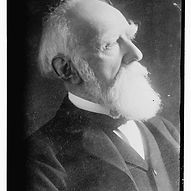
Stefansson talks with Lord Strathcona who ate only eggs, milk, and butter while also skipping lunch and ultimately breakfast.
"My talk before the Royal Geographical Society was, however, incidental. The main purpose of my visit was to enlist Strathcona's support. My first contacts with him were merely casual occasions for him to use his position as Canada's High Commissioner to expedite the work of the Canadian Arctic Expedition. It was not long, however, before there grew up between the bond of a common interest--an interest in dietary matters. I told him what I had learned. from the Eskimos, and he told me that years ago in Canada he had begun a regimen all his own by skipping lunch and ultimately breakfast too. Then he had begun to wonder why, since he liked some things better than others, he should bother to eat something different on Tuesday when he had liked what he had eaten on Monday better. This led to his questioning what he really did like and, when he got the answer, eating nothing else--eggs, milk, and butter. Although this combination would not have made up my favorite meal, much as I favor butter, the point was that Strathcona and I were in agreement on the feeling that the longer a man ate one complete food exclusively, the more likely he was to relish it."
https://en.wikipedia.org/wiki/Donald_Smith,_1st_Baron_Strathcona_and_Mount_Royal Lord Stratcona died later that winter at the age of 93.
December 31, 1913
Book of the Eskimos

"We just ate, and I learned what was good. The diet of the Polar Eskimos is actually healthful and varied. When you have meat and meat, and meat again, you learn to distinguish between the different parts of an animal."
It took me three weeks to build the house, and when Knud returned, he started a series of house-raising feasts in grand style. Actually it was one single celebration, but it lasted a couple of weeks. At the time, there were eight families in the settlement, and they all seemed capable of eating at every hour of the endless day. As I have mentioned, sleep was permitted during the banquets, but expressions of satiety in the form of air explosions from every possible opening of the body seemed to be good substitutes for sleep. Knud was at the head of them all. He sang and told stories; he cooked and arranged food orgies the like of which had rarely been seen. His ability to drum up edibles was formidable. We didn't have to supply much of them, ourselves. It was Knud's special art during a meal to start reminiscing about gigantic feasts of yore. Then his eyes assumed a dreamy look while he softly mumbled something about tail of narwhale, well fermented, rotten eider ducks, or other beautiful treats.
Immediately, somebody or other jumped up and demanded to be allowed to show that also in this place such palate-caressing articles could be prepared. Knud expressed a little doubt—but no more than to make it a challenge. The result was always that the man and a couple of his friends ran off to fetch the delicacies. They might otherwise have been set aside for the visit of a dear relative or some such purpose. Now they went to Knud and his guests, almost the entire settlement. Our house seemed to have inexhaustible riches. How we procured all that was consumed I don't know; that was Knud's department. He just told somebody or other to go out and get some cooking meat. If then the poor fellow went out to obey the glorious command, and it happened that he returned to report that there was no more meat on the rack, Knud turned a little joke in his direction so that everybody present laughed at him. The man couldn't bear this loss of honor; he went out again and came back with all he could carry. There was no point asking where he got it from: meat was considered common property, so it didn't really matter.
We just ate, and I learned what was good. The diet of the Polar Eskimos is actually healthful and varied. When you have meat and meat, and meat again, you learn to distinguish between the different parts of an animal. The breast doesn't taste at all like the muscles of the hindlegs, for instance. And little by little I learned the finesse of Eskimo food preparation. One of the greatest delicacies, narwhale skin, is either served fresh and raw, or it is preserved with dried meat in big skin bags filled with blubber. Seals are used either as boiling meat or put in the meat cache to ferment, whole and unskinned. Then their meat tastes strong and sweet as sugar, and the liver is particularly desirable, tasting somewhat like preserved cranberries.
January 1, 1914
The Northern Copper Inuit - A History

The Inuit were a relatively healthy people, in 1914, disease was virtually unknown between Coronation Gulf and the magnet pole.
Health and Disease
Before the aerial of Eurocanadians to the Canadian Arctic, the Inuit were a relatively healthy people. Deaths due to hunting accidents and starvation were common (and life expectancy was relatively short), but the Inuit were free of major infectious disease. According to anthropologist Diamond Jenness, in 1914 disease was virtually unknown between Coronation Gulf and the magnet pole(1964:140). In ensuing decades, following increased contact with white traders, missionaries, and police, the Copper Inuit fell prey to tuberculosis, influenza, measles, and venereal disease. Many of these diseases proved fatal to the Inuit, who had no natural immunity.

