


Recent History
January 4, 1843
Osborne Russell
Journal of a Trapper

The Bison of North America are described. "And it also requires experience to enable him choose a fat animal the best looking Buffaloe is not always the fattest and a hunter by constant practice may lay down rules for selecting the fattest when on foot which would be no guide to him when running upon horseback for he is then placed in a different position and one which requires different rules for choosing. The cows are fattest in Octr and the Bulls in July."
THE BUFFALOE OR BISON
This animal has been so minutely described by travellers that I have considered it of little importance to enter into the details of its shape and size, and shall therefore omit those descriptions with which I suppose the public to be already acquainted, and try to convey some idea of its peculiarities which probably are not so well known. The vast numbers of these animals which once traversed such an extensive region in Nth. America are fast diminishing. The continual increasing demand for robes in the civilised world has already and is still contributing in no small degree to their destruction, whilst on the other hand the continual increase of wolves and other 4 footed enemies far exceeds that of the Buffaloe when these combined efforts for its destruction is taken into consideration, it will not be doubted for a moment that this noble race of animals, so useful in supplying the wants of man, will at no far distant period become extinct in North America. The Buffaloe is already a stranger, altho so numerous 10 years ago, in that part of the country which is drained by the sources of the Colerado, Bear and Snake Rivers and occupied by the Snake and Bonnack Indians. The flesh of the Buffaloe Cow is considered far superior to that of the domestic Beef and it is so much impregnated with salt that it requires but little seasoning when cooked. All the time, trouble and care bestowed by man upon improving the breed and food of meat cattle seems to be entirely thrown away when we compare those animals in their original state which are reared upon the food supplied them by Nature with the same species when domesticated and fed on cultivated grasses and grains and the fact seems to justify the opinion that Nature will not allow herself to be outdone by art for it is fairly proved to this enlightened age that the rude and untaught savage feasts on better beef and Mutton than the most learned and experienced Agriculturists now if every effect is produced by a cause perhaps I may stumble upon the cause which produces the effect in this instance at any rate I shall attempt it - In the first place, the rutting season of the Buffaloe is regular commencing about the 15th of July when the males and females are fat, and ends about the 15 of Aug. Consequently the females bring forth their young in the latter part of April and the first of May when the grass is most luxuriant and thereby enables the cow to afford the most nourishment for her calf and enables the young to quit the natural nourishment of its dam and feed upon the tender herbage sooner than it would at any other season of the year. Another proof is that when the rutting season commences the strongest healthiest and most vigorous Bulls drive the weaker ones from the cows hence the calves are from the best breed which is thereby kept upon a regular basis. In summer season they generally go to water and drink once in 24 hours but in the winter they seldom get water at all. The cows are fattest in Octr and the Bulls in July The cows retain their flesh in a great measure throughout the winter until the Spring opens and they get at water from whence they become poor in a short time So much for the regularity of their habits and the next point is the food on which they subsist The grass on which the Buffaloe generally feeds is short, firm and of the most nutritious kind. The salts with which the mountain regions is much impregnated are imbibed in a great degree by the vegetation and as there is very little rain in Summer Autumn or winter the grass arrives at maturity and dries in the sun without being wet it is made like hay; in this state it remains throughout the winter and while the spring rains are divesting the old growth of its nutricious qualities they are in the meantime pushing forward the new - The Buffaloe are very particular in their choice of grass always preferring the short of the uplands to that of the luxuriant growth of the fertile alluvial bottoms. Thus they are taught by nature to choose such food as is most palatable and she has also provided that such as is most palatable is the best suited to their condition and that condition the best calculated to supply the wants and necessities of her rude untutored children for whom they were prepared. Thus nature looks with a smile of derision upon the magnified efforts of art to excel her works by a continual breach of her laws The most general mode practiced by the Indians for killing Buffaloe is running upon horseback and shooting them with arrows but it requires a degree of experience for both man and horse to kill them in this manner with any degree of safety particularly in places where the ground is rocky and uneven. The horse that is well trained for this purpose not only watches the ground over which he is running and avoids the holes ditchs and rocks by shortening or extending his leaps but also the animal which he is pursuing in order to prevent being `horned' when tis brot suddenly to bay which is done instantaneously and if the Buffaloe wheel to the right the horse passes as quick as thought to the left behind it and thereby avoids its horns but if the horse in close pursuit wheels on the same side with the Buffaloe he comes directly in contact with its horns and with one stroke the horses entrails are often torn out and his rider thrown headlong to the ground After the Buffaloe is brought to bay the trained horse will immediately commence describing a circle about 10 paces from the animal in which he moves continually in a slow gallop or trot which prevents the raging animal from making a direct bound at him by keeping it continually turning round until it is killed by the rider with arrows or bullets. If a hunter discovers a band of Buffaloe in a place too rough and broken for his horse to run with safety and there is smooth ground nearby he secretly rides on the leward side as near as he can without being discovered he then starts up suddenly without apparently noticing the Buffaloe and gallops in the direction he wishes the band to run the Buffaloe on seeing him run to the plain start in the same direction in order to prevent themselves from being headed and kept from the smooth ground The same course would be pursued if he wished to take them to any particular place in the mountains - One of the hunters first instructions to an inexperienced hand is "run towards the place where you wish the Buffaloe to run but do not close on them behind until they get to that place" for instance if the hunter is to the right the leading Buffaloe keep inclining to the right and if he should fall in behind and crowd upon the rear they would separate in different directions and it would be a mere chance if any took the direction he wished them - When he gets to the plain he gives his horse the rein and darts thro the band selects his victim reins his horse up along side and shoots and if he considers the wound mortal he pulls up the rein the horse knowing his business keeps along galloping with the band until the rider has reloaded when he darts forward upon another Buffaloe as at first A Cow seldom stops at bay before she is wounded and therefore is not so dangerous as a Bull who wheels soon after he is pushed from the band and becomes fatigued whether he is wounded or not. When running over ground where there is rocks holes or gullies the horse must be reined up gradually if he is reined at all there is more accidents happens in running Buffaloes by the riders getting frightened and suddenly checking their horses than any other way. If they come upon a Gully over which the horse can leap by an extra exertion the best plan is to give him the rein and the whip or spur at the same time and fear not for any ditch that a Buffaloe can leap can be cleared with safety by a horse and one too wide for a Buffaloe to clear an experienced rider will generally see in time to check his horse gradually before he gets to it - And now as I have finished my description of the Buffaloe and the manner of killing them I will put a simple question for the reader's solution -
If Kings Princes Nobles and Gentlemen can derive so much sport and Pleasure as they boast of in chasing a fox or simple hare all day? which when they have caught is of little or no benefit to them what pleasure can the Rocky Mountain hunter be expected to derive in running with a well trained horse such a noble and stately animal as the Bison? which when killed is of some service to him. There are men of noble birth noble Estate and noble minds who have attained to a tolerable degree of perfection in fox hunting in Europe and Buffaloe hunting in the Rocky Mountains, and I have heard some of them decide that the points would not bear a comparison if the word Fashion could be stricken from the English language It also requires a considerable degree of practice to approach on foot and kill Buffaloe with a Rifle A person must be well acquainted with the shape and make of the animal and the manner which it is standing in order to direct his aim with certainty - And it also requires experience to enable him choose a fat animal the best looking Buffaloe is not always the fattest and a hunter by constant practice may lay down rules for selecting the fattest when on foot which would be no guide to him when running upon horseback for he is then placed in a different position and one which requires different rules for choosing.
August 1, 1854
The White Indian Boy - The Story of Uncle Nick among the Shoshones
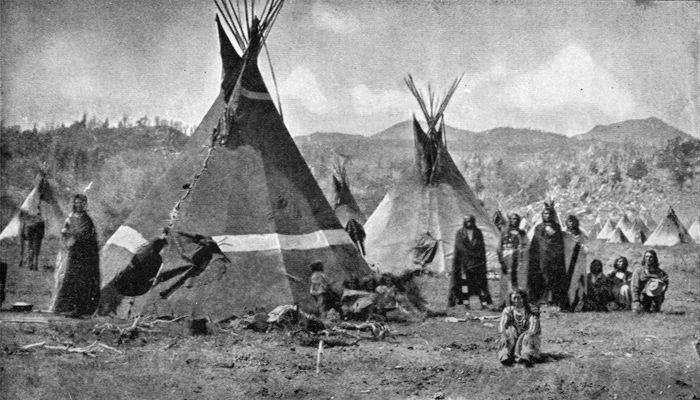
A white pioneer in Utah learns Native American language and then at 12 years old runs away to eat meat with the Indians. He is adopted as a chieftain's brother and then lives the life of hunting and fishing. His fascinating accounts points out importance of fatty meat over lean while describing a lush world just 200 years ago.
Quotes relating to meat, fat, hunting.
I was born in Illinois in 1842. I crossed the plains by ox team and came to Utah in 1850. My parents settled in Grantsville, a pioneer village just south of the Great Salt Lake. To protect themselves from the Indians, the settlers grouped their houses close together and built a high wall all around them. Some of the men would stand guard while others worked in the fields. The cattle had to be herded very closely during the day, and corralled at night with a strong guard to keep them from being stolen. But even with all our watchfulness we lost a good many of them. The Indians would steal in and drive our horses and cows away and kill them. Some times they killed the people, too.
The savages that gave us the most trouble were called Gosiutes. They lived in the deserts of Utah and Nevada. Many of them had been banished into the desert from other tribes because of crimes they had committed. The Gosiutes were a mixed breed of good and bad Indians.
They were always poorly clad. In the summer they went almost naked; but in winter they dressed themselves in robes made by twisting and tying rabbit skins together. These robes were generally all they had to wear during the day and all they had to sleep in at night.
They often went hungry, too. The desert had but little food to give them. They found some edible roots, the sego, and tintic, which is a kind of Indian potato, like the artichoke; they gathered sunflower and balzamoriza seeds, and a few berries. The pitch pine tree gave them pine nuts; and for meat they killed rabbits, prairie dogs, mice, lizards, and even snakes. Once in a great while they got a deer or an antelope. The poor savages had a cold and hungry time of it; we could hardly blame them for stealing our cattle and horses to eat. Yes, they ate horses, too. That was the reason they had no ponies, as did the Bannocks and Shoshones and other tribes.
A few tame Indians hung around the settlements begging their living. The people had a saying, “It is cheaper to feed them than to fight them,” so they gave them what they could; but the leaders thought it would be better to put them to work to earn their living; so some of the whites hired the Indians. My father made a bargain with old Tosenamp (White-foot) to help him. The Indian had a squaw and one papoose, a boy about my age. They called him Pantsuk.
At that time my father owned a small herd of sheep, and he wanted to move out on his farm, two miles from the settlement, so he could take better care of them. Old Tosenamp thought it would be safe to do so, as most of the Indians there were becoming friendly, and the wild Indians were so far away that it was thought they would not bother us; so we moved out on the farm.
Father put the Indian boy and me to herding the sheep. I had no other boy to play with. Pantsuk and I became greatly attached to each other. I soon learned to talk his language, and Pantsuk and I had great times together for about two years. We trapped chipmunks and birds, shot rabbits with our bows and arrows, and had other kinds of papoose sport.
Some months after this the poor little fellow took sick. We did all we could for him, but he kept getting worse until he died. It was hard for me to part with my dear little Indian friend. I loved him as much as if he had been my own brother.
After Pantsuk died, I had to herd the sheep by myself. The summer wore along very lonely for me, until about the first of August, when a band of Shoshone Indians came and camped near where I was watching my sheep. Some of them could talk the Gosiute language, which I had learned from my little Indian brother. The Indians seemed to take quite a fancy to me, and they would be with me every chance they could get. They said they liked to hear me talk their language, for they had never heard a white boy talk it as well as I could.
One day an Indian rode up to the place where I was herding. He had with him a little pinto pony. I thought it was the prettiest animal I ever saw. The Indian could talk Gosiute very well. He asked me if I did not want [10]to ride the pony. I told him that I had never ridden a horse. He said that the pony was very gentle, and helped me to mount it. Then he led it around for a while. The next day he came again with the pony and let me ride it. Several other Indians were with him this time. They took turns leading the pony about while I rode it. It was great sport for me. I soon got so I could ride it without their leading it. They kept coming and giving me this fun for several days.
One day, after I had ridden till I was tired, I brought the pony back to the Indian who had first come, and he asked me if I did not want to keep it.
“I would rather have that pony,” I replied, “than anything else I ever saw.”
“You may have it,” he said, “if you will go away with us.”
I told him I was afraid to go. He said he would take good care of me and would give me bows and arrows and all the buckskin clothes I needed. I asked him what they had to eat. He said they had all kinds of meat, and berries, and fish, sage chickens, ducks, geese, and rabbits. This sounded good to me. It surely beat living on “lumpy dick”(Made by cooking moistened flour in milk.) and greens, our usual pioneer fare.
“Our papooses do not have to work,” he went on, “they have heap fun all the time, catching fish and hunting and riding ponies.”
That looked better to me than herding a bunch of sheep alone in the sagebrush. I told him I would think it over. That night I talked with old Tosenamp. The Indians had tried to get him to help them induce me to go with them. He refused; but he did tell me that they would not hurt me and would treat me all right. The next day I told them I would go.
My parents knew nothing about it. They would never have consented to my going. And it did look like a foolish, risky thing to do; but I was lonely and tired and hungry for excitement, and I yielded to the temptation. In five days the Indians were to start north to join the rest of their tribe. This Indian was to hide for two days after the rest had gone and then meet me at a bunch of willows about a mile above my father’s house after dark with the little pinto pony. The plan was carried out, as you will see. I went with them, and for two years I did not see a white man. This was in August, 1854. I was just about twelve years old at the time.
The night came at last when we were to leave. Just after dark I slipped away from the house and started for the bunch of willows where I was to meet the Indian. When I got there, I found two Indians waiting for me instead of one. The sight of two of them almost made me weaken and turn back; but I saw with them my little pinto pony and it gave me new courage. They had an old Indian saddle on the pony with very rough rawhide thongs for stirrup straps. At a signal from them, I jumped on my horse and away we went. Our trail led towards the north along the western shore of the Great Salt Lake.
The Indians wanted to ride fast. It was all right at first; but after a while I got very tired. My legs began to hurt me, and I wanted to stop, but they urged me along till the peep of day, when we stopped by some very salt springs. I was so stiff and sore that I could not get off my horse, so one of them lifted me off and stood me on the ground, but I could hardly stand up. The rawhide [14]straps had rubbed the skin off my legs till they were raw. The Indians told me that if I would take off my trousers and jump into the salt springs it would make my legs better; but I found that I could not get them off alone; they were stuck to my legs. The Indians helped me, and after some very severe pain we succeeded in getting them off. A good deal of skin came with them.
I ate some duck and dried meat and felt better.
We traveled all day over a country that was more like the bottom of an old lake than anything else. We camped that night by another spring. The Indians lifted me from my horse, put me down on a robe and started a fire. Then they caught some fish and broiled them again on the coals. It was a fine supper we had that night.
The next morning I felt pretty well used up; but when I had eaten some fish and a big piece of dried elk meat for breakfast, I felt more like traveling. Then we started again.
The old squaw put her hand on my head and began to say something pitiful to me, and I began to cry. She cried, too, and taking me by the arm, led me into the tepee, and pointed to a nice bed the chief’s wife had made for me. I lay down on the bed and sobbed myself to sleep. When I awoke, this new mother of mine brought [17]me some soup and some fresh deer meat to eat. I tell you it tasted good.
The next morning my new mother thought she would give me a good breakfast. They had brought some flour from the settlements, and she tried to make me some bread, such as I had at home. They had no soda, nothing but flour and water, so the bread turned out to be pretty soggy. I think she didn’t like it very well when she found I didn’t eat it, but I simply couldn’t choke it down. I did make a good meal, however, of the fried sage chicken and the fresh service berries that she brought with the bread.
Nothing else of importance happened until we reached Big Hole Basin. There I saw the first buffalo I had seen since crossing the plains. Seven head of them appeared one morning on a hill about a mile away. Ten Indians started after them. One, having a wide, blade-like spear-head attached to a long shaft, would ride up to a buffalo and cut the hamstrings of both legs, then the others would rush up and kill the wounded animal.
About fifteen squaws followed the hunters to skin the buffaloes and get the meat. Mother and I went with them. The squaws would rip the animals down the back from head to tail, then rip them down the belly and take off the top half of the hide and cut away all the meat on that side from the bones. They would tie ropes to the feet of the carcass and turn it over with their ponies, to strip off the skin and flesh from the other side in the same way.
The meat was then carried to camp to be[23] sliced in thin strips and hung up to dry. When it was about half dry, the squaws would take a piece at a time and pound it between two stones till it was very tender. It was then hung up again to dry thoroughly. The dried meat was put into a sack and kept for use in the winter and during the general gatherings of the tribe. The older it got the better it was. This is the way the Indians cured all of their buffalo meat. Washakie had about five hundred pounds of such meat for his own family when we reached Deer Lodge Valley, now in Montana, the place of our great encampment.
Washakie’s wife was there and she told me to dash ahead and tell the chief to hurry back. When he came, he ordered the band to stop and pitch camp. We had to stay there a week to let mother get well enough to travel again. There were a great many antelope in the valley and plenty of fish in the stream by the camp. When mother would go to sleep, I would go fishing. When she awoke Hanabi would call, “Yagaki come,” and I would get back in double-quick time.
One day while we were camped here waiting for mother to get better, I went out with Washakie and the other Indians to chase antelope. About fifty of us circled around [31]a bunch and took turns chasing them. The poor little animals were gradually worn out by this running and finally they would drop down one after another, hiding their heads under the bushes, while the Indians shot them to death with their bows and arrows. I killed two myself. When I got home and told mother about it, she bragged about me so much that I thought I was a “heap big Injun.”
Mother’s arm soon got well enough for her to travel, for the medicine man had fixed it up very well, so we took up our journey again. There were a great many buffaloes and antelope too, where we next pitched camp. We stayed there for about three weeks. During the times that she could not watch me, mother had Washakie take me out on his hunting trips. That just suited me. It was lots of fun to watch the Indian with the big spear dash up and cut the hamstrings of the great animals. When they had been crippled in this way, we would rush up and shoot arrows into their necks until they dropped dead. The first day we killed six, two large bulls and four cows.
I told Washakie that my bow was too small to kill buffaloes with. He laughed and said I should have a bigger one. When we got back to camp, he told some Indians what I had said and one very old Indian, whose name was Morogonai, gave me a very fine bow and another Indian gave me eight good arrows. I felt very proud then; I told mother that the next time I went out I would kill a whole herd of buffaloes. She said she knew I would, but she did not know what they could do with all the meat.
Washakie said that I was just like the rest of the white men. They would kill buffaloes as long as there were any in sight and leave their carcasses over the prairies for the wolves. He said that was not the way of the Indians. They killed only what they needed and saved all the meat and hides.
“The Great Spirit,” he said, “would not like it if we slaughtered the game as the whites do. It would bring bad luck, and the Indians would go hungry if they killed the deer and buffaloes when they were not needed for food and clothing.”
Two or three days after this we went out again and killed two more buffaloes. When we got back mother asked how many I had killed. I told her that I shot twice at them and I believed I had hit one. She said that I would be the best hunter in the tribe afterwhile, and some day, she said, I would be a big chief.
We now started for the elk country. When we got there, the Indians killed about one hundred elk and a few bear; but by that time it was getting so cold that we set out for our winter quarters. After traveling a few days we reached a large river, called by the Indians Piatapa, by the whites the Jefferson River; it is now in Montana. Here we pitched camp to stay during the “snowy moons.”
Most of the buffaloes by this time had left for their winter range; but once in a while we saw a few as they passed our camp. The Indians did not bother them, however, because we had plenty of dried meat, and for fresh meat there were many white-tail deer that we could snare by hanging loops of rawhide over their trails through the willows. There were also a great many grouse and sage hens about in the brush. I have killed as many as six or seven of these a day with my bow and arrows.
My old mother also told me many things that happened when she was a little girl. She said that her father was a Shoshone, and her mother a Bannock. She said she was sixty-two “snows” (years) old when I came. She had had four children, three boys and a girl. When the girl was seven years old, she was dragged to death by a horse. Her two sons were killed by the snowslide, so Washakie and I were the only ones she had left.
For three or four more days we all traveled south again. The game was plentiful here, elk, deer, antelope, and buffalo, so we camped for several days and stocked up with fresh meat.
It was a great game country, too. We could see buffaloes at any time and in any direction that we looked. There were herds of antelope over the flats. I had great fun running them. Washakie said that I was riding my horse too much, that he was getting thin. He told me to turn the pony out, and he would give me another horse. I was very glad to let my little pinto have a rest and get fat again.
The next morning I went with mother and another squaw to get the elk. Washakie asked me if I thought I could find it. I told him that I knew I could, so we started and I led them right to it. As we were skinning the elk, mother said that I had spoiled the skin by shooting it so full of holes. But the meat was fat and tender.
The Indians killed a great many elk, deer, and moose while in this valley, and the squaws had all they could do tanning the skins and drying the meat. I asked Washakie if he was planning to winter in this valley.
“Oh, no,” he replied. “The snow falls too deep here. After the buffalo get fat, and we kill all we want for our winter use, we will go a long way west out of the buffalo country, but where there are plenty of deer and antelope and fish. Some of the fish,” he said, “are as long as you are.”
Berries were getting ripe, so we papooses would go with our mothers up in the hills and gather them to dry. It was great fun.
By this time we had gathered most of the berries that grew along the foothills; the squaws were afraid to go farther into the mountains after the bear excitement; so then they stopped berry picking and went to work in earnest tanning buckskin and drying meat for winter use. The Indians quit hunting for elk and deer; for they already had all of the skins that the women could get ready for the trading trip they had planned.
It was the custom of the tribe to make a journey almost every fall to Salt Lake City, and other White settlements, and swap their buckskin and buffalo robes for red blankets, beads, ammunition, and other things they needed. Mother and Hanabi worked all day and away into the night to get their skins ready in time, and I helped them all I could. I got an old horse and dragged down enough wood to last while we stayed there. I carried all the water for them, and no kid dared to call me a squaw either.
Finally the time came for us to begin killing buffaloes for our winter’s supply of meat. We did not have to hunt them, however, for we could see them at any time in almost any direction. Many a time I went out with Washakie to watch the hunters kill the buffaloes. Washakie wanted only five and we soon got them; but it took mother and Hanabi a good many days to tan their hides and get the meat ready for winter.
Mother was afraid that I would get sick from not having bread and milk to eat, for I told her that was what I always had for supper when I was home. She thought that eating meat all the time would not agree with me and would make me unhealthy. Often she would have fried fish and fried chickens or ducks for supper. When I first went to live with her, she made a small sack and tied it to my saddle. She would keep this sack full of the best dried fish when we were traveling, so that I could eat if I got hungry; for she said that I could not go all day without eating anything, as the Indians often did. Every morning she would empty my lunch sack and refill it with fresh food. She soon found out what I liked best, and she always had it for me; so you see I had plenty to eat, even if I was with Indians; and that is more than a great many white children had at that time.
I was very healthy while I was with the Indians.
Spring came at last. We moved down the river about fifteen miles where we could get better grass for our horses. Here were plenty of white-tailed deer and antelope, some elk, and a few mountain sheep. Ducks and geese also were plentiful.
We stayed here until about the middle of May. The big fish they had told me about began to come up the river. And they were really big ones; two of them made all the load I could carry. They must have weighed thirty or thirty-five pounds each. Mother and Hanabi dried about two hundred pounds of these fish. I afterwards learned that they were salmon. The first that came up were fat and very good, but they kept coming thicker and thicker until they were so thin that they were not fit to eat.
The Indians killed a great many black-tailed deer and antelope and dried the meat. I think Washakie and I killed seventeen while we stayed here.
While we were staying here, one of the War Chief’s boys was accidentally shot and killed. Oh, what crying we had to do! Every one in camp who could raise a yelp had to cry for about five days. I had to mingle my gentle voice with the rest of the mourners. They killed three horses and buried them and his bow and arrows with him. The horses were for him to ride to the Happy Hunting Grounds. When they got ready to bury him, every one in camp had to go up to him and put a hand on his head and say he was sorry to have him leave us. When it came my turn, I went into our tepee and would not come out. Mother came after me. I told her I would not go, that I was not sorry to see him go, for he was no good anyhow.
“Don’t say that so they will hear it,” she said. Then she went back and made excuses for me.
They took him up to a high cliff and put him in a crevice with his bedding, a frying pan, an ax, his bow and arrows, and some dried buffalo meat. After this they covered him with rocks. When they got back to camp, they let out the most pitiful howls I ever heard. I joined them too, just as loud as I could scream, as if I was the most broken-hearted one in the camp, but it seemed so foolish to keep up this howling, as they did for five days. I got so hoarse I could hardly talk.
Here we did nothing but fish. The buffalo were not fat enough to kill, and besides, we had all of the dried elk and deer meat we wanted. It was a beautiful place to camp, and we had the finest of grass for our horses.
I broke a few more colts, two for mother and four for Washakie. Our horses by this time were getting fat and looking fine, but my little pinto was the prettiest one of all. Hardly a day passed but some Indian would try to trade me out of him. One Indian offered me two good horses if I would swap, but I thought too much of the pony to part with him even for a whole band of horses. He was just as pretty as a horse could be.
Our next journey took us a long way northeast. Washakie said that we were going where the buffaloes were too many to count. After about a week of travel, we reached the north fork of the Madison River, about on a line with the Yellowstone Park; and oh, the kwaditsi (antelope) and padahia (elk) and kotea (buffalo) there were! Every way we looked we could see herds of them.
While we were at this camp another boy was killed by a horse. He was dragged almost to pieces through the rocks and brush.
When I heard of it, I told mother to get her voice ready for another big howling.
“Aren’t you ashamed to talk that way?” asked Hanabi.
“I am afraid you are a hard-hearted boy,” said mother.
After the poor fellow was buried, we went up the Madison River about ninety miles and camped there for a month. The buffalo were now in better condition, so we killed a good many, drying their meat and making their hides into robes. Then we went on south and came to the beautiful lake where we had had such a good time the summer before. It is now called Henry’s Lake, and is the head of the north fork of the Snake River. We did nothing here but fish, for we had enough dried meat to last till we reached the usual hunting grounds.
“We did not know,” said the old arrow maker, “what whooping cough, measles, and smallpox were until the whites brought these diseases among us. A train of emigrants once camped near us; some of their white papooses had the whooping cough; our papooses caught it from them. Our medicine man tried to cure it as he would a bad cold, and more than half of our papooses died from the disease and the treatment. Hundreds of our people have been killed with the smallpox brought to us by the white man.
“The white men keep crowding the Indians that are east of here out west, and they keep crowding us farther west. Very soon they will have us away out in Nevada where there is nothing but lizards and snakes and horned toads to live on. If they crowd us farther than that, we shall have to jump off into the Great Water.”
June 9, 1864
Travel And Adventure In The Territory Of Alaska by Frederick Whymper

The natives were drying fish and clams on strings hanging from the rafters of their dwellings, and were by no means anxious to engage in our service. There were two reasons for this reluctance, which was one of the main drawbacks of our journey. The first was simply that they lived so easily, getting salmon, deer, and beaver meat in abundance, and consequently were indifferent to anything but extremely high pay.
Page 71 of 418
On the 9th June, after a "hyas wa-wa” (big talk) with the Indians, Brown at length succeeded in hiring a canoe, and, putting the larger part of the stuff therein, sent it up the Cowichan River in charge of one white man of our party and several Indians. The larger part of us proceeded by land direct to the village of Somenos, where we found several large lodges, or “ rancheries,” as they are termed in the colony. The natives were drying fish and clams on strings hanging from the rafters of their dwellings, and were by no means anxious to engage in our service. There were two reasons for this reluctance, which was one of the main drawbacks of our journey. The first was simply that they lived so easily, getting salmon, deer, and beaver meat in abundance, and consequently were indifferent to anything but extremely high pay. The second and main reason was fear of surrounding tribes, especially those of the west coast, who were accustomed occasionally to kidnap ‘‘ unprotected males,’’ and carry them off as slaves.
October 9, 1870
Arctic Passage, Whaleman's Shipping List and Merchants Transcript Letter

Captain Frederick A Barker of the Japan shipwrecks in the Arctic Ocean in 1870 and is rescued by Eskimo natives who restore the frostbitten and dying men and then feed them a diet of raw walrus meat through the winter, despite suffering from famine themselves. Captain Barker realizes that his whaling and walrus slaugtering had reduced the natives only remaining food resources and wrote to authorites for help.
From Artic Passage Book - Page 135 Physical Hardcover:
Captain Frederick A. Barker of the Japan was one of the few whaling men to cry out against the wholesale destruction of the walrus herds of the Bering Sea. In a letter to the Whalemen's Shipping List and Merchants Transcript he warned New England whaling men that the practice "will surely end in the extermination of this race of natives who rely upon these animals alone for their winter's supply of food." 28 If the butchering of the walrus did not cease, the fate of the Eskimo was inevitable: "Already this cruel persecution has been felt along the entire coast, while a wail like that of the Egyptians goes through the length and breadth of the land. There is a famine and relief comes not." 29 Eskimos had often asked Barker why the white men took away their food and left them to starve, and he had no answer to give them. They told him of their joy when the whalemen first began to come among them, and of their growing despair as the hunters began to decimate the walrus. "I have conversed with many intelligent shipmasters upon this subject," wrote Barker, "since I have seen it in its true light and all have expressed their honest conviction that it was wrong, cruel and heartless and the sure death of this inoffensive race." 30 Captains had told Barker that they would be glad to abandon walrus hunting if the ship owners would approve it, "but until the subject was introduced to public notice, they were powerless to act." 31 It would be hard to give up an enterprise that provided 10,000 barrels of oil each season. My advocacy "may seem preposterous and meet with derision and contempt, but let those who deride it see the misery entailed throughout the country by this unjust wrong." 32
Captain Barker was not the only shipmaster to appeal for an end to the walrus slaughter, but he knew better than to most what was happening to northern natives. Barker had taken his Japan into the Arctic Ocean in 1870 and had made a good catch. Whales were plentiful and the weather was good, so Barker was reluctant to return south through the Bering Strait. As the days grew colder and the shore ice thickened, Barker was forced to give up the chase and work the Japan toward the strait. Unfortunately, he encountered heavy fog which slowed his progress, then a storm which buffeted the Japan for four days. On October 9, 1870, the Japan was off East Cape, Siberia, and in serious trouble. "The gale blew harder, attended by such blinding snow that we could not see half a ship's length." 33 Although Barker had taken in most of his sails, the Japan was racing at breakneck speed before the gale. "Just then, to add to our horror, a huge wave swept over the ship, taking off all our boats and sweeping the decks clean." 34
The situation was critical. Barker steered for the beach and hoped for the best. An enormous wave hit the Japan and drove it upon the rocky shore. Miraculously, all the men got ashore safely, but their travails were just beginning. The weather was bitterly cold, and clothing and provisions had to be recovered from the disabled ship. Barker and his men struggled through the surf to the ship and back to the shore again and suffered fearful consequences. All were severely frostbitten, and eight of the thirty-man crew died in the effort. Natives came to the mariners' assistance. Barker was dragged out of the breakers, breathless and nearly frozen, loaded onto a sled, and taken to village. "I thought my teeth would freeze off." 35 Barker scrambled out of the sled and tried to run, hoping the exertion would warm him. Instead he fell down as one paralyzed. The natives picked him up and put him on the sled once more.
In the village the survivors received tender care. "The chief's wife, in whose hut I was," wrote Barker, "pulled off my boots and stockings and placed my frozen feet against her naked borom to restore warmth and animation," 36. With such care the seamen who had not died on the beach recovered. But for the natives "every soul would have perished on the beach... as there was no means at hand of kindling a fire or of helping ourselves one way or the other." 37
Barker and his men wintered with the Eskimos, They had no choice in the matter as the entire whaling fleet had returned south before the Japan started for Bering Strait, It was during these months that Barker leaned someching of the Eskimos' way of life and became their advocate. Except for a few casks of bread and flour that had washed ashore, the seamen were entirely dependent upon their hosts. The men ate raw walrus meat and blubber that was generally on the ripe side. The whalemen did not relish their diet, but it sustained them. Prejudices against a novel food inhibited Barker for a time. He fasted for three days. "Hunger at last compelled me and, strange as it may appear, it tasted good to me and before I had been there many weeks, I could eat as much raw meat as anyone, the natives excepted." 38 Barker soon understood that the natives were short of food. "I felt like a guilty culprit while eating their food with them, that I have been taking the bread out of their mouths."39 Barker knew and the Eskimos knew that the whalemen's hunting of walrus had reduced the natives to the point of famine, "still they were ready to share all they had with us." 40 Barker resolved to call for a prohibition of walrus hunting when he returned to New Bedford and further resolved that he would never kill another walrus "for those poor people along the coast have nothing else to live upon." 41
In the summer of 1871 Barker and his men were rescued when the whaling fleet returned. Some recompense was made to the Eskimos for their charity; they were given provisions and equipment from the ships. The natives plight was observed by other captains too. One wrote a letter to the New Bedford Republican Standard to describe the "cruel occupation" of walrus killing. Most of those killed were females which were lanced as they held their nursing offspring in their flippers "uttering the most heartrending and piteous cries."' 42 Many whalemen felt guilty about this butchery, and they had to have very strong stomachs to carry out the bloody job under such circumstances. "But the worst feature of the business is that the natives of the entire Arctic shores, from Cape Thaddeus and the Anadyr Sea to the farthest point north, a shoreline of more than one thousand miles on the west coast, with the large island of St. Lawrence, the smaller ones of Diomede and King's Island, all thickly inhabited are now almost entirely dependent on the walrus for their food, clothings, boots and dwellings." 43 Earlier there were plenty of whales for them, but the whales had been destroyed and driven north. "This is a sad state of things for them."
Other captains reported that they had seen natives thiry to forty miles from land on the ice, trying desperately to catch a walrus or find a carcass that had been abandoned by the whalemen. "What must the poor creatures do this cold winter, with no whale or walrus?" 45 Such appeals might have been effective eventually, though whether they would have led to a prohibition of walrus killing in time to spare the northern natives from famine is unlikely. But events took an unexpected turn in 1871: The ships which passed through the Bering Strait that season did so for the last time. The entire fleet was caught in the ice near Point Barrow, as the men including the Japan survivors-hunted walrus and whale. Thanks to the Revenue Marine, the seamen were saved, but the ships were lost. This disaster, coming six years after the Shenandoah's destructive cruise, dealt the whaling industry a blow from which it never recovered. But it may have saved the walrus and the northern natives from extinction. It was clear enough to the Bering Sea natives that they had benefited by the loss of the fleet. As an Eskimo or Chukchi of Plover Bay put it to a whaling captain when word of the loss reached Siberia: "Bad. Very bad for you. Good for us. More walrus now." 46
January 1, 1894
Samuel Hearne
A Journey from Prince of Wales's Fort in Hudson's Bay to the Northern Ocean
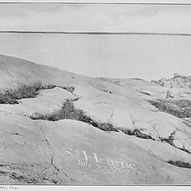
The editor of Samuel Hearne's book travels over the Northern Canadian wilderness 123 years later after Hearne and finds the population had changed from Chipewyans to Eskimos who were dependent entirely on the caribou for food and clothing.
Being possessed of much more than the average amount of ability and enthusiasm, he was chosen by Moses Norton, the energetic Governor of Fort Prince of Wales, to go out with the Indians into the vast, and as far as that was then known, limitless, territory west of Hudson Bay, in order to find and prospect the place where the native copper had been found which the Indians often brought with them to the fort.
During the year preceding his departure on his first expedition, he had had an excellent opportunity to perfect himself in a knowledge of astronomical and geodetic work, for in the summer of 1768 the annual ship had brought William Wales, F.R.S., and Joseph Dymond from London, commissioned by the Royal Society to remain at Fort Prince of Wales throughout the ensuing year in order to observe the transit of Venus over the sun on the 3rd of June 1769.[2] They remained at the fort until the ship left again for London in August of the following year (1769). Mr. Wales was one of the foremost astronomers, mathematicians, and litterateurs of his age. Shortly after his return to England he was appointed to accompany Captain Cook on his voyage around the world in the Resolution in 1772-74, and again on his last voyage in 1776-79. His presence for more than a year among the little band of white men assembled at this remote fur-trading post on Hudson Bay must have had a helpful influence in preparing Hearne for his great explorations overland to the Arctic Ocean. This book is an account of three journeys which he undertook in rapid succession into the country west of Hudson Bay and north-west of Fort Prince of Wales in search of the fabled bed of copper ore, from which pure copper could be loaded directly into ships at trifling expense. In the first and second journeys he was obliged to turn back before reaching his destination, but in the third journey all difficulties were finally overcome, and he was taken to and shown the "mine" of copper.
It has been my good fortune to travel over parts of the same country through which Hearne had journeyed one hundred and twenty-three years before me, and into which no white man had ventured during the intervening time. The conditions which I found were just such as he describes, except that the inhabitants had changed. The Chipewyan Indians, whom he found occupying advantageous positions everywhere as far as the north end of Dubawnt Lake, had disappeared, and in their places the country had been occupied by scattered bands and families of Eskimos, who had almost forgotten the ocean shores of the north, from which they had come. They were depending entirely, for food and clothing, on the caribou, which they killed on the banks of the inland streams and lakes. Traces of old Indian encampments were seen in a few of the scattered groves that are growing along the banks of Dubawnt and Kazan Rivers, but these camps had evidently not been occupied for many years.[3]

