


Recent History
May 6, 1912
To Treat the Oxyuriasis - Short Message from Dr. Hugo Stettiner ZUR BEHANDLUNG DER OXYURIASIS

Dr Hugo Stettiner cures 5 patients with a carbohydrate-free diet to resolve their oxyurisis, the human pinworm parasite, and thinks diet is more important than drugs which only had temporary success.
To treat the oxyurl base. Short message.
From Dr. Hugo Stettiner - Berlin.
At the end of his explanations in No. 10 and 11 of this weekly, Rheindorf asks to declare war on the Oxyurs more than before. The fact that victory over this apparently harmless parasite, which can so badly affect its host, is not always easy, is already proven by the numerous literature that deals with the displacement of the same. I do not want to go into this in more detail, but rather briefly report on some experiences, the further pursuit of which I would like to leave to others in and of themselves. A patient close to me had suffered from oxyure since childhood. All kinds of cures were made, authorities would be questioned. always in vain. Even while I was still a student, I eagerly studied the literature and advised the patient to try all of the suggested means, be it per it or anum. The cures were repeated at regular intervals, but only with temporary success. I don't need to elaborate on how excruciating pruritus ani can be, how it can disturb the night's sleep and thus shake the nervous system. Diabetes mellitus developed in the patient's fifth decennium. The same has therefore been changed to carbohydrate-free for some time, later put on low-carbohydrate food. And lo and behold! which was not achieved with all cures, was achieved without a cure through diet alone. Patient was liberated from the oxyurs and has remained free ever since, After having often had the opportunity to treat children and adults with oxyuriasis in the past, I was often annoyed by the persistence of suffering. I decided to use the experience gained in the case mentioned above in other cases. Since then I have had the opportunity to see five patients, two maids and three children to be treated with oxyuris vermicularis. I proceeded in the usual way - Santonin, laxatives, clysters - and also prescribed a low-carbohydrate diet for the patients. In four out of the five cases I am very quick ie after repeating the treatment two or three times, to finally expel the parasite. I have not yet achieved my goal with one child, but I suspect the little girl has a sweet tooth and doesn’t stop dieting. In two of the patients, one maid and one child. Repeated cures had already been carried out by other parties, which, however, had only a temporary success. I would like to explain the effect in the following way. that the eggs that have entered the human body need a carbohydrate-rich nutrient medium for their development or the developed animals for the maintenance of life. Whether this presumption is correct. I would like to leave it up to others to check. In any case, it would be a pleasure to be welcomed if the experiences shared were confirmed by others.
https://babel.hathitrust.org/cgi/ssd?id=uc1.c2892622;page=ssd;view=plaintext;seq=277;num=897
https://babel.hathitrust.org/cgi/ssd?id=uc1.c2892622;page=ssd;view=plaintext;seq=278;num=901
902 no.19. BERLIN CLINICAL WEEKLY '.
December 31, 1912
Book of the Eskimos

The Eskimos' dearest pastime is visiting and it's about sharing meat such as frozen fish or meat, and then boiled walrus or seal.
THE ESKIMO'S DEAREST PASTIME is visiting. More often than not, he takes his meals in somebody else's house, his family with him, or else he himself has guests, as many as his provisions can accommodate. Visiting is an important social function and is governed by a great deal of etiquette. A man's reputation is to a large extent dependent upon how often he invites, how well he serves his guests, and the perfection of his manners as a host. Consequently, the best pieces of the game that he catches are reserved for visitors. And when he has had a good catch, he is the happiest man on earth. He stands by the entrance to his house and calls out: "Come visit my house! Come visit me!"
The rest of the four or five families at the settlement—those who have seen him come home with game, and who have more or less been expecting his invitation—come running immediately. As they enter his house, they simply say: "Hereby somebody comes visiting!" The women take off their long kamiks and their outer garments and crawl up on the bunks, the men sit down on the skins that cover the floor, while the children and the youngsters either sit or stand in a flock by the entrance.
Then the man in the house says how happy he is to see while everybody just sits around talking about the hunt, the dogs, or the weather. Suddenly the host gets a bright idea.
"Do you happen to want something to eat?" he asks, and the other men then answer him that of course they didn't expect at all to get something to eat, but that if he wants to give them food, then they know that no place in the world will they get such good things as in this particular house!
"Alas no!" says the host. "You are in bad luck. It so happens that I am a bad hunter, and I have nothing to treat you to. But if you will lower yourselves to taste the poor carcass I can offer you, then let me go and fetch it in!"
Then the great hunter goes out to the meat rack and gets his best piece of meat. In order to get it in through the narrow entrance tunnel, he puts a strap around it and hands one end of the strap to the young people just inside. They pull the meat in with loud shouts about how heavy it is, how this great hunter always has big things to offer, etc., all to flatter their host.
The meat is placed in the middle of the circle, and the host takes his axe and begins to chop the frozen mass to pieces. When this is done, he takes a little piece and begins to eat, but says in a highly worried tone of voice:
"Alas I have to throw it all out again, for it tastes so awfully bad. The dogs have soiled it, all kinds of dirt is on it. I can't offer it to such excellent guests."
Upon this invitation, everybody grabs a piece, each man hands one to his wife on the bunk behind him, and soon there is noisy chewing and smacking of lips only interrupted by loud praises of the incomparable delicacy that is being consumed here. The men say only little, but the women are gabbing continuously, as women everywhere are wont to do. It is beneath the dignity of an Eskimo man to pay any attention to the women, and if the noise from them becomes too loud, he may look about him in astonishment.
"What is this!" he shouts. "Is it getting to be spring? Where am I? It sounds as if the auks on the cliffs are quacking. Are there really birds here, or is it women that are nearby?"
That quiets the ladies down a little, but then everybody laughs, and the gaiety starts up again. The host's wife is busy boiling meat from the newly caught game over her blubber lamp, and when everybody has had enough of the frozen delicacies, they start in on the steaming walrus or seal meat. The polite guests fart and belch to show how well they are digesting the treats of the house. They continue eating until they are too gorged to get another bite down. If a guest gets tired, he will simply go to sleep where he sits and start in on the meal again when he wakes up.
If it becomes apparent that the provisions of the house are about to give out, another hunter will stand up and ask to be allowed to show what his house has to offer. Thus the party goes from house to house, and the feast may last for days.
December 31, 1912
Book of the Eskimos

Peter Freuchen and Knud Rasmussen take part in a food orgy where fermented narwhale skin kept in a meat cache for several years is shared. This is called rotten mattack and tastes like walnuts and roquefort cheese.
I was early acquainted with the magnificent hospitality of the Polar Eskimos. Knud Rasmussen and I even skipped unloading the little ship Motor in which we went to Thule together in order to take part in a food orgy which he got started by announcing that he had been longing to taste the good things the place had to offer. We were invited to Uvdluriak's and there for the first time I tasted rotten mattak. This dish, which is a great delicacy for the Eskimos, consists of huge flakes of narwhale skin that have been kept in meat caches for several years. In the low temperature they do not become rancid, they just ferment, so that the skin tastes very much like walnuts while the blubber, turned quite green, tastes sharp—almost like roquefort cheese. Next we went to the house of Tornge, who served caribou meat with tallow. Knud let it be known that he would consider it an offense not to visit all the other tents, where people no doubt were expecting us with such specialties as they had in store. At last, we were so gorged that we both lay down on the bunk where we happened to be and fell asleep. We were awakened by a message from the irate captain of Motor, who asked us if we had any intentions of further activity in this place.
December 31, 1912
Book of the Eskimos

The role of women at feasts of the Hudson Bay Eskimos is described while the men share boiled meat.
Among the Hudson Bay Eskimos, the women are not allowed to take part in these feasts. It is thought that boiled meat is man's food, too good for women to have, and a man would make himself ridiculous if he ate it in the company of his family. No, he goes outside his house and announces loudly that there is boiled meat. This is an invitation for all the other men in the village to come to a feast. With serious faces, they form a single file and enter the house of their host. They have their big knives in their hands and hold them up in front of themselves like sabres. Inside the house, they take position in a circle without saying a word.
The host begins the proceedings by making a little speech that is always approximately the same: "Alas, I have waited so long before inviting you because I was embarrassed on account of my bad house. I do not know how to build houses as big and handsome as yours. Moreover, I have nothing decent to offer you. The rest of you, you are used to catching young, fresh, and good-tasting animals; I must be content with half-dead carrions that are an insult to the palate. And finally I have only the miserable wife who sits here. She is unfit for any work, and she is particularly impossible at cooking meat, so this meal is going to be a terrible scandal for my house."
Whereupon the men sit down, and the wife starts serving the meat. This is her only function at the meal. She has a kind of fork made from a caribou antler or a walrus rib, with which she lifts a lump of meat from the pot. She then licks it carefully so that soup and blood won't drip too much over her husband's fingers.
The husband takes the meat and puts it in his mouth—or at least, as much as he has room for. He then cuts off the rest and hands it to his neighbor, who cuts off a mouthful and passes it on to the next man in the circle. The lump of meat keeps circling like this until it is eaten up, and the host receives a new lump from his wife. It is desirable to have a little fat with the meat from time to time, so the host cuts off a piece of blubber and sends it around the circle in the same manner. The men rub the various pieces around on their faces so that the blood and smear often cover even the foreheads. If a piece is lost on the floor, the man who picks it up is expected to lick it clean. Water to drink with the food is provided in a basin made of walrus skin or seal skin. The water is from melted snow, but it is far from crystal clear, for it has been melted in the same pots the meat is cooked in. And these pots never get washed, only wiped off with a piece of skin at every new moon. The water is therefore brown like thin coffee, and on its surface caribou hairs, matches, and other little things are afloat. On these occasions my beard was very useful, as I let it sift the water for me. Afterward, when I wiped the beard with my hand and saw the amount of dirt and slime it contained, I was ever so happy that I had avoided using the razor.
As you may easily understand, I much preferred life with the Thule Eskimos. There, the fair sex were allowed to enliven the parties with their charm, the pots were kept fairly clean without any consideration of the position of the moon, there was always freshly melted water, and each man got his individual piece of food untouched by others except, perhaps, the hostess, who handed it to him only to press him to eat more.
March 10, 1913
Vilhjalmur Stefansson
Discovery
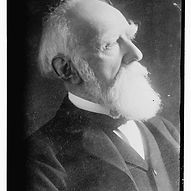
Stefansson talks with Lord Strathcona who ate only eggs, milk, and butter while also skipping lunch and ultimately breakfast.
"My talk before the Royal Geographical Society was, however, incidental. The main purpose of my visit was to enlist Strathcona's support. My first contacts with him were merely casual occasions for him to use his position as Canada's High Commissioner to expedite the work of the Canadian Arctic Expedition. It was not long, however, before there grew up between the bond of a common interest--an interest in dietary matters. I told him what I had learned. from the Eskimos, and he told me that years ago in Canada he had begun a regimen all his own by skipping lunch and ultimately breakfast too. Then he had begun to wonder why, since he liked some things better than others, he should bother to eat something different on Tuesday when he had liked what he had eaten on Monday better. This led to his questioning what he really did like and, when he got the answer, eating nothing else--eggs, milk, and butter. Although this combination would not have made up my favorite meal, much as I favor butter, the point was that Strathcona and I were in agreement on the feeling that the longer a man ate one complete food exclusively, the more likely he was to relish it."
https://en.wikipedia.org/wiki/Donald_Smith,_1st_Baron_Strathcona_and_Mount_Royal Lord Stratcona died later that winter at the age of 93.
Ancient History
Germany
50000
B.C.E.
Palaeolithic and Mesolithic kill-butchering sites: the hard evidence
The upper paleolithic is characterized by advanced hunting of large animals with various weapons, and planning to maximize easy prey
Upper Palaeolithic and Mesolithic Hunting:
the archaeological record leaves us some direct evidence of man's hunting activities. At Meiendorf (Rust 1937) and Stellmoor (Rusf 1937), some bones of reindeer and birds still conserve weapon marks and a few pieces of silex have remained thrusted in mammalian bones; man kills reindeer with harpoons and sticks (fractured skulls), birds with bows and maybe slings. Three fractured skulls of red deer in Abri Pataud (Bouchud, 1975), and one bovid skull with a circular orifice in Saint Marcel (Allain, 1952) suggest the practice of the so called " co'up de merlin": man has delivered a blow similar to the one used today to butcher cattle. Probably the animal already immobilized (wounded or entrapped) was hit on the frontal with a big stone. At Kokorevo I (Siberia), a large scapula of bison is pierced by the upper end of a point made of bone (Boriskowksi, 1965). At High Furlong (Mesolithic), an elk was discovered with the marks of L7 wounds made by barbed points, of which two were found in the site, and by other arms. The animal had apparently been attacked at two distinct occasions: during the first one, hunters aimed at the legs to lame the animal (fig. 6), later hunters hit the thoracic region and the lungs to kill it. However the elk died in a little lake, perhaps imprisoned in the ice, and man had no access to the meat. The animal represents in fact a hunting loss (Hallam et a1.,1973).
Planning: very good. Many sites belong to Wpe e, were occupied periodically or seasonally and specialised in the capture of a particular game (e.g., horse, reindeeq, ibex). Game drive towards cliffs have been claimed and Solutre (Combier & Thevenot,1976) has long figured as an example, but the evidence is far from conclusive.
Scavenging: no doubt H. sapiens still killed or exploited animals in the occasional and opportunistic way of Lower Palaeolithic times. According to Lindner (Lindner,1941), hunters at Predmost utilised the carcasses of hundreds of mammoths that probably succumbed as a result of natural catastrophes, as food.
Food transport: selective transport of the most useful animal parts is claimed for many sites.
Specialised activities: sometimes the material is dislocated in distinct clusters that could reflect specialised activity areas as for example at Solutre (Combier & Thevenot, 1976). Site topography: some hunting sites were located in valleys enclosed by steep slopes as at Rascano (Gonziilez-Echegaray, 1979), Stellmoor (Rust, 1937), Meiendorf (Rust 1937), or at the foot of rocky cliffs at Solutr6 (Combier & Th6venot, 1,976).
4. Conclusions
Most of the Lower Palaeolithic sites analysed here belong to category a (butchering sites); other kind of concentrations are rare and difficult to ascertain. A number of hunting stations (category e) and a hunting stop (category f) form my sample for the age of Neanderthal man and related people. The Upper Palaeolithic is characterised by many hunting stations, while in Mesolithic times a hunting loss (category d ) was found as well as several sighting sites (category g). The foregoing distribution seems to reflect in a vague way an evolution from scavenging and haphazard opportunistic hunting to well organised, selective hunting activities. However, this reflection results no doubt in part from a priori assumptions concerning the evolution of hominid meat procurement often colouring the interpretations offered for the osseous "hard" data; these are frequently equivocal.
Vindija, 42000, Varaždin, Croatia
28500
B.C.E.
Neanderthal diet at Vindija and Neanderthal predation: The evidence from stable isotopes
The isotope evidence overwhelmingly points to the Neanderthals behaving as top-level carnivores, obtaining almost all of their dietary protein from animal sources
Archeological analysis of faunal remains and of lithic and bone tools has suggested that hunting of medium to large mammals was a major element of Neanderthal subsistence. Plant foods are almost invisible in the archeological record, and it is impossible to estimate accurately their dietary importance. However, stable isotope (13C and 15N) analysis of mammal bone collagen provides a direct measure of diet and has been applied to two Neanderthals and various faunal species from Vindija Cave, Croatia. The isotope evidence overwhelmingly points to the Neanderthals behaving as top-level carnivores, obtaining almost all of their dietary protein from animal sources. Earlier Neanderthals in France and Belgium have yielded similar results, and a pattern of European Neander- thal adaptation as carnivores is emerging. These data reinforce current taphonomic assessments of associated faunal elements and make it unlikely that the Neanderthals were acquiring animal protein principally through scavenging. Instead, these findings portray them as effective predators.
Stable Isotope Analyses.
Mammal bone collagen δ13C and δ15N values reflect the δ13C and δ15N values of dietary protein (14). They furnish a long-term record of diet, giving the average δ13C and δ15N values of all of the protein consumed over the last years of the measured individual's life. δ13C values can be used to discriminate between terrestrial and marine dietary protein in humans and other mammals (15, 16). In addition, because of the canopy effect, species that live in forest environments can have δ13C values that are more negative than species that live in open environments (17). δ15N values are, on average, 2–4‰ higher than the average δ15N value of the protein consumed (18). Therefore, δ15N values can be used to determine the trophic level of the protein consumed. By measuring the δ13C and δ15N values of various fauna in a paleo-ecosystem, it is possible to reconstruct the trophic level relationships within that ecosystem. Therefore, by comparing the δ13C and δ15N values of omnivores such as hominids with the values of herbivores and carnivores from the same ecosystem, it is possible to determine whether those omnivores were obtaining dietary protein from plant or animal sources.
Cheddar Reservoir, Cheddar BS26, UK
12000
B.C.E.
FOCUS: Gough’s Cave and Sun Hole Cave Human Stable Isotope Values Indicate a High Animal Protein Diet in the British Upper Palaeolithic
We were testing the hypothesis that these humans had a mainly hunting economy, and therefore a diet high in animal protein. We found this to be the case, and by comparing the human δ15N values with those of contemporary fauna, we conclude that the protein sources in human diets at these sites came mainly from herbivores such as Bos sp. and Cervus elaphus
We undertook stable isotope analysis of Upper Palaeolithic humans and fauna from the sites of Gough's Cave and Sun Hole Cave, Somerset, U.K., for palaeodietary reconstruction. We were testing the hypothesis that these humans had a mainly hunting economy, and therefore a diet high in animal protein. We found this to be the case, and by comparing the human δ15N values with those of contemporary fauna, we conclude that the protein sources in human diets at these sites came mainly from herbivores such as Bos sp. and Cervus elaphus. There are a large number ofEquus sp. faunal remains from this site, but this species was not a significant food resource in the diets of these Upper Palaeolithic humans.
If the humans hunted and consumed mainly horse, then their 15N values should be c. 3–5‰ (Equus 15N value of 0·7‰+enrichment of 2–4‰). Instead, their 15N values make more sense if they lived mostly off Bos and Cervus elaphus (Bos and Cervus values of c. 3‰+enrichment of 2–4‰=the observed values c. 6–7‰). It is also possible that other species, including Rangifer tarandus, were consumed by these individuals. Rangifer tarandus has 15N values similar to Cervus elaphus (Richards, 1998), and has more positive 13C values, which may explain the observed slight enrichment in the human 13C values. A number of artefacts made from Rangifer tarandus have been found at Gough’s, but there is no other evidence that this species was being exploited for food
Province of Crotone, Italy
500
B.C.E.
On the Sociology of Ancient Sport
One report states that a trainer named Pythagoras recommended a meat diet to the Olympic athletes he trained.
A lack of animal-derived protein seems to have been rectified early in history, as there are two reports of the introduction of meat into the athletes’ diet. One report states that a trainer named Pythagoras recommended a meat diet to the athletes he trained. https://www.omicsonline.org/open-access/a-comparison-of-ancient-greek-and-roman-sports-diets-with-modern-day-practices-2473-6449-1000104.php?aid=69865
8 He [Pythagoras] is said to have been the first to train athletes on a meat diet. The first athlete he did this with was Eurymenes. Formerly they had trained on dried figs, moist cheese, and wheat. Some say that it was a trainer named Pythagoras and not the philosopher who was responsible for this innovative diet. For our Pythagoras prohibited killing, not to mention eating, life which possessed souls like our own.
Diogenes Laertius, Lives of the Philosophers 8.12
Sport and Recreation
To all appearances medical knowledge in general and nutrition in particular was widespread in Pythagorean circles in Southern Italy, especially in Kroton. Burkert has pointed out that the fmaous doctor Alcmaeon came from the Pythagorean center of Kroton. From the akousmata (secret doctrines), which doubtless contain old religious traditions, we learn that the Pythagoreans were not originally strict vegetarians; the consumption of meat was permitted, with the exception of lamb and the meat of draft oxen. Burkert considers there is some likelihood that Pythagoras introduced a meat diet for athletes. He believes this tradition arose when Pythagorean vegetarianism had not yet been completely developed. In later times, when vegetarianism had prevailed, a second tradition has possibly been invented, in which it was not Pythagoras, the philosopher from Samos and Kroton, but a homonymous person who wrot the great 'trainer's recipe book'.
57: There are similar issues regarding the transmission in later sources of Pythagoras advising the successful heavy athlete Eurymenes of Samos to use a special meat-based diet instead of the dried figs and cheese he had previously been eating.
On the Sociology of Ancient Sport - page 43.
Mantineia 221 00, Greece
480
B.C.E.
A Comparison of Ancient Greek and Roman Sports Diets with Modern Day Practices
Dromeus, a long-distance runner, is said to have first thought of eating meat for training instead of just cheese and won multiple victories.
The second report is that of Pausanias, who writes of Dromeus, a long-distance runner from Stymphalos [23].
“...he won two victories in the dolichos at Olympia, the same number in the Pythian Games, three at the Isthmian and five at the Nemean. He is said to have first thought of eating meat (as part of his training diet). Until then the food for athletes was cheese fresh out of the basket.”
Clearly, if his success is anything to go by, then Dromeus had really found a winner’s diet. There are also reports of athletes eating meat from oxen, bulls, goats and deer, a very” red-meat” diet which is a rich form of protein. Moreover, with meat as a part of their diet, the performance of competing athletes would most certainly have improved noticeably.
5 A man named Dromeus from Mantineia was said to have been the first we know of to have won the pankration by default [ = akoniti]. Pausanias 6.11.4
Dromeus, Long-Distance Runner
There was a man from Stymphalos, named Dromeus, whose record as a long-distance runner was exceptional: he won two victories in the dolichos at Olympia, the same number in the Pythian Games, three at the Isthmian and five at the Nemean. He is said to have first thought of eating meat (as part of his training diet). Until then the food for athletes was cheese fresh out of the basket.


