


Recent History
January 1, 1892
William Osler
The Principles and Practice of Medicine - Designed for the use of practioners and students of medicine by William Osler M.D. FRCP.

Dr William Osler quotes Dr Sydenham's diabetes advice - which include "let the patient eat food of easy digestion, such as veal, mutton, and the like, and abstain from all sorts of fruit and garden stuff" as well as "carbohydrates in the food should be reduced to a minimum."
Diet. — Our injunctions to-day aro thoso of Sydenham : " Let the patient est food of easy digestion, eiich aa voal, mutton, and the like, and abstain from all sorts of fruit and garden stuff." The carbohydrates in tho food should be reduced to a minimum. Under a strict hydrocarbonaceous and nitrogenous regimen all casc«are benefited and some arc cured. The most minute and specific instructions should be given in each case, and the dietary arranged with scrupulous care^
It is of the first importance to give the patient variety in the food, otherwise the loathing of certain essential articles becomes intolerable, and too oft«u tho patient gives up in diegiiet or despair. It is wcl), perhaps, not to attempt the absolute exclusion of the carbohydrates, but to allow a small proportion of ordinary bread, or, belter still, as containing less starch, potatoes. It is beat gradually to cnforoe a rigid system, cutting oH one article after another. Tho following is a list of articles which diabetic patients may take :
Liquids; Soups — ox-tail, turtle, bouillon, and other clear soops
Lemonade, coffee, tea, chocolate, and cocoa; these to be taken without sugar, but they may bo sweetened with saccharin.
Potash or soda water, and the Apoltinatis, or the Saratoga Vichy, and milk in moderation, may be used.
Of animal food :
Fish of all sorts, salt and fresh,
butcher's meat (with the exception of liver),
poultry,
and game.
Eggs,
butter,
buttermilk,
curds,
and cream cheese.
Of bread : gluten and bran bread, and almond and coconut biscuits.
Of vegetables: Lettuce, tomatoes, spinach, chiccory, sorrel, radishes, water-cress, mustard and cress, cucumbers, celery, and endives. Pickles of various sorts.
5. Fruits : Lemons, oranges, and currants. Nuts are, as a rule, allowable
Among prohibited articles are the following :
Thick soups, liver, crabs, lobsters, and oysters; though, if the livers are cut out, oysters may be used.
Ordinary bread of all sorts (in quantity): rye, wheaten, brown, or white.
All farinaceous preparations, such as hominy, rice, tapioca, semolina, arrowroot, sago, and vermicelli.
Of vegetables : Potatoes, turnips, parsnips, sqimslies, vegetable marrow of all hinds, beets, corn, artichokes, and asparagus.
Of liquids: Beer, sparkling wine of all sorts, and the sweet aerated drinks.
The chief difficulty in arranging the daily menu of a diabetic patient is the bread, and for it various substitutes have been advised — ^bran bread, gluten bread, and almond biscuits. Most of these are unpalatable, and the patients weary of them rapidly. Too many of them are gross frauds, and contain a very much greater proportion of starch than represented. A friend, a distinguished physician, who has, unfortunately, had to make trial of a great many of them, writes : 'That made from almond flour is usually so heavy and indigestible that it can only be used to a limited extent. Gluten flour obtained in Paris or London contains about 15 per cent of the ordinary amount of starch and can be well used. The gluten flour obtained in this country has from 35 to 45 per cent of starch, and can be used successfully in mild but not in severe forms of diabetes." ' Unless a satisfactory and palatable gluten bread can be obtained, it is better to allow the patient a few ounces of ordinary bread daily. The " Soya " bread is not any better than that made from the best gluten flour. As a substitute for sugar, saccharin is very useful, and is perfectly harm- less. Glycerin may also be used for this purpose. It is well to begin the treatment by cutting off article after article until the sugar disappears from the urine. Within a month or two the patient may gradually be allowed a more liberal regimen. An exclusively milk diet, either skimmed milk, buttermilk, or koumyss, has been recommended by Donkin and others. Certain cases seem to improve on it, but it is not, on the whole, to be recommended.
January 1, 1892
The principles and practice of medicine : designed for the use of practitioners and students of medicine

Dr Osler explains the disease of gout and its etiology (hereditary, food, alcohol, lead) and theories (uric-acid, nervous, Ebstein's), however, the treatment of the chronic condition is a low carb diet where "starchy and saccharine articles of food are to be taken in very limited quantities."
VI. GOUT (Podagra)
Definition. A nutritional disorder, associated with an excessive formation of uric acid, and characterized clinically by attacks of acute brltis, by the gradual deposition of urate of soda in and about the joints, and by the occurrence of irregular constitutional symptoms.
Etiology. — It is now generally recognized that the disease depends upon disturbed metabolism ; most probably upon defective oxidation of nitrogenous food-stuffs.
Among important etiological factors in gout are the following:
(a) Hereditary Influences — Statistics show that in from fifty to sixty per cent of all cases the disease existed in the parents or grandparents. The transmission is supposed to be more marked from the male side. Cases with a strong hereditary taint have been known to develop before puberty. The disease has been seen even in infants at the breast. Males are more subject to the disease than females. It rarely develops before the thirtieth year; and in large majority of the cases the first manifestions appear before the age of fifty,
(b) Alcohol is the most potent factor in the etiology of the disease. Fermented liquors favor its development much more than distilled spirits, and it prevails most extensively in countries like England and Gennany, which consume the most beer and ale. Probably the greater tendency of malt liquors to induce gout is associated with the production of an acid dyspepsia. The lighter beers used in this country are much less liable to produce gout than the heavier English and Scotch ales,
(c) Food plays a role equal in importance to that of alcohol. From the time of Hippocrates overeating has been regarded as a special predisposing cause. The excessive use of food, particularly of meats, disturbs gastric digestion and leads to the formation of lactic and volatile fatty acids. It is held by Garrod and others that these tend to decrease the alkalinity of the blood and to reduce its power of holding urates in solution. A special form of gouty dyspepsia has been described. A robust and active digestion is, however, often met in gouty persons. Gout is by no means confined to the rich. In England the combination of poor food, defective hygiene, and an excessive consumption of malt liquor makes the "poor man's gout" a common affection.
(d) Lead. Garrod has shown that workers In lead are specially prone to gout. In thirty per cent of his hospital cases the patients had been painters or workers in lead. The association is probably to be sought in the production by the poison of arteriosclerosis and chronic nephritis. Something in addition is necessary, or certainly in this country we should more frequently see cases of this kind so common in London hospitals. Chronic lead-poisoning here frequently associated with arteriosclerosis and contracted kidneys, but acute arthritis is rare. Gouty deposits are, however, to be found, in the big-toe joint and in the kidneys in those cases.
There are three theories with reference to gout :
(1) The Uric-acid Theory. — Sir Alfred Garrod, to whom the profession is indebted for so many careful studies in this disease, showed that there was an increase in the uric acid in the blood, due either to increased production or to diminished elimination ; and that the alkalinity of the blood was also lessened. He attributes the deposition of the urate of soda the diminished alkalinity of the plasma, which is unable to hold it in solution. An increase in the quantity of the uric acid produced, or any interference with elimination through the kidneys, may cause a sudden outbreak. The acute paroxysm is due to an accumulation of the urates the blood, which he believes are responsible also for the preliminary dyspepaia, the coated tongue, the irritability of temper, and the general feelings of malaise. The sudden deposit of the cryst;itline urates about thf joint leads to inflammation. {H) The
Nervous Theory. — The view of Cullen that gout was primarily an affection of the nervous system has been modified into a neuro-humoral view which has been advocated particularly by Sir Dyce Duckworth. On this theory there is a basic, arthritic stock-a diathetic habit, of which gout and rheumatism are two distinct branches. The gouty diathesis is expressed in a neurosis of the nerve-centres, which may be inherited acquired; and (b) "a peculiar incapacity for normal elaboration within the whole body, not merely in the liver or in one or two organs, of food, whereby uric acid is formed at times in excess, or is incapable of being duly transformed iuto more soluble and less noxious product. (Duckworth). The explosive neuroses and the influence of depressing circumstances, physical or mental, point strongly to the part played by the nervous system in the disease.
(3) Ebstein's Theory. — A nutritive tissue disturbance is the priflii change leading to necrosis, and in the necrotic areas the urates are posited. This is not unlike the view of Ord, who holds that there a tendency, inherited or acquired, to a special form of tissue degent tion.
Morbid Anatomy. — The hold shows an excces of uric acid, as proved originally by Garrod. The uric acid may be obtained from the blood-serum by the method known as uric-acid thread experiment, or from the serum obtained from a blister....The primary change, according to Ebstein, is a local necrosis, due to the presence of an excess of urates in the blood. This is seen in the cartilage and other articular tissues tissues in which the nutritional currents are slow.
Symptoms.--Gout is usually divided into acute, chronic, and irregular forms.
Treatment-- Individuals who have inherited a tendency to gout, or who have shown any manifestions of it, should live temperately, abstain from alcohol, and eat moderately. An open-air life, with plenty of exercise and regular hours, does much to counteract an inborn tendency to the disease.
Diet--Experience has shown that a modified nitrogenous diet is the most suitable. Starchy and saccharine articles of food are to be taken in very limited quantities; as "the conversion of anatized food is more complete with a minimum of carbohydrates than it is with an excess of them-in other words, one of the best means of avoiding the accumulation of lithic acid in the blood is to diminish the carbohdyrates rather than the anotized foods" (Draper).
Meats of all kinds, except perhaps the coarser sorts, such as pork and veal, and salted provisions, may be used. Eggs, oysters, and f ish may be taken. Lobsters and crabs, particulary when made into salaids, are to be eschewed. The sugar should be reduced to a minimum. The sweeter fruits should not be taken. L Oranges and lemons may be allowed. Strawberries, bananas, and melons should not be eaten. If necessary, saccharin may be substituted. for cane sugar. Potatoes should be sparingly used. The fresh vegetables, such as lettuce, cucumbers, tomatoes, and cauliflower, may be taken freely. Hot rolls and cakes of all sorts, hominy, grits, and the more starchy forms of prepared foods are not suitable. The various articles of diet prepared from corn should be avoided. Fats are easily digested and may be taken freely. In obstinate cases great benefit is derived with an exclusively milk diet.
Persons with a gouty tendency should be encourage to drink freely of such mineral waters as they prefer. They kep the interstitial circulation active and so favor elimination. Milk and potash-water form a pleasant and wholesome drink for a lithamic patient. Alcohol in all forms should be avoided. When from any cause a stimulant is indicated, claret, dry sherry, or good whisky is preferable. Champagne is particularly pernicious. Persons with a marked tendency to lithaemia should be urged to restrict the appetite and to take only a moderate amount of food. Overeating is not far behind excessive drinking in its injurious effects. Indeed, a majority of people over forty years of age take more food than is required to maintain the equilibrium of health. Gout, in many cases, is evidence of an overfed, overworked, and consequently clogged machine.
In the chronic and irregular forms of gout the treatment by hygiene and diet is most suitable.
August 2, 1893
Elliott P. Joslin
Dr. Joslin Makes First Entry in Diabetic Ledger

Dr Joslin begins a ledger on diabetes after meeting a frail young Irish girl named Mary Higgins who was suffering from Type 1 Diabetes. He prescribed a low carb diet and recorded all of his cases over his entire career in his ledger.
On this day in 1893, a student at Harvard Medical School made the first entry in a ledger he would keep for the rest of his long career. Elliott Joslin examined a frail young Irish girl, who was suffering from diabetes. Long before he became one of the world's leading authorities on diabetes, he understood the importance of careful documentation. Keen observation of his patients helped him develop a novel approach to the treatment of diabetes. He prescribed a strict diet that regulated blood sugar levels and helped patients manage their own care. The introduction of insulin in 1921 confirmed the effectiveness of Joslin's approach. Elliott Joslin saw 15 patients a day until a week before his death in 1962, at age 93.
Unlike many other men who made Boston a center of medical innovation, Elliott Joslin was born in Massachusetts — in the town of Oxford, 40 miles west of Boston. The son of a wealthy shoe manufacturer, Elliott was an unusually focused, driven young man. He attended Yale College, graduated at the top of his Harvard Medical School class, and served an internship at Massachusetts General Hospital. After additional study in Europe, he returned to Boston in 1898 and opened a private office in the house his father had bought in the Back Bay.
Although Joslin had been interested in diabetes since medical school, he began his career as a general practitioner. Physicians who specialized in one particular disease were still rare in American medicine, and it would be almost 20 years before Elliott Joslin emerged as one of the most influential people in the study and treatment of diabetes.
Mary Higgins's case sparked his interest and convinced him of the need to chart in detail the course of a patient's illness. Joslin began keeping a diabetic ledger in 1893; Mary Higgins was the first entry in the first volume. He documented every patient he treated for the next 70 years. Eventually, his ledgers filled 80 volumes and became the central registry for diabetes in the United States, the first system for recording patient diabetes data outside of Europe.
January 1, 1896
J.H. Romig, M.D. Letterhead
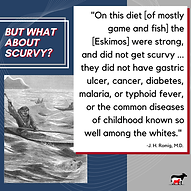
Dr Romig states that Alaskan natives on this [carnivore] diet the people were strong, and did not get scurvy ... the did not have gastric ulcer, cancer, diabetes, malaria, or typhoid fever, or the common diseases of childhood known so well among the whites.
It is written on a letterhead: “J. H. Romig, M.D., 115 East Columbia, Colorado Springs, Colo. ... 1948 ...” and signed, in ink, “J. H. Romig, M.D.” In the first part of this paper he speaks of himself in the third person:
“When Dr, J. H. Romig went to the Bering Sea region of Alaska, in the year 1896, he found the Eskimos living according to tradition, ideology, and diet, the same as they had lived for hundreds of years before.” He gives the general impression of average good health and considerable longevity. He describes their houses and housekeeping and tells that during winter most of the men spend much of their time at what whites have called club houses or bath houses, the native karrigi or kadjigi.
“The women brought the largest meal of the day to their husbands, fathers, and sons. The food was in a wooden dish ... mostly game and fish ... Dried smoked salmon was much used, and other dried fish. Seal and fish oil was much in demand and was a necessity; no one could be well without fats. Their food was cooked mostly by boiling, and was rather rare; they ate as well, especially in winter, raw frozen fish and raw meat. They kept some wild cranberries for the favored dish of akutok — made [of lean meat and] of seal or fish oil mixed with warm tallow, sprinkled with cranberries, stirred, and hardened with a little snow.
“On this diet the people were strong, and did not get scurvy ... the did not have gastric ulcer, cancer, diabetes, malaria, or typhoid fever, or the common diseases of childhood known so well among the whites. For the most part they were a happy, carefree people ...
“With the advent of gold discovery, government schools and missions, and the high price of furs, came a new era ... They were able to buy white men's food and clothing, neither of which fitted their real need. The children were sent to school and learned white man's ways ...
“These people have changed from the old way, to eating pancakes with syrup and canned goods from the store. The children have poor teeth now, as well as the older ones. They have white man's epidemics, and neither the home nor the food that once was good for them ...
“The Government is now doing much to cover up and ease these changes in native life ... It is with regret that we can see the slow passing of these once hardy people ...”
January 1, 1896
Arnaldo Cantani
Food in Health and Disease

Yeo Burney summarizes Cantani's Diet for Diabetes: He requires the adoption of this absolute meat and fat diet for three months — in very mild cases for two months, in very severe cases for six or nine months.
7. — Cantani's.
{This is a very exclusive diet.)
Sanctioned:
Meat and animal fats of all kinds (at all meals).
Fish of all kinds.
Lobsters.
Olive oil (instead of butter).
Eggs (in milder cases).
Substitute for bread: Pavy's almond cakes(only for convalescents who cannot entirely dispense with bread).
Pure Water.
Soda-water.
Persons habituated to the use of strong wines and spirits may add to the water 10 to 30 grammes of pure alcohol daily.
Red Wine.
Tea and coffee in small quantities.
Forbidden:
Liver.
Butter, as it contains traces of lactose.
Cheese.
Milk.
All farinaceous and saccharine foods absolutely.
All fruits.
All green vegetable and roots.
Lemonade.
Chocolate.
Rum, cognac.
Tea and coffee (in severe cases).
Cantani considers much salt injurious, as well as much pickled pork or salt fish.
He requires the adoption of this absolute meat and fat diet for three months — in very mild cases for two months, in very severe cases for six or nine months. If after two months the urine contains no sugar, he allows green vegetables ; after another month, cheese and old red wine ; and after another fortnight, almonds and nuts. A month or so after this he permits juicy fruits, not too sweet, as straw- berries, raspberries, peaches, apples, and sour oranges ; still later, plums, gooseberries, green beans and peas, tomatoes, melons, cucumbers, and gourds. After another fortnight, milk and fresh milk foods may be used. Finally, if after repeated examination no sugar be found in the urine, small quantities of farinaceous food may be cautiously permitted, but their use must be restricted for life. It is best to avoid altogether cane-sugar and sweets of all kinds.
Cantani urges the consumption of as much fat as possible, and especially of " pancreatic fat," as easy of digestion. It is prepared of pancreas, cut up into small pieces, well mixed with a certain quantity of melted bacon fat or lard, left to undergo an artificial digestion for about three hours, and finally lightly roasted before the fire. In mild cases he prescribes pure sugar-free cod-liver oil, in 20- to 100-gramme doses.
Ancient History
Cairo, Cairo Governorate, Egypt
1552
B.C.E.
The Ebers Papyrus is the first known medical reference to diabetes mellitus.
["Diabetes and the Ebers Papyrus"]) by D. Lynn Loriaux, M.D., PhD
"Of great interest to endocrinologists is the opinion that in the Ebers Papyrus is the first known medical reference to diabetes mellitus. The reference is to a single phrase: "...to eliminate urine which is too plentiful."
"Unfortunately, the crucial word, asha, can mean both 'plentiful' and 'often,' and it is unclear whether the condition described was polyuria(increased volume of urine) or increased frequency of micturition, very often due to cystitis. The latter condition is much more common and therefore the more likely interpretation."


